
ASDP: 49% of Returnees Have Already Returned to Java from Sumatra During the 2026 Lebaran Return Flow
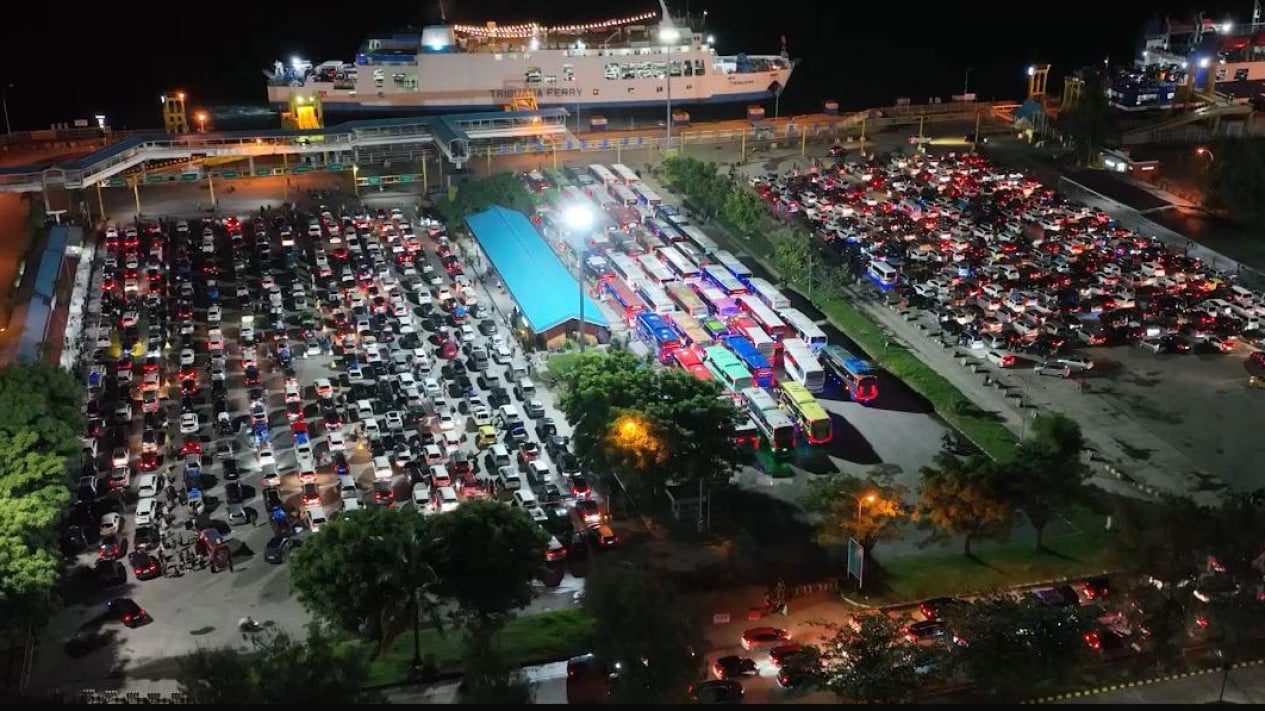
ASDP Indonesia Ferry states that 49% of Eid returnees have returned to Java Island from Sumatra during the 2026 Lebaran return period. ASDP’s President Director, Heru Widodo, said that this figure indicates high public mobility on the nation’s main crossing routes. “The total number of passengers who have returned to Java during the period of 22-26 March 2026 up to 14:00 WIB, or from H to H+4, reached 444,223 people, or about 49% of the total passengers during the outbound mudik of 898,864 people,” he stated on Thursday (26/3/2026). In addition to passengers, the number of vehicles that have returned to Java also reached 118,297 units, or about 49% of the total vehicles during the mudik of 239,920 units. “The Lebaran return flow from Sumatra to Java is entering a crucial phase. After a temporary slowdown at the start of the period, movements are now strengthening again, with the potential for significant surges in the coming days,” he said. According to Heru, this condition represents a consolidation phase towards the peak of the return flow, where previously dispersed movements are now beginning to concentrate again. ASDP projects that the second return peak will occur on 28 to 29 March 2026. “The return flow does not happen simultaneously but increases gradually. After a temporary lull, movements are now strengthening again and are projected to peak soon. Therefore, we are ensuring that all operational readiness is at an optimal level, while urging the public to avoid the peak period estimated for Saturday (28/3) and Sunday (29/3),” Heru stated. With about 51% of service users yet to return, the potential for surges in the near term is a primary concern. To anticipate congestion, ASDP is implementing an adaptive operational pattern, including the Tiba-Bongkar-Berangkat (TBB) scheme to accelerate ship turnaround times during increased traffic. Additionally, vehicle flow management is being strengthened through delaying systems and diversions at several strategic buffer points. “In addition, buffer points include Rest Area KM 49B, KM 20B, Gayam Terminal, and RM Gunung Jati, to ensure that vehicle distribution remains controlled and does not pile up at the ports,” he said. ASDP assures that through adaptive operational strategies and coordination across stakeholders, the return flow surge can be managed effectively.