
Asa Bafagih, the Forgotten Indonesian Diplomat and Press Figure
The 18 March 1953 edition of the Pemandangan newspaper upset the government. Its reporting on plans for new foreign investment in 21 types of industries was deemed to have leaked state secrets. Prime Minister Wilopo requested that the Attorney General investigate and hold Asa Bafagih accountable as Editor-in-Chief of Pemandangan.
However, during the examination, Asa—who was the abbreviation for Abdillah bin Syech bin Ali—refused to reveal his news source on the grounds of journalistic ethics. He was charged with violating Article 224 of the Criminal Code for refusing to provide testimony as a witness. Due to opposition and mockery from various quarters towards the legal efforts, Attorney General R. Soeprapto eventually halted the case on 15 August 1953.
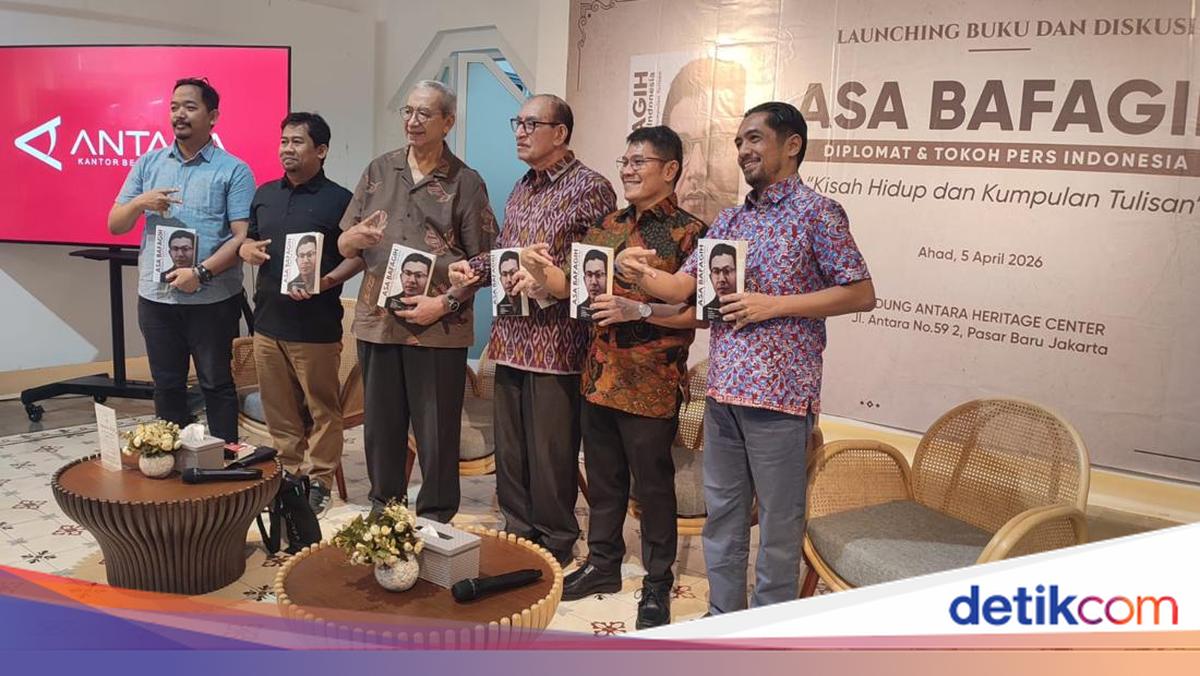
“The case, later known as the Bafagih Incident, subsequently became known as the Right to Refuse in the world of journalism in Indonesia,” revealed Nabiel A. Karim Hayaze at the launch of the book “Asa Bafagih: Diplomat and Indonesian Press Figure” at Antara Heritage on Sunday (5/4/2026).
The event, moderated by Hadi Nur Ramadhan from the Indonesian History House, was attended by, among others, former Foreign Minister Alwi Shihab, senior journalist Bambang Wiwoho, President Director of LKBN ANTARA Benny Siga Butarbutar, entrepreneur and literacy activist Haidar Bagir, and members of Asa Bafagih’s extended family.
Nabiel admitted to compiling the book on the figure born in Tanah Abang on 14 December 1918 since 2016 when he was still active in Papua New Guinea. From tracing various archives, old books, scattered writings in various mass media, to several documents, it was revealed that Asa Bafagih, who nearly escaped public discussion and memory, was actually a major figure in journalism and diplomacy.
Together with Adam Malik, he was involved in disseminating the 1945 Proclamation news through the Antara News Agency. He once worked at the Merdeka daily owned by BM Diah and became a mentor to Harmoko, who later became the Minister of Information. In the Nahdlatul Ulama environment, Asa Bafagih was the founder of Duta Masyarakat.
“However, in the young generation of NU, his name is almost unknown, never discussed. If talking about NU figures who became journalists and midwifed Duta Masyarakat, they only know Mahbud Djunaidi,” said RM Joko Prawoto Mulyadi, alias Okky Tirto.
Not only that. If we search for the name ‘Asa Bafagih’ on Wikipedia, Okky continued, the information that appears is only three sentences. Similarly on YouTube, there is only a snippet of a speech in Tanjung Priok with a duration of about one minute. “This is truly ironic,” he said.
It is unclear why the name Asa Bafagih seems to suddenly disappear from historical records. Yet until the mid-1970s, according to the testimony of his seventh son, Rusdi Jayaputra, his father was quite famous and respected among journalists. Every week, the public used to look forward to his writings in the Merdeka daily. “His column would definitely increase circulation by 10,000 every time there was Father’s writing,” said Rusdi.
Asa Bafagih also had close relations with President Soeharto. One indication, said Rusdi, was that his father was once invited to perform the pilgrimage together to Mecca.
Even though he often criticised the government during the Old Order era, Asa Bafagih was also friends with President Sukarno. On 18 September 1960, President Sukarno inaugurated him as Ambassador to Sri Lanka alongside Ny. Supeni, who became the Indonesian Ambassador to the United States. Four years later, Asa was entrusted to become Ambassador to Algeria, concurrently to Tunisia. Thanks to his mastery of Arabic and French, he had close relations with President Boumedienne, Foreign Minister Bouteflika, and national figures in Algeria.
Another interesting aspect of Asa Bafagih’s figure, according to Abdullah Abubakar Batarfie from Al-Irsyad, is that he did not give his eight children names with the Hadhrami family appendage. They are Achmad, Habibah Kusuma Wardani, Nuril Kamil, Ramzi, Yusri, Muhammad Wardy, Rusdi Jayaputra, and Fitri Budi Satria. “This shows how grounded he was on issues,” he said.
Asa Bafagih’s career as a journalist, bureaucrat, and politician ended in Solo on 13 December 1978. His body was buried at Karet Cemetery, Jakarta. Four years later, on 19 April 1982, Minister of Information Harmoko presented the Press Council’s Award to Asa Bafagih as a “Pioneer of the Indonesian Press”.
However, according to Nabiel, by examining all his tracks, he deserves to be remembered as a National Hero. “Not because of the title itself, but as a marker of the honesty of History.”