
As Eid Approaches, Seasonal Beggars Return to Jakarta Streets with Children and Wives
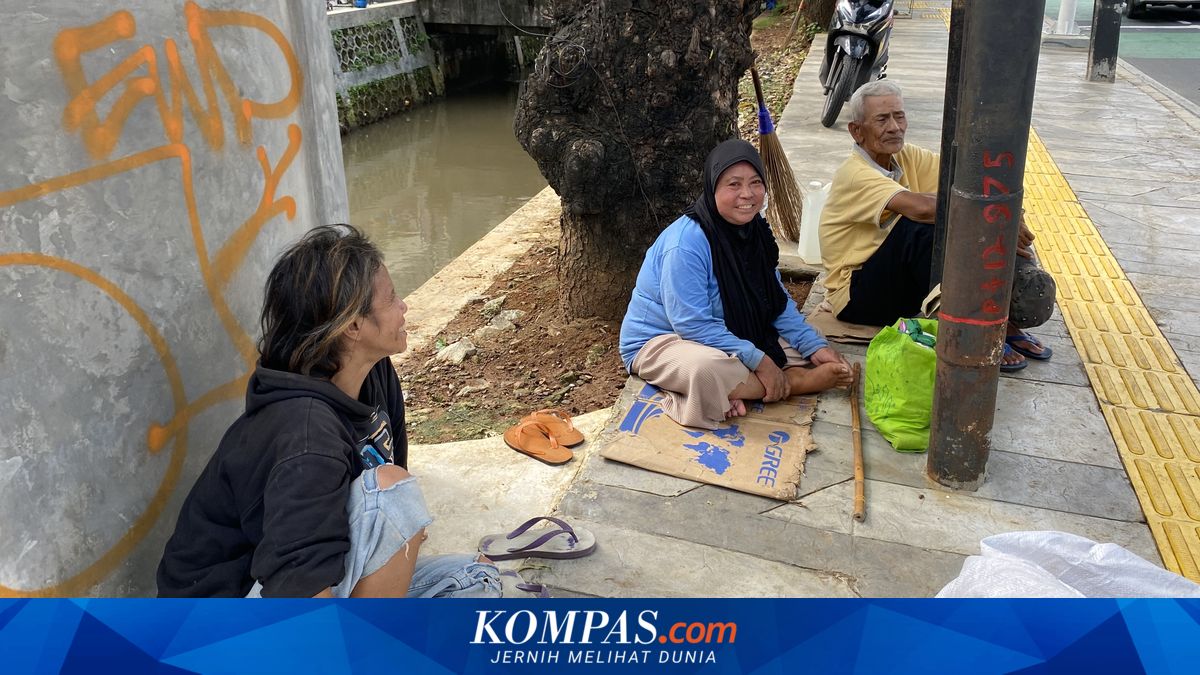
JAKARTA — As Eid al-Fitr approaches, pavements along several Jakarta roads have once again become populated by street dwellers arriving to seek additional income.
Some of them even bring their families and temporarily reside in public spaces for several weeks before Eid.
This scene is visible on the pavement connecting Jalan Pasar Minggu to Jalan Prof. Dr. Soepomo in South Jakarta.
Several people can be seen sitting cross-legged atop tactile paving for the visually impaired. One of them is Asep (45), who came to Jakarta with his wife Santi (37) and their two children.
He explained that his visits to Jakarta are seasonal. He typically arrives two to three weeks before Eid.
“We don’t stay permanently. We come seasonally. Usually we only come to Jakarta when Eid is approaching,” said Asep when met on the pavement in the Pasar Minggu area, South Jakarta, on Friday (6 March 2026).
According to Asep, the economic conditions in his village make it difficult for him to find permanent work.
For this reason, he chooses to come to Jakarta during Ramadan, when the prospects of earning money from road users are deemed greater.
“It’s hard to find work in the village. Here in Jakarta, although it’s not certain, sometimes people give money or food,” he said.
Asep stated that he has been doing this for about five years, each time approaching Eid.
During his time in Jakarta, he and his family sleep on the pavement. For bedding, they usually use cardboard and thin mats brought from home or given by others.
When it rains, they must seek shelter in nearby locations.
Asep acknowledged that life on the streets at night is not always safe. He must remain vigilant against the possibility of theft or harassment from others.
The family’s belongings are kept in large bags that are always placed near their sleeping area.
“All our belongings are in these bags. When we sleep, we usually put it near our head,” said Asep.
For bathing and sanitation needs, Asep uses public facilities near the market or mosque. He also acknowledged having experienced raids by Satpol PP (municipal civil police) officers several times.
“We’ve been raided several times,” he said.
According to him, officers usually take them to temporary shelters. However, after that, some of them return to the streets again.
“Once we’re released, we come back here,” said Asep.
Asep acknowledged that he actually wants to return to normal work as he once did. However, economic conditions make it difficult for him to obtain permanent employment.
Santi (37) said she and her husband had been in Jakarta for about two weeks before being encountered.
“We arrived here about two weeks ago,” said Santi.
She acknowledged coming to Jakarta in the hope of earning more money than in her home village.
While on the pavement, she more often looks after both children whilst her husband seeks money at traffic lights.
“Usually we take turns. Sometimes I look after the children, their father earns the money,” she said.
Santi stated that their eldest child is 9 years old and their second child is 5 years old.
According to her, their eldest child had previously attended school in their home village. However, this education was interrupted due to the family’s economic conditions and frequent relocations. Meanwhile, their youngest child does not yet have a birth certificate.