
As Eid Approaches, Jakarta Pavements Become Survival Spaces for Seasonal Beggars
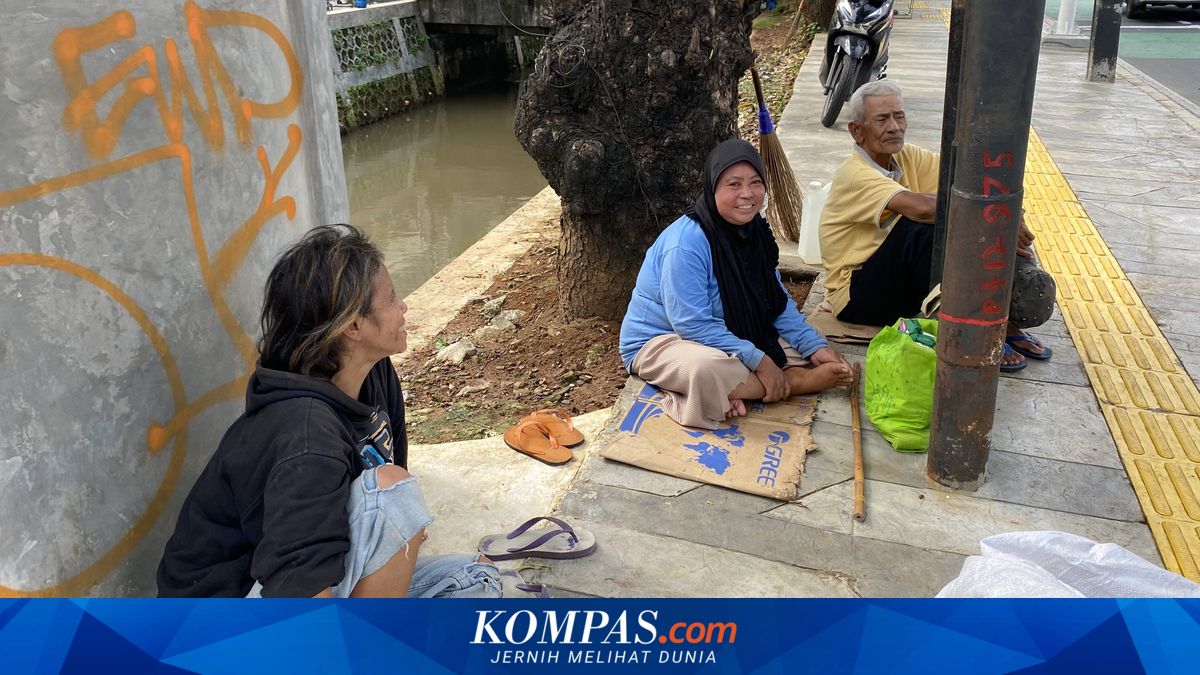
Jakarta — As Eid al-Fitr approaches, pavements along various roads in Jakarta have once again become survival spaces for economically marginalised residents.
Along the connecting route between Jalan Pasar Minggu and Jalan Prof. Dr. Soepomo in South Jakarta, several individuals can be seen conducting their daily lives in public spaces—ranging from scavenging to simply awaiting assistance from passers-by.
Amidst the bustle of traffic, a middle-aged woman sits cross-legged on a yellow tactile paving strip on the pavement in the area on Friday (6 March 2026).
Idah, 52, revealed she had been living on the streets in the area for approximately four years alongside her husband. “Sometimes I receive Zakat al-Fitr donations, clothing, or money in envelopes. Eid becomes a significant time for us too because we have no home,” Idah told Kompas.com.
According to her, there are also people who come only at specific times, particularly during Ramadan and approaching Eid. “Many migrate here as well. Some come from Manggarai, and others from outside the region,” she said.
Beside Idah sits a green wooden cart laden with stacks of cardboard, plastic bottles, and large sacks tightly bound together. The cart serves as the primary tool for Idah’s livelihood as a scavenger.
She disclosed that she originally came from East Jakarta. After both her parents passed away, she no longer had a place to live. “There is no home. My parents have passed away, so I make my own living with my husband,” she said.
“When it rains, I sell raincoats. For snacks, meals, or to break the fast,” she added.
However, the income she generates is inconsistent. From scavenging, she manages to earn only tens of thousands of rupiah. “My scavenging earnings are sometimes 70,000 rupiah. When business is good, it can reach 100,000 rupiah, but nowadays plastic bottle prices are cheaper too,” Idah said.
For bathing and other basic needs, Idah relies on public facilities near the market. “I bathe at the public bathhouse at Pasar Jembatan Merah,” she said.
At night, she and her husband sleep in front of a food stall. Living on the street, according to Idah, is fraught with risk. She must always remain cautious about various possibilities. “When living on the street, you must always be vigilant. You cannot afford to be careless because anything can happen,” Idah said.
Similar scenes are visible at several points along the pavement stretching from Jalan Pasar Minggu towards Jalan Prof. Dr. Soepomo.
Asep, 45, and his wife Santi, 37, for example, said they came from Bogor. They travel to Jakarta only as Eid approaches. According to him, the decision to come to the capital was driven by the difficulty of finding work in his village.