
As economy falters, free food becomes lifeline for vulnerable Yemenis
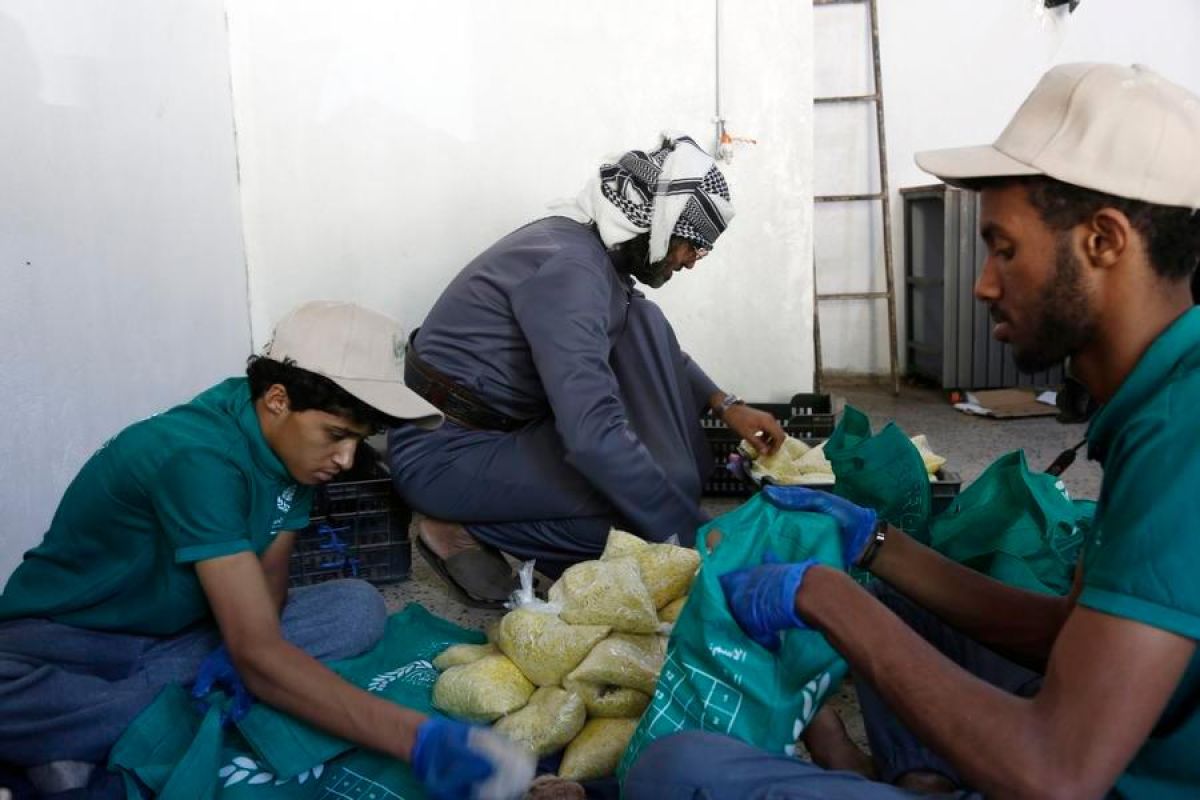
Sanaa, Yemen — Every morning, Abdul Qader Khaled, a resident of Sanaa, Yemen, arrives early at a modest charity kitchen and joins the queue to receive free food for his family of five.
He clutches a plastic container and an old bag, waiting patiently for that day’s ration of food.
“I come here early every day,” he said. “Sometimes I worry I’ll go home empty-handed. But thankfully, the kitchen manager calls my name, and I can take food home for my family.”
For Khaled and hundreds of other local residents, the free food provided by the kitchen, managed by director Abu Badr al-Yamani with the help of local volunteers and supported by community donations, has become one of the most anticipated things each day.
According to al-Yamani, the kitchen prepares large quantities of food daily to meet the needs of more than 500 families, including the poor, the sick, the unemployed, and low-income households.
“The happiness of people in need when they receive these food packets is truly extraordinary, and it is a great blessing … This increasingly motivates us to help them, even though this food does not match their needs,” he said.
Despite limited resources, volunteers say they remain committed to running the food distribution programme, determined to ease the burden on vulnerable families as broader humanitarian challenges continue.
Abu Zaid, one of the volunteers, expressed his joy in helping those in need.
“Honestly, I forget all tiredness when I see children smile as they receive this free food,” he said.
For many families in Sanaa, the daily queue outside the small charity kitchen remains a source of hope and a simple but vital means of survival.
Inside the small kitchen, some volunteers work around large pots of food being prepared, whilst others hurriedly fill containers with small portions, trying to serve as many people as possible before that day’s supply runs out.
Yaser al-Absi, a volunteer cook, said that helping those in need gives him peace of mind.
“When we bring happiness and smiles to people who truly need it, we feel indescribable happiness and peace,” he told Xinhua, “especially when we see the food reach those who truly deserve it.”
Al-Yamani and the volunteers’ efforts are part of a broader response to the humanitarian crisis affecting millions of people.
Yemen has been ravaged by conflict since the Houthi group took control of the capital in the northern region, Sanaa, in 2014. The prolonged war has created one of the world’s most severe humanitarian crises.
The United Nations has warned that Yemen will face another year of severe humanitarian challenges in 2026, with more than 22 million people estimated to need assistance.
However, despite ongoing relief efforts, local observers report that the number of residents seeking assistance has increased in recent months, reflecting the broader economic difficulties faced by many households.
In addition to the ongoing domestic conflict, escalating regional crises are adding to the uncertainty.
Humanitarian concerns are mounting amid regional tensions triggered by Israeli-American attacks on Iran, which are feared could spread to Yemen and further worsen conditions in the country.
“As we monitor developments in the region, concerns are growing that continued tensions and escalation could further strain Yemen’s already fragile humanitarian situation,” said Abdul Rahman Yahya, a Yemeni politician.