
Around 1,900 ships still detained in Strait of Hormuz, Persian Gulf
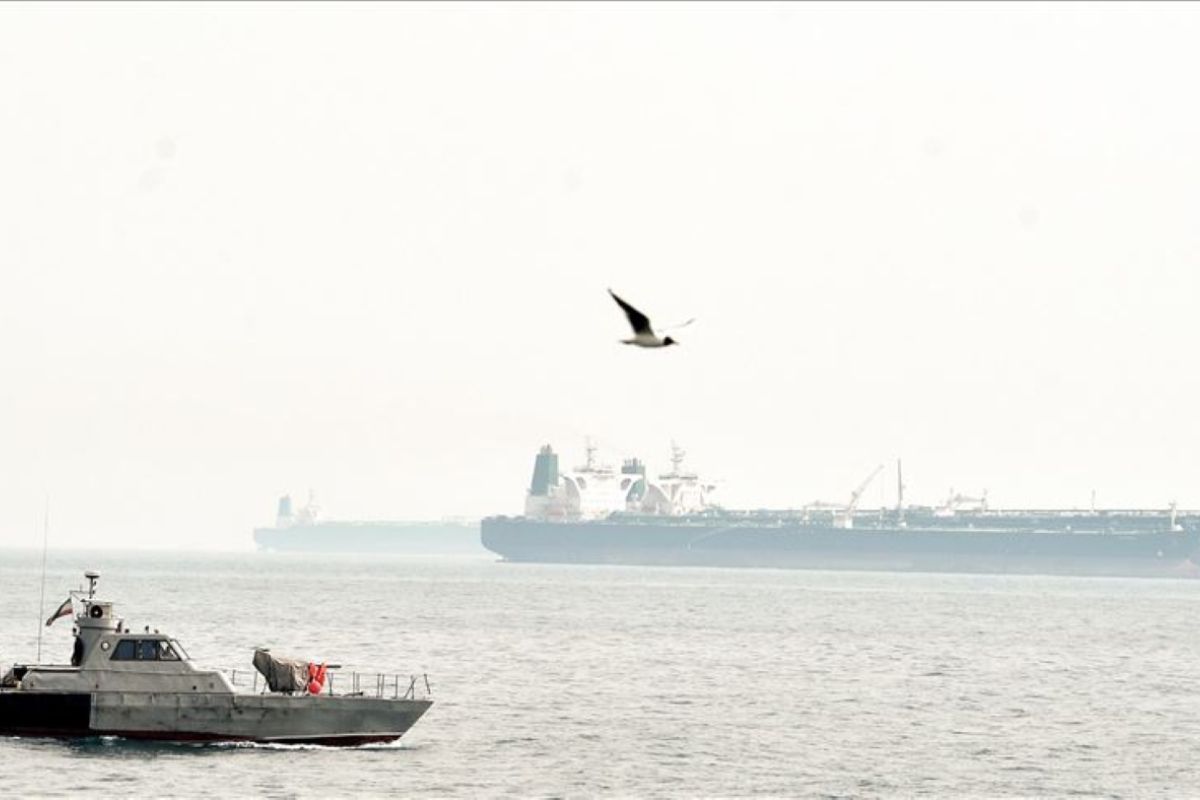
London (ANTARA) - Approximately 1,900 commercial ships are detained in the Strait of Hormuz area, particularly in the Persian Gulf, since the United States (US) and Israel attacked Iran on 28 February 2026.
Since the start of the attack, Tehran has effectively closed the strategic waterway to ships associated with the attacking countries, halting maritime traffic in the strait.
Ships in the area preparing to cross the strait cannot continue their journey due to military tensions, with most detained vessels dropping anchor in open waters.
Tehran has stated that ships from countries other than the US and Israel may still pass through the Strait of Hormuz as long as they are not involved in or supporting aggression against Iran and fully comply with safety and security rules.
Spokesperson for Iran’s integrated armed forces command, the Khatam al-Anbiya Central Headquarters, Ebrahim Zolfaqari, said on Wednesday (25/3) that Iran has changed the rules in the strait and the situation will not return to pre-war conditions, emphasising that entities linked to the US and Israel have no right to pass through.
Based on real-time ship tracking data from MarineTraffic for the period 20 to 22 March, around 1,900 ships were unable to move near the Strait of Hormuz.
Among the detained ships are approximately 324 bulk carriers, 315 oil or chemical product tankers, 267 product oil tankers, and 211 crude oil tankers.
Around 190 million barrels of crude oil and petroleum products are on the detained tankers in the area, according to analytics firm Vortexa.
Additionally, there are 177 general cargo ships, 174 container ships, 98 liquefied petroleum gas carriers, 42 asphalt or bitumen carriers, 37 heavy lift ships, and 34 LPG or chemical tankers in the area, while the rest consist of various other types of ships such as Ro-Ro vessels, bunkering tankers, and heavy lift carriers.
German shipping company Hapag-Lloyd reported that six of its ships cannot operate in the Persian Gulf amid the ongoing tensions.
Director of maritime analysis at the Baltic and International Maritime Council, Filipe Gouveia, told Anadolu that the impact of the maritime traffic halt on the shipping market and freight rates will depend on various factors.
He mentioned that developments in fuel prices, the duration of the strait closure, and the number of ships Iran allows to pass will be determining factors, while tensions in the region are also driving up freight rates.
This increase is particularly evident in the tanker market, including crude oil and product oil tankers.
He said that since 27 February, the Baltic Dirty Tanker Index has risen 49% and the Baltic Clean Tanker Index has increased 78% up to 20 March, with freight rates in the container market also experiencing a surge.
Rising fuel costs and the imposition of emergency surcharges by shipping companies are also contributing to the increase.
He added that under normal conditions, around 30% of global seaborne oil exports, 4% of dry bulk cargo, and 3% of container volume pass through the Strait of Hormuz.
However, only a portion of exports from the Persian Gulf can be diverted to alternative sources, while land routes lack the capacity to meet usual cargo volumes.
He also noted that around 5.5% of the world’s tanker fleet and 1.5% of the dry cargo container ship fleet are currently in the Persian Gulf area.
Source: Anadolu