
Arms Exports to the Middle East Surge Sharply: Who Is Buying?
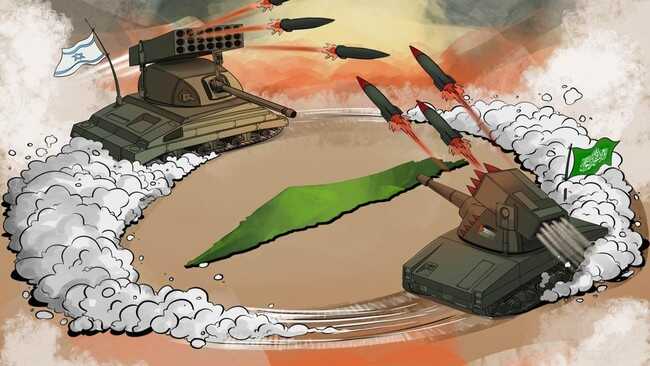
Jakarta, CNBC Indonesia - The escalating conflict in the Middle East is seen not only as worsening the global geopolitical situation but also as potentially driving up arms demand in the region. This view comes directly from European defence industry players, as war and regional tensions again become the primary focus of markets.
Alexander Sagel, CEO of the German defence firm Renk, said the war in Iran and the crisis unfolding in the Middle East could trigger increased defence needs in the region. According to him, the escalating conflict creates opportunities for higher military spending, both for air defence systems, ammunition, and land forces needs. ‘The crisis currently taking place in the Middle East, the Iran war, overall could spur higher demand for defence capabilities in this region,’ Sagel said, quoted from CNBC International. He also emphasised that the conflict could trigger broader defence spending across various lines.
The statement attracted attention as it comes amid growing focus on the potential spike in demand for the global defence industry. Renk itself is a company engaged in military propulsion technology, including for infantry fighting vehicles (IFVs), and serves as a supplier to many major defence firms. Sagel had previously disclosed that his company had received an initial order for a prototype of a new IFV from one of the Gulf states. The project is said to be developed over the next two to three years. This signals that the Middle East remains a very important market for the global arms industry.
How Large is the Middle East Market?
Looking at the data, the Middle East remains one of the world’s largest arms markets. The latest report from the Stockholm International Peace Research Institute (SIPRI) shows that the Middle East accounts for more than a quarter, specifically 27%, of total global arms imports in 2020-2024. Meanwhile, North Africa accounts for 2.2%. Due to geographic links, history, and security dynamics, the two regions are often viewed as a single large region, known as the Middle East and North Africa (MENA).
Nevertheless, arms imports into the Middle East in 2020-2024 actually fell by 20% compared with 2015-2019. However, SIPRI notes in its report that the region is almost certainly still a large arms-importing area, given many orders have yet to be delivered.
In the list of the world’s largest importers, MENA’s dominance remains very strong. Four of the ten largest arms importers globally in 2020-2024 come from this region: Qatar at number three, Saudi Arabia at number four, Egypt at number eight, and Kuwait at number ten.
On the supplier side, the United States remains the major player in the Middle East market. Around 50% of MENA countries’ arms imports in 2020-2024 came from the USA, followed by Italy 12%, France 9.7%, and Germany 7.6%. By contrast, Russia’s role declined sharply. Russia’s share of arms supply to the region fell from 18% in 2015-2019 to just 4.1% in 2020-2024. China accounted for only 1.2%.
These figures show the Middle East arms market is still very large, but also highly concentrated on Western suppliers, particularly the United States and European countries.
The Gulf States Remain the Main Engine
Among regional states, Saudi Arabia remains one of the largest buyers. Although its arms imports fell by 41% compared with the previous period, Saudi Arabia still accounted for 23% of total MENA arms imports in 2020-2024. The main supplier to Saudi Arabia is the USA, with a 74% share, followed by Spain 10% and France 6.2%.
Meanwhile, two other Gulf states posted sharp surges. Kuwait’s arms imports rose by 466%, while Bahrain surged by 898% compared with 2015-2019. For Kuwait, the USA supplied 63% of its arms imports, followed by Italy 29% and France 7.1%. Bahrain, by contrast, is highly dependent on the USA, with a 97% share of its total arms imports in 2020-2024.
The UAE also remained a significant market, though its imports fell by 19%. SIPRI notes that the UAE still has a number of orders yet to be delivered, including air defence systems from South Korea, fighter aircraft from France, and attack helicopters from the USA.
By contrast, Israel is large in arms imports, while Iran is very small
Beyond the Gulf states, Israel also remains an important importer. SIPRI notes that Israel was the sixth-largest arms importer in the Middle East and the 15th in the world. From 2020-2024, the USA was the main supplier with a 66% share, while Germany accounted for 33%. Israel is said to remain heavily dependent on US military assistance for its main conventional capabilities, including combat aircraft, missiles, guided bombs, and armoured vehicles.
Conversely, Iran imports weapons in very small volumes. Iran’s import share accounts for only 0.2% of total MENA arms imports in 2020-2024. During that period, Russia is even recorded as Iran’s sole supplier. This condition shows a stark contrast within the region. On one side, Gulf states and Israel continue to actively buy arms. On the other, Iran has far more limited access to the international arms market.
In the midst of unresolved conflict, the statement by Renk’s boss becomes all the more relevant. The Middle East is not only politically and militarily tense but also remains one of the most strategic markets for the global defence industry.