
Arguments of Prof Uceng and Al-Araf at the Constitutional Court on the Revision of the Military Judiciary Law
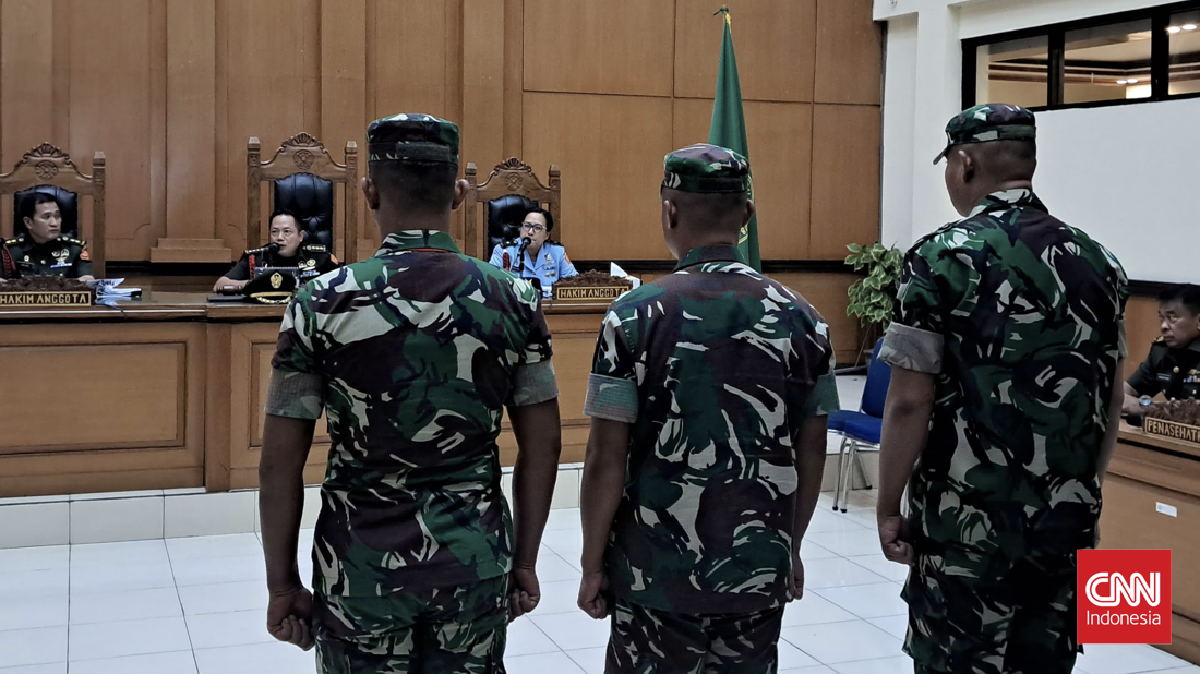
Dosen from the Department of Constitutional Law at the Faculty of Law, Universitas Gadjah Mada (FH UGM), Zainal Arifin Mochtar, and Chairman of the Centra Initiative Management Board, Al-Araf, have pushed for the revision of Law Number 31 of 1997 on Military Judiciary.
This push was expressed when both were presented as experts in case number 260/PUU-XXIII/2025 regarding the material examination of the Military Judiciary Law at the Constitutional Court (MK), on Tuesday (14/4).
Zainal Arifin Mochtar, familiarly known as Uceng, was given the first opportunity to provide his views on military judiciary. Uceng views that there are still various fundamental issues in Indonesia’s military judicial system.
Uceng stated that the Military Judiciary Law was formed during the New Order era, which granted strong privileges to the regime, thus leaving several problems until now.
“Many issues have arisen, starting from dualism of jurisdiction, lack of synchronisation with the spirit of reform, absence of detailed regulations on connexity, to issues of independence and accountability of military judiciary that are often discussed as a form of legal exceptionalism,” said Uceng, quoted from the MK website, Tuesday (14/4) night.
Uceng said that post-reformasi, there has been a change in legal politics, including strengthening the provisions of judicial power in Article 24 of the 1945 Constitution, which affirms four judicial environments under the Supreme Court (MA), namely general judiciary, religious judiciary, military judiciary, and administrative judiciary.
According to him, the examination of Article 9, Article 43, and Article 127 of the Military Judiciary Law is constitutionally justified. These provisions are deemed to potentially grant excessively broad jurisdiction to the military judiciary, including in handling general criminal offences.
Uceng emphasised that these norms do not clearly distinguish between military criminal offences and general criminal offences, thus potentially conflicting with the principle of equality before the law and the principle of a rule of law state guaranteed in the 1945 Constitution of the Republic of Indonesia.
“In a constitutional perspective, these norms need to be interpreted in a limited manner that the jurisdiction of military judiciary only applies to military criminal offences directly related to military functions and discipline,” he explained.
At the end of his presentation, Uceng hopes that the MK not only provides interpretation of the examined norms but also urges the President and the DPR to immediately enact a new Law on Military Judiciary. He considers it important as an effort to complete homework that has been delayed for more than 20 years.
“In my opinion, this is a big challenge for the Constitutional Court because I think the MK should carefully consider, push to complete the homework that has not been resolved for 20 years and we let it float, and in my opinion, it has reproduced injustice repeatedly, like two of them that happened to the victims who are the Applicants in this room,” Uceng asserted.
Meanwhile, Al-Araf said that the issue of military judiciary in Indonesia is not merely a technical matter, but concerns the protection of human rights (HAM) and the supremacy of law.
The state’s inability to ensure that perpetrators from military members are tried through an independent, transparent, and accountable judiciary, he said, ultimately reflects a failure in fulfilling constitutional obligations to guarantee a sense of security for citizens.
Al-Araf outlined several issues related to military judiciary. First, regarding the Military Judiciary Law (31/1997), which did not emerge in a vacuum.
The Military Judiciary Law was formed in 1997 under the initiative of the authoritarian New Order political regime, which ignored the principles of a rule of law state and human rights.
“During the New Order era, legal products formed in laws tended to be repressive and merely served as instruments of control for power,” he said.
“The state formed laws at that time not within the framework of the rule of law (supremacy of law), but merely to meet the needs of rule by law (law as a tool of power),” he continued.
Al-Araf added that when reformasi rolled in 1998, and democracy was made the chosen political system, the people through their mandate in the MPR urged that the Military Judiciary Law be improved and corrected.
This process is also parallel and in line with the constitutional reform agenda, which was poured into four rounds of amendments to the 1945 Constitution of the Republic of Indonesia. In these constitutional amendments, one aspect accommodated and agreed upon relates to the affirmation of the principles of a rule of law state and human rights.
Furthermore, the direction of legal politics regarding the reform of military judiciary has been explicitly formulated in MPR Decree No. VII/MPR/2000 and Law No. 34 of 2004 on the Indonesian National Army (TNI Law). The provision of Article 3 paragraph (4) letter a of MPR Decree No. VII/MPR/2000.
“These norms systematically show that the lawmakers have consciously built a design of jurisdiction that is limitative. In this framework, at least there are two legal consequences that cannot be interpreted otherwise,” he added.
First, the absolute competence of military judiciary is strictly limited only to violations of military criminal law. Second, every violation of general criminal law committed by military members is constitutionally transferred to the authority of the general judiciary.
“Thus, the expansion of military judiciary jurisdiction to the realm of general criminal law actually contradicts the normative and constitutional design that has been established,” Al-Araf explained.
He also explained that the affirmation of this construction is also reflected in Constitutional Court Decision Number 87/PUU-XXI/2023.
The MK explicitly affirmed