
Arab Negotiator Suddenly Meets Iran, Requests Involvement in Regulating the Strait of Hormuz
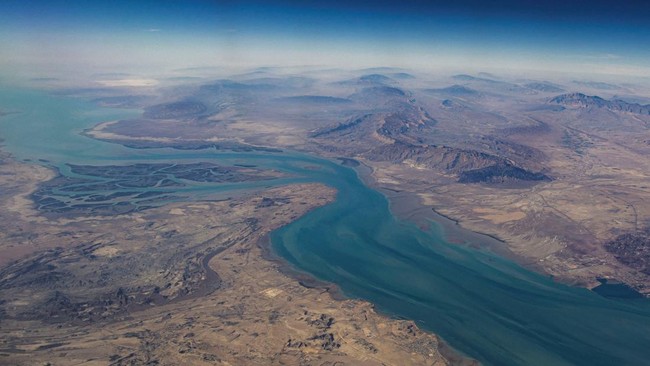
The governments of Oman and Iran held a high-level meeting to discuss the smooth transit of ships through the Strait of Hormuz. This step was taken amid the effective blockade imposed by Tehran on this vital waterway in response to the United States (US)-Israel war against Iran.
Oman’s Ministry of Foreign Affairs reported that the talks were held at the level of deputy foreign ministers to discuss various options for ensuring smooth passage for ships transiting the strait. Citing a report from Al Jazeera, the meeting took place on Sunday (5/4/2026) following initial technical coordination at the level of the secretaries general of the foreign ministries of both countries.
The ministry stated that the meeting was attended by specialists from both sides to formulate solutions amid the increasingly tense regional situation.
“Various possible options have been discussed regarding guarantees for smooth passage through the Strait of Hormuz during the current situation in the region. During the meeting, experts from both sides presented a number of visions and proposals that will be studied,” read the official statement from Oman’s Ministry of Foreign Affairs.
Tracking data from the shipping journal Lloyd’s List shows that three Omani ships, consisting of two very large crude carriers and one liquefied natural gas (LNG) carrier, began crossing the Strait of Hormuz outside the corridor approved by Iran. The convoy of ships was reported to be sailing very close to the Omani coast, a movement considered unusual amid the sea blockade.
This diplomatic effort follows a statement from an Iranian official last Thursday, which mentioned that Tehran is preparing a joint protocol with Oman to monitor traffic in the strait. The Strait of Hormuz is a critical chokepoint for global energy supplies, where about one-fifth of the world’s total oil supply depends on this route.
Since the war broke out on 28 February, Iran’s Islamic Revolutionary Guard Corps (IRGC) has imposed strict restrictions on access, allowing only certain ships, such as those related to Pakistan, France, and Turkey, to pass. As a result of this policy, around 3,000 other ships are reported to be stranded and unable to continue their journey.
This situation has triggered global anger, particularly from Washington, as disruptions in Hormuz have injected extreme volatility into the world energy market. US President Donald Trump, through a social media post this weekend, even issued strong threats if the route is not opened soon.
“President Donald Trump has threatened to unleash ‘all hell’ if the route is not opened by Monday,” the report wrote, describing the escalating tensions.
On the other hand, regional de-escalation efforts continue by several countries, including Egypt. Egypt’s Foreign Minister Badr Abdelatty is reported to have held separate telephone calls with US Special Envoy Steve Witkoff and Iranian Foreign Minister Abbas Araghchi to discuss a peace proposal.
However, international observers assess that the chances of a diplomatic solution at present remain very slim unless there is a major compromise from the conflicting parties. Amin Saikal, an emeritus professor at the Australian National University, warned of the horrific impacts if the war continues to spread across the region.
“The expansion of the war would be hell for the entire region. There must be some negotiated settlement. But at this stage, the door to a diplomatic solution seems very narrow, unless President Trump decides that this conflict has caused so many problems for him domestically and internationally, that this is really the right time to reach a compromise with the Iranian side,” Saikal said.