
Arab Conflict Grows More Ominous, Indonesian Palm Oil Entrepreneurs Worried and Raising This Alarm
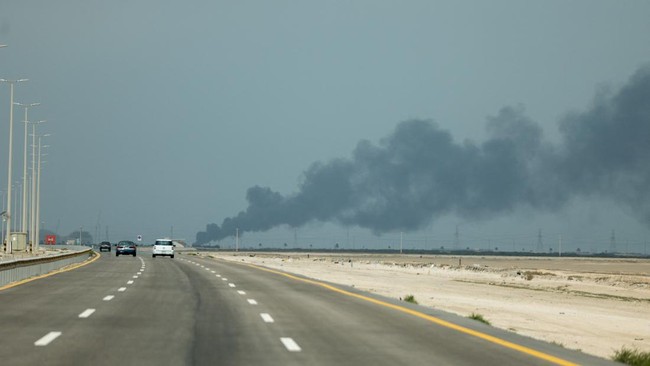
Jakarta, CNBC Indonesia - The escalation of the conflict between the United States (US), Israel, and Iran is starting to raise concerns in several sectors of the global industry, including Indonesia’s palm oil industry. Industry players assess that the protracted conflict could disrupt international shipping routes that have long been the main export channels for this strategic commodity.
Eddy Martono, Secretary General of the Indonesian Palm Oil Producers Association (Gapki), said that disruption to sea transportation is the main risk that Indonesian palm oil industry should watch if the conflict widens.
He said that if shipping lanes are disrupted, export activity will also be affected, especially for shipments to Europe. In certain conditions, ships may have to take longer routes to avoid conflict areas.
“First, the problem is transport disruption; if transport is disrupted, exports will be disrupted, but in the next 1 to 2 weeks, or if we have to reroute exports to the European Union, this will cause additional transport costs,” Eddy told CNBC Indonesia on Wednesday (4/3/2026).
He explained that changing shipping routes is indeed still possible. But the consequence is higher logistics costs which can suppress trade efficiency.
In addition, another risk anticipated is disruption to domestic supply chains if exports cannot run smoothly for an extended period. If shipments are held up, stock of crude palm oil (CPO) domestically could pile up.
“If this disruption lasts too long and exports are disrupted, upstream problems could occur, that is tanks could fill up,” he said.
According to Eddy, full storage tanks would trigger downstream effects on domestic CPO prices. When stock is abundant due to blocked exports, the commodity’s price could fall sharply.
He cites a similar situation that occurred in 2022, when the government briefly imposed an export ban on palm oil. During that period, domestic stocks were abundant and pressured prices at the producers’ level.
“Domestic prices will fall because stocks are abundant, as in 2022 when there was an export ban,” he said.
Nevertheless, Eddy reveals that up to now the national CPO supply condition is still relatively normal. There are no signs of significant stockpile domestically.
“Not (overflowing), still normal,” Eddy said.
According to him, the development of the situation in one to two weeks ahead will be the decisive factor whether transport disruptions truly occur and affect Indonesia’s palm oil exports.
He also assessed that the current situation differs from 2022 because exports can still be done even if via alternative routes.
“We’ll see in 1-2 weeks whether transport is disrupted; actually it’s not purely like 2022 because we can still reroute, only with increased transport costs,” he said.
Regarding anticipatory measures, Eddy acknowledges that government intervention space is relatively limited because the conflict occurs outside Indonesia. Nevertheless, he hopes geopolitical circumstances can quickly de-escalate to avoid disrupting global trade.
“It’s quite difficult; at most the government will ask for the war to stop,” he said.
For information, the Middle East region is one of the important routes for global energy and logistics trade. The escalation of conflict in the Middle East could trigger shipping disruptions and raise sea transport costs, which could ultimately affect the export of various commodities, including Indonesia’s palm oil.