
APPI Identifies Four Types of Debtors in the Automotive Finance Industry
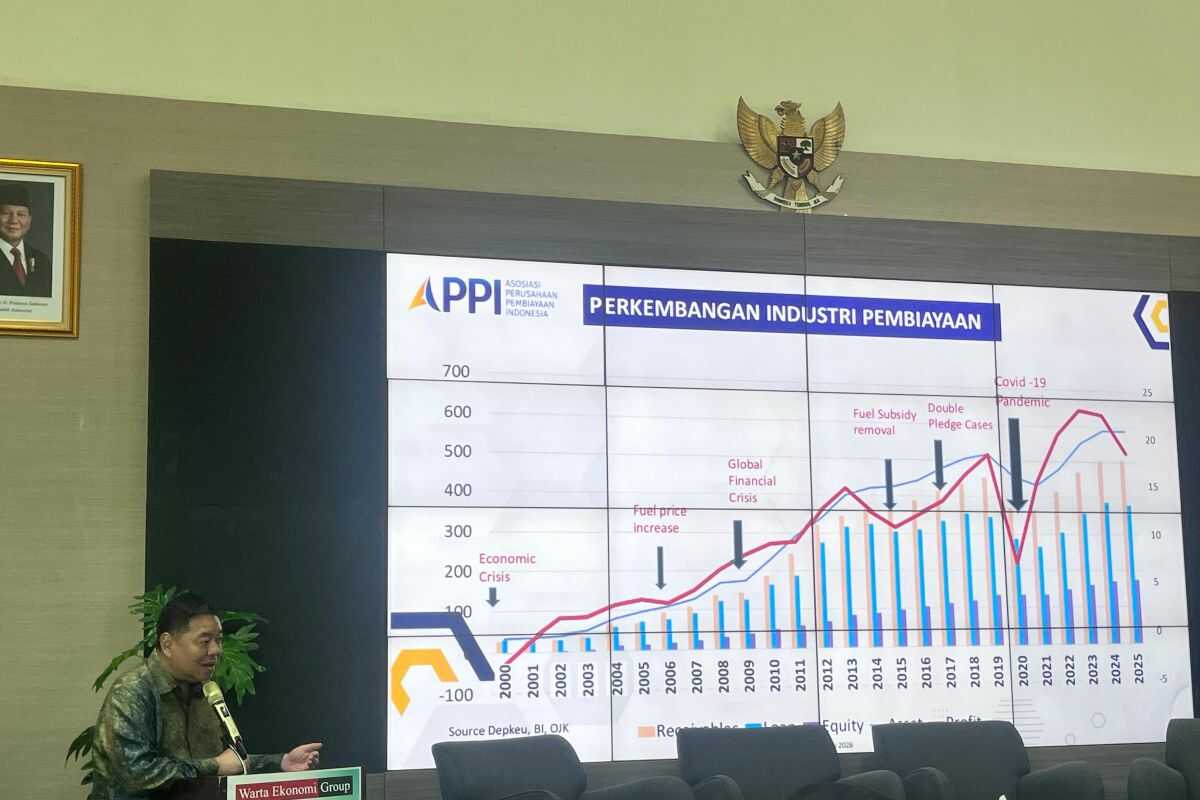
Jakarta (ANTARA) - The Supervisory Board of the Indonesian Financing Companies Association (APPI), Gusti Wira Susanto, has outlined four types of debtor profiles in the automotive finance industry.
“Firstly, there are customers who are willing and able to pay their instalments. This category accounts for approximately 90% of the company’s debtors,” he said at a seminar entitled “Unraveling the Complexities of High Non-Performing Loans and Debt Collection Challenges” in Jakarta, Thursday.
The second type consists of those who have good intentions to pay but are experiencing temporary difficulties due to certain circumstances, such as urgent family needs or a decrease in income.
In such situations, financing companies generally provide various solutions, ranging from restructuring to adjusting the tenor of the loan.
“The solution is not to sell the car or mortgage it. There are many options, such as restructuring or extending the tenor to reduce the instalment amount. So, if you have financial problems, come to the financing company, discuss the problem, and find a solution,” said Gusti.
The next category of debtors is those who are able to pay but unwilling to do so. He stated that many debtors of this type are considered to have bad intentions.
The last type of debtor is those who are unwilling and unable to pay their instalments. They usually sell the vehicle while it is still under financing. This practice of selling vehicles with only the “STNK” (vehicle registration certificate) and without the “BPKB” (vehicle ownership certificate) can potentially lead to criminal consequences for both the seller and the buyer.
Gusti believes that the complexity of the problems with the fourth type of debtor has increased since the Constitutional Court (MK) issued a ruling in 2019, which reinterpreted the provisions on enforcement in Law Number 42 of 1999 concerning Fiducia. This interpretation introduced the requirement for the debtor’s consent and opened the possibility of having to go through court in certain conditions.
In practice, this interpretation has created tension between legal norms and the reality on the ground, because enforcement is essentially a coercive measure that is carried out when voluntary compliance is not achieved. This situation, he said, has been exploited by various parties, including members of social organisations that claim to protect defaulting debtors, and has encouraged the proliferation of problematic vehicle sales.
On the other hand, Gusti also explained that there is a serious problem in the form of debt collection actions carried out by debt collectors who work outside of procedure, including the use of violence and intimidation. Debt collectors, he said, should act based on a clear mandate, be a legal entity, carry complete documents, and have professional certification issued by a registered Professional Certification Agency (LSP).
“So, every debt collector must be certified, must be trained, and must have training. Certification is issued by the LSP,” said the APPI Supervisory Board.