
Appealing to DPR, Banten Teachers' Forum Demands Certainty on Allowances, PPPK Contracts until Retirement
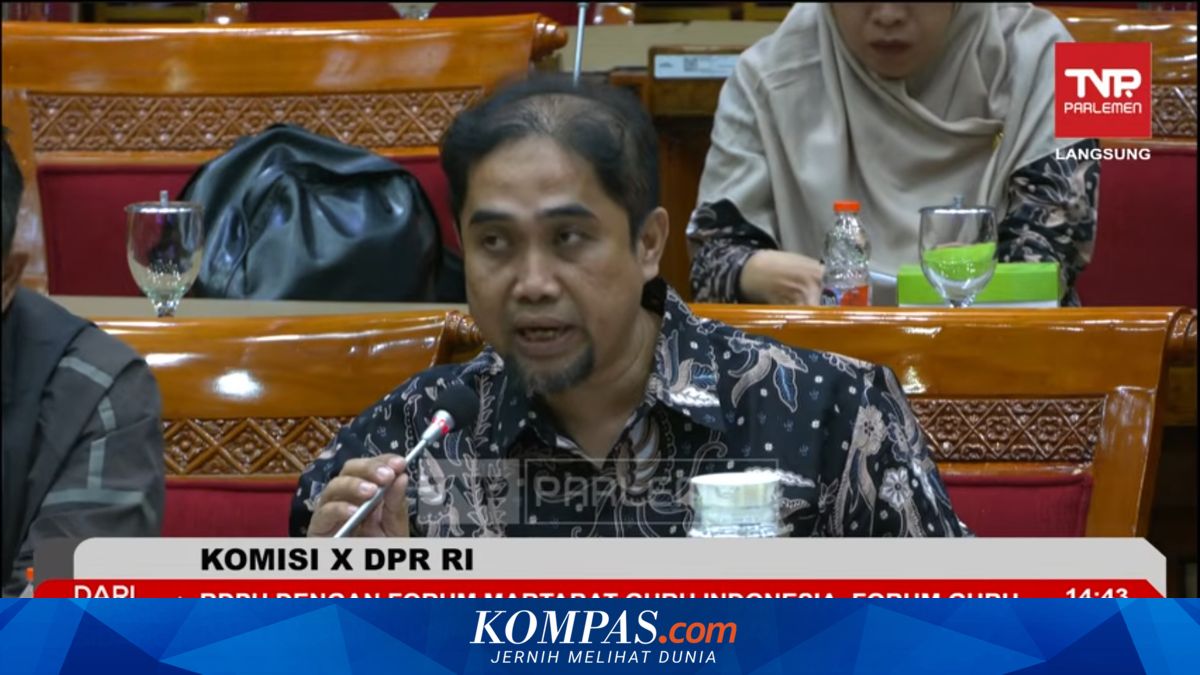
JAKARTA - The chairman of the Banten Teachers’ Forum, Agus Slamet Mulyawan, has revealed ongoing disparities in welfare experienced by Government Employees with Work Agreements (PPPK) teachers, particularly regarding performance allowances deemed unequal to those of Civil Servants (PNS).
According to Agus, starting in 2026, there will be differential treatment viewed as discriminatory towards PPPK teachers.
He noted that performance allowances, previously equivalent to those for PNS, have instead been reduced in several regions.
He assessed that this situation creates injustice for PPPK teachers who have carried out their dedication duties in schools.
In his view, teachers seem faced with a choice between dedication and a decent livelihood.
The Banten Teachers’ Forum is thus advocating for mandatory regulations from the central government, so that local governments have no leeway to reduce or eliminate performance allowances.
“We implore Commission X of the DPR to push for regulations so that the Ministry of Home Affairs and the Ministry of Finance issue binding rules for local governments to provide decent allowances, on time, and without discrimination based on status,” he said.
He stated that PPPK teachers have not yet been involved in the selection process for prospective school principals or school supervisors.
“We hope for clarity on career paths. Currently, we are not involved in the selection process for prospective school principals and school supervisors,” he said.
The Banten Teachers’ Forum also proposes certainty of employment until retirement age.
Currently, PPPK teachers’ contracts last for five years, with the second batch expected to end in February 2027.
“We propose employment until retirement age without periodic evaluations. If there are disciplinary violations or field issues, we are certainly ready to follow the applicable rules,” he said.
He hopes that the DPR can urge relevant ministries, particularly in basic and secondary education, to introduce policies that provide certainty of status and welfare for PPPK teachers across all regions.