
Apkasindo hopes government will support palm oil mills without plantations
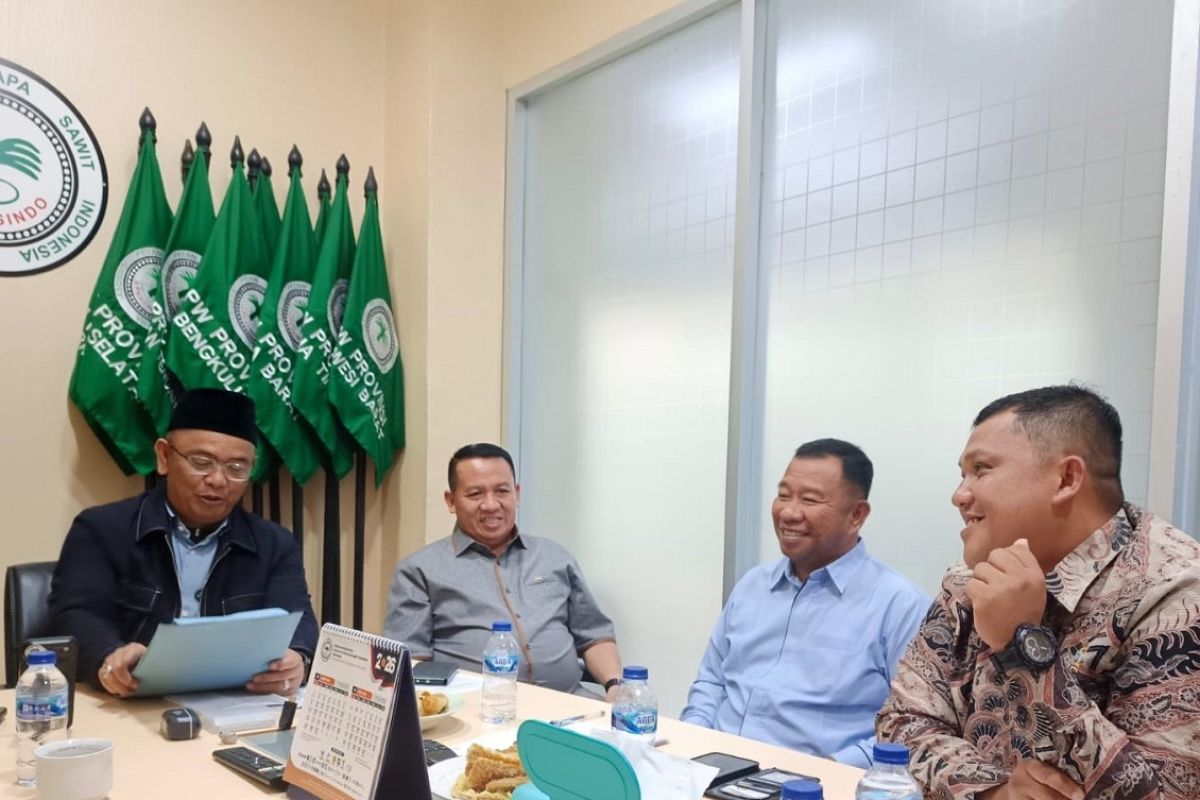
Jakarta (ANTARA) - The Indonesian Palm Oil Farmers’ Association (Apkasindo) hopes for government support for palm oil mills (PKS) without plantations, as their presence can improve the welfare of palm oil farmers, especially independent smallholders.
General Chairman of the Apkasindo Central Board, Gulat ME Manurung, stated that the existence of commercial PKS or mills without plantations makes the pricing system for fresh fruit bunches (TBS) from partnered and independent farmers more competitive and healthy.
“A fair TBS palm oil pricing system is very important for improving the welfare of palm oil farmers, especially independent smallholder farmers,” he said in his statement in Jakarta on Friday.
However, he continued, currently the only hope for independent farmers—commercial palm oil mills (mills without plantations)—is instead facing closure due to proposals from parties seeking to monopolise the sector.
Gulat mentioned that out of 6.87 million hectares of palm oil plantations managed by farmers, only 6.8% are partnered farmers, while 93.2% are independent or self-reliant farmers.
“If commercial PKS are truly closed, the impact will be deeply felt by millions of independent farmers. Moreover, there are currently 6.87 million hectares of smallholder palm oil plantations that support 17 million households (not including wives and children) of palm oil farmers and workers,” he said.
According to him, there are several benefits received by independent farmers from the presence of commercial palm oil mills, namely that the TBS palm oil market becomes more competitive because it directly maintains stability and price competitiveness at the farmer level, both partnered and independent.
Additionally, access for independent farmers becomes easier to sell their palm fruit because the presence of commercial palm oil mills will reduce queues for palm fruit compared to selling to conventional palm oil mills (nucleus-plasma).
“Because conventional palm oil mills will prioritise processing fruit from their own plantations and buying from partner farmers,” he said.
Furthermore, the presence of commercial palm oil mills creates healthy competition, with no monopoly by one or two mills.
Commercial palm oil mills, according to him, also drive regional economic growth through labour absorption, investment creation, and money circulation in the community.
Gulat emphasised that what is currently needed is an effort to ensure all conventional PKS comply with government regulations, particularly the provincial TBS price determination, while for commercial PKS, at least 20% of their raw materials should come from independent partners as regulated by Agricultural Ministry Regulation 13/2024.
Apkasindo regrets the emerging discourse to ban palm oil mills without plantations, as these mills also have legal backing through KBLI 10431 (Crude Palm Oil Industry) related to processing, in line with licensing norms stated in Government Regulation No. 28 of 2025 and Ministry of Industry Regulation No. 37 of 2025.
As a solution, according to him, the government should require all palm oil mills without exception to partner with farmers, at least 20% of their needs. Through partnerships, all supplies of fresh fruit bunches (TBS) palm oil will be ensured to come from their partner farmers and receive prices set by the Plantation Agency (Disbun).
“Apkasindo’s partnership scheme proposal benefits all parties, both conventional palm oil mills, commercial PKS, independent palm oil farmers and plasma, namely the certainty of TBS supply,” he said.
Meanwhile, Chairman of the South Bangka Regency DPRD, Erwin Asmadi, expressed support for the existence of palm oil mills without plantations because they protect TBS palm oil prices.
“The TBS palm oil prices received by farmers in South Bangka are very low, below Rp3,000/kg. Far below the provincial TBS price determination,” he said during an audience with the South Bangka Regency DPRD apparatus, Bangka Belitung Province, with the Apkasindo Central Board.
Therefore, he rejects proposals to ban palm oil mills without plantations because farmers need price balance and fair trading systems.
“It is best to have synergy and balance between palm oil mills with and without plantations,” he said.