
APJATEL remains committed to rolling out fibre optic networks despite rising costs
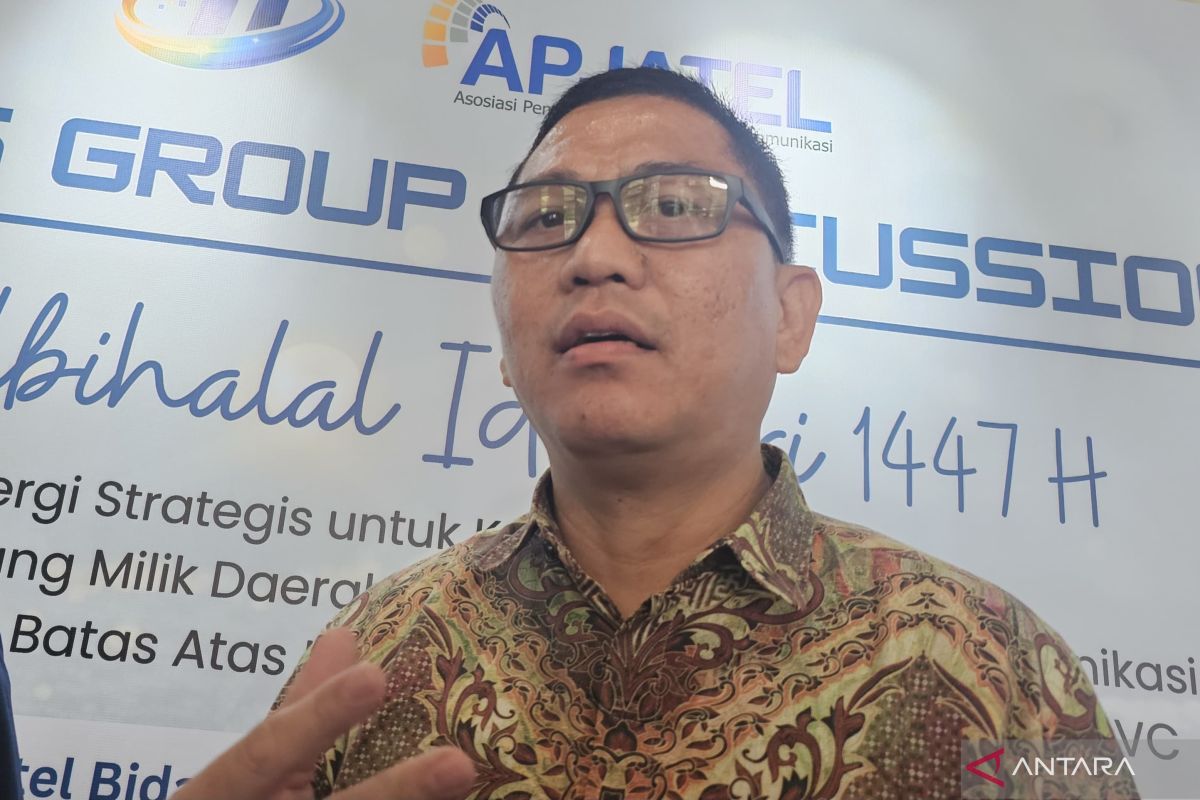
Jakarta (ANTARA) - The General Chairman of the Association of Telecommunications Network Providers (APJATEL), Jerry Mangansas Swandy, stated that industry players remain committed to deploying fibre optic networks, even as costs could rise due to the war involving the United States, Israel, and Iran in the Middle East region.
“We in the industry will continue to build. Based on Ministry of Communication and Informatics Regulation No. 5 of 2021, there is a commitment there that network providers must deploy networks,” Jerry said in a brief interview in South Jakarta on Thursday.
“However, the network deployment now is no longer in normal conditions because there are indicators affecting it,” he added.
Jerry exemplified that essential raw materials for fibre optic deployment, such as corning and High Density Polyethylene (HDPE), have risen in price due to the war.
According to him, the price of corning has increased because, in addition to being needed for telecommunications network deployment, it is also used in weapon manufacturing.
The price of HDPE, used as a covering for fibre optic cables, has also risen.
“HDPE is the cover for fibre optics. In the field, you can see it in green, red, orange colours. That’s HDPE. Its price has gone up,” he said.
“This means that technically, it will certainly be affected as well,” Jerry said, referring to the costs of fibre optic deployment.
Nevertheless, Jerry stated that APJATEL members remain committed to deploying fibre optic networks, even if the results may be lower than the targets.
“For example, a company’s target for one year is to deploy 50 kilometres, but it might end up being only 10 kilometres,” Jerry said.
If conditions worsen further, APJATEL plans to apply for incentives from the government so that the fibreisation programme can continue.
“If indeed it becomes unmanageable later, say heading towards an economic blackout, then we have no choice,” Jerry said.
“We experienced this condition during COVID-19 as well; we requested incentives from Kominfo at that time, but it did not eliminate the obligations,” he added.