
Apindo Warns Government Not to Be Complacent Despite Positive Q1 2025 Investment Performance
JAKARTA, investor.id - The Indonesian Employers’ Association (Apindo) has assessed that investment performance is on a positive trend in Q1 2025. However, the government must not become complacent, as significant challenges remain in achieving the investment realisation target of Rp 1,905.6 trillion for 2025.
According to data from the Ministry of Investment and Downstreaming/Investment Coordinating Board (BKPM), investment realisation in Q1 2025 reached Rp 465.2 trillion. Domestic direct investment (PMDN) accounted for Rp 234.8 trillion, or 50.5% of total investment realisation, whilst foreign direct investment (PMA) contributed Rp 230.4 trillion, or 49.3% of the total.
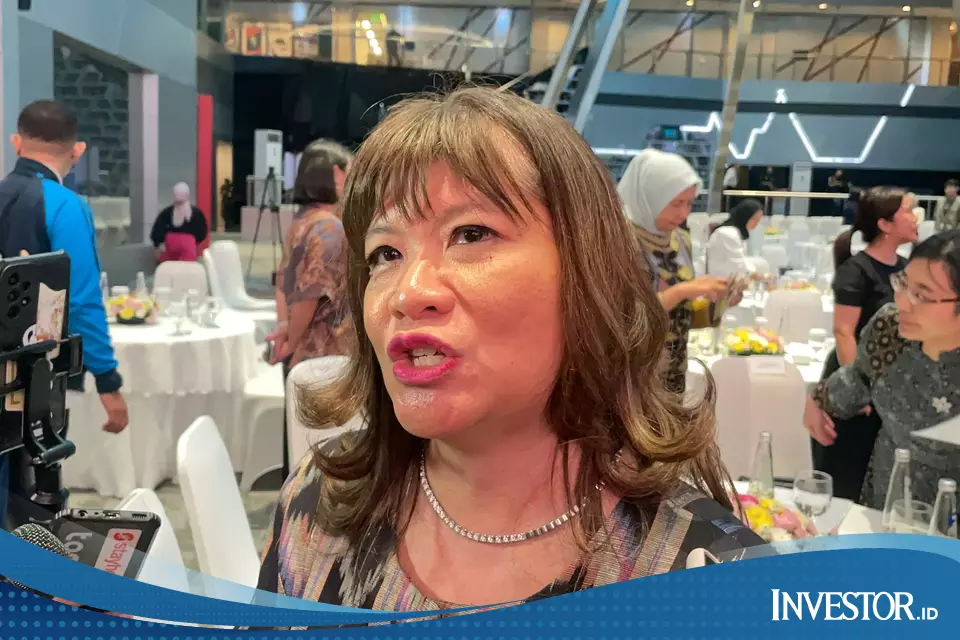
Apindo Chairman Shinta Widjaja Kamdani said the growth in both foreign and domestic investment was inseparable from the sustained efforts undertaken since 2024. Investment in downstreaming has also attracted considerable investor interest.
“Our response is that this is positive, but we must also be cautious. We should not be lulled by these good figures because we know there are many challenges ahead,” said Shinta in Jakarta on Tuesday (29/4/2025).
Shinta noted that efforts to boost investment still face numerous challenges, ranging from complex licensing procedures and regulatory obesity to bureaucratic obstacles. She acknowledged that the government has been working to address these issues through deregulation and the revitalisation of labour-intensive industries.
“In principle, we also help the government by not only raising problems but also proposing solutions. From the ground, we continuously convey the specific obstacles being faced,” Shinta explained.
Secretary-General of the Indonesian Young Entrepreneurs’ Association (Hipmi) Anggawira said the Q1 2025 investment achievement still provides optimism despite a slight slowdown compared to Q1 2024. The 15.9% year-on-year increase demonstrates that Indonesia’s appeal as an investment destination remains strong, particularly amid global pressures such as China’s economic slowdown and geopolitical uncertainty.
“However, this slowdown also serves as an early warning that our investment strategy needs to be adjusted to increasingly protectionist and selective global conditions,” said Anggawira.
He noted that trade tensions between the United States and China could spread to other countries, disrupting the global investment climate. As a result, global investors are now more selective and have begun divesting from countries perceived as lacking policy certainty.
“In this context, Indonesia needs to position itself as a safe harbour by strengthening regulatory clarity, investor protection, and accelerating the downstreaming ecosystem. If this is not anticipated, the 2025 national investment target could be affected, particularly on the foreign investment side,” he concluded.