
APII Officially Launched, Minister for Administrative Reform Urges Uncompromising Integrity
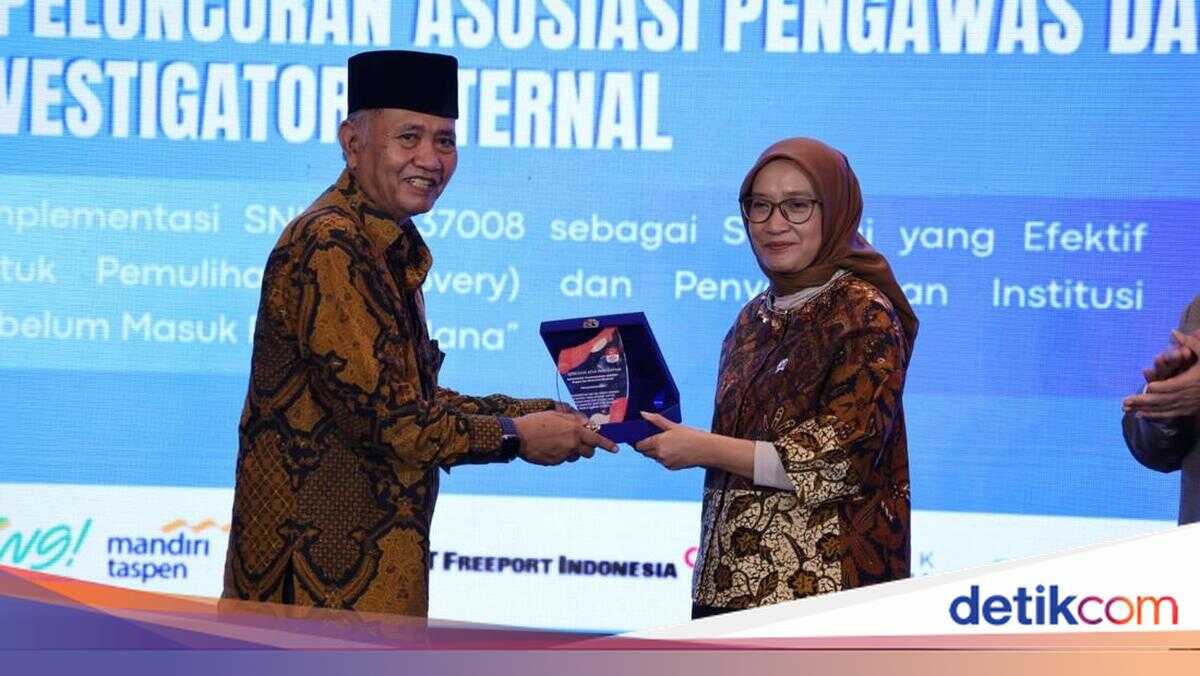
The Association of Internal Supervisors and Investigators (APII) has been officially launched. In line with the Integrity Zone concept frequently championed by Minister for Administrative and Bureaucratic Reform (PANRB) Rini Widyantini, APII brings together and strengthens internal supervisors to uphold the dignity of the profession.
According to Rini, there are three fundamental values serving as the main pillars for auditors: integrity, independence, and competence. However, collective commitment is required to uphold these three core values.
She expressed her hope that the profession must stand on honour, credibility, and moral responsibility.
“APII is expected to uphold integrity without compromise, whereby in every audit process, investigation, and recommendation for improvement, integrity must stand above all interests,” Rini stated firmly in a written statement on Tuesday (24/2/2026).
These remarks were delivered by Rini at the Official Launch of the Association of Internal Supervisors and Investigators (APII) in Jakarta on Monday (23/2).
APII is expected to continually strengthen professionalism based on global standards, including the development of competencies and credible investigative practices. Rini urged APII to support the Government Internal Supervisory Apparatus (APIP) in preventing the abuse of authority by officials.
“Beyond that, APII must be capable of making tangible contributions to government and corporate governance through constructive recommendations, early warning systems, and continuous improvement,” Rini said.
In tandem with the strengthening of Integrity Zones, the role of internal supervisors continues to evolve. Oversight no longer functions merely as a watchdog focused on compliance and detecting violations. Internal supervisors must become strategic partners for their organisations.
The internal oversight approach involves conducting risk-based audits, focusing on areas with genuine impact. Auditors must not only identify errors but also provide constructive recommendations. Most importantly, supervisors must serve as an early warning mechanism so that potential problems can be prevented from the outset.
Ultimately, professional oversight does not merely safeguard systems but preserves trust.
“Public trust is the foundation of government legitimacy and organisational sustainability. When oversight is strong, objective, and credible, governance will be increasingly trusted,” Rini concluded.