
API Pushes for Geothermal Energy Utilisation through IIGCE 2026
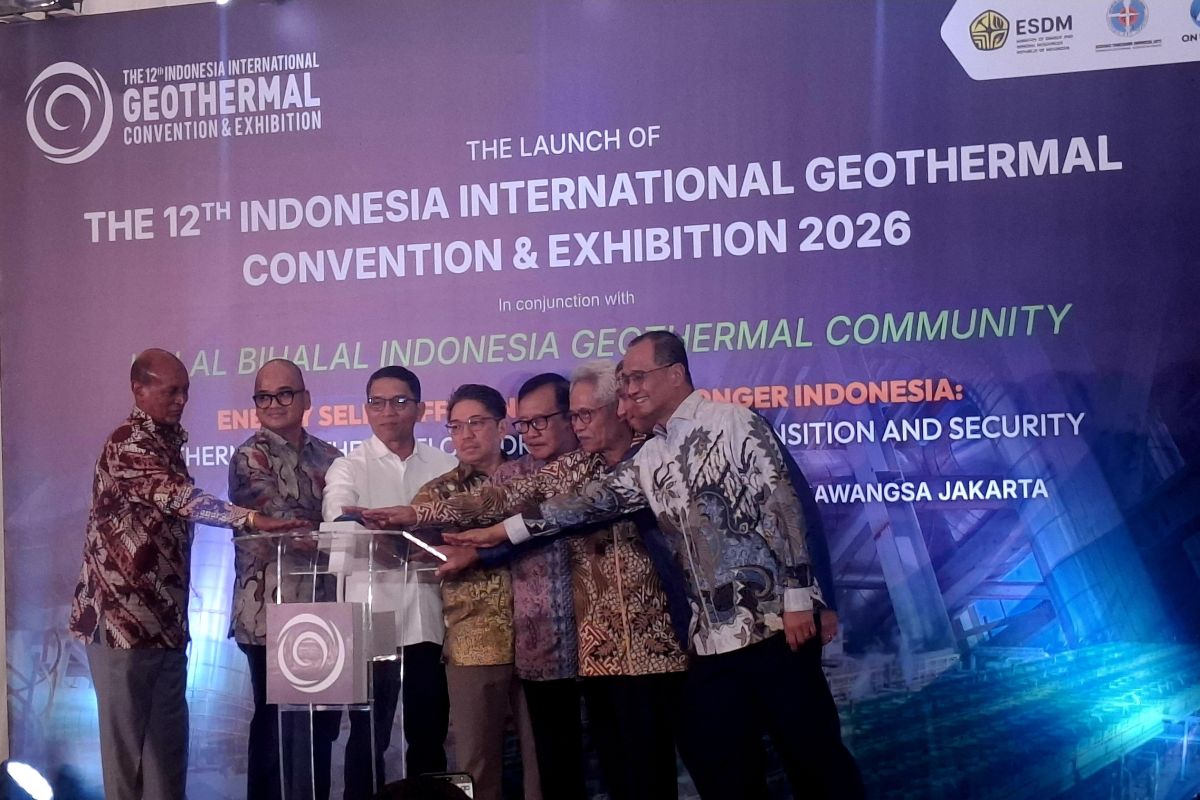
The Indonesian Geothermal Association (API), also known as Inaga, is striving to accelerate the utilisation of geothermal energy through the organisation of the 12th Indonesia International Geothermal Convention & Exhibition (IIGCE) 2026. The event will be held from 19-21 August 2026 at the Jakarta International Convention Center (JICC). This international-scale forum is intended to expedite the development of geothermal as the primary baseload source to achieve Indonesia’s energy independence and resilience, featuring over 100 global speakers and attended by thousands of professionals from various countries.
API General Chairman Julfi Hadi emphasised that geothermal energy plays a crucial role in driving the energy transition while ensuring national energy security. According to him, the current momentum for geothermal development is highly important amid evolving global dynamics.
Compared to previous years, the push to strengthen the energy sector is considered much stronger, particularly with global political dynamics such as conflicts in Iran and Ukraine. These conditions make energy security issues increasingly urgent, so Indonesia needs to prioritise the utilisation of domestic resources (indigenous resources) that are baseload in nature, one of which is geothermal.
In addition, Julfi highlighted the increasingly pressing challenge of climate change. He even described the current situation as a climate catastrophe that demands acceleration of the energy transformation in Indonesia. Geothermal energy is seen as a strategic solution because it is a clean, stable energy source derived from domestic potential.
“The fundamental step is how to accelerate the geothermal potential,” he stated during the IIGCE 2026 launch press conference in Jakarta on Wednesday (8/4).
Julfi assessed that the main problem in geothermal development in Indonesia so far lies in the commercial aspect. This has actually been understood collectively by industry players. In 2024, API, along with the Ministry of Energy and Mineral Resources (ESDM) and consultants, conducted a recalculation of the economic viability of geothermal projects.
The calculation refers to a fair pricing scheme since 2012, including the return rate regulated in regulations, expectations of returns from developers (IPP), and the gaps that still exist. Thus, the main issues faced by this industry are considered very clear.
Based on over 40 years of experience in geothermal development in Indonesia, there are several key factors that can drive acceleration in this sector. One of the most important is collaboration. Collaboration is needed not only among developers (IPP), but also between IPP and service companies, as well as between business actors and the government. In this regard, the government’s role includes the Ministry of ESDM, PT PLN (Persero), and the National Energy Council (DEN). With strong collaboration across the entire ecosystem chain, the main obstacle in the form of commercial aspects that have long been a bottleneck is expected to be overcome and trigger accelerated geothermal development.
To address these issues, there are two main approaches that can be taken, namely through the role of the government and business actors. From the government side, more applicable incentives (workable incentives) and tariff adjustments that can improve project economics are needed.
One of the expectations at the IIGCE event is strengthening policies through Presidential Regulation Number 112 of 2022 on the Acceleration of Renewable Energy Development for Electricity Provision.
“This focuses on improving the tariff scheme and more attractive incentives for investors,” said Julfi.
Meanwhile, from the geothermal developers’ side, the efforts needed are to increase efficiency, particularly through reducing capital expenditure (capex) and optimising production. However, reducing capex cannot be done sufficiently with a conventional approach that only yields limited efficiency.
According to him, breakthroughs are needed, both through long-term contract strategies, innovations in manufacturing, technology applications, and other approaches. On the other hand, production optimisation also becomes key to improving overall project performance.
“Through IIGCE 2026, we want to strengthen global collaboration to address challenges and leverage opportunities in geothermal development in Indonesia and the world,” Julfi asserted.
Under the theme “Energy Self-Sufficiency for a Stronger Indonesia: Geothermal as The Baseload Driving Energy Transition and Security”, IIGCE 2026 arrives at a crucial moment in the national energy transition that encourages all stakeholders to accelerate the utilisation of geothermal potential.
This forum will serve as a strategic discussion space addressing various important issues, from technological innovations in exploration and drilling, sustainable financing schemes, supportive policies for industry competitiveness, to the contribution of geothermal to Indonesia’s net-zero emission targets. In addition, the forum is also designed to produce concrete policy recommendations and encourage strategic partnerships between domestic and foreign industry players.
The government has expressed full support for the organisation of the forum.
Secretary General of the Ministry of ESDM Dadan Kusdiana stated that geothermal is the main key in Indonesia’s energy transition and security towards 2045.
“IIGCE 2026 becomes an important momentum for Indonesia to showcase its commitment and real achievements in geothermal development to the world,” he said.
Over the three days of the event, IIGCE 2026 will feature high-level conferences, interactive panel discussions, exhibitions