
APHI Teams Up with Academics to Accelerate Forest-Based Multi-Enterprise Development
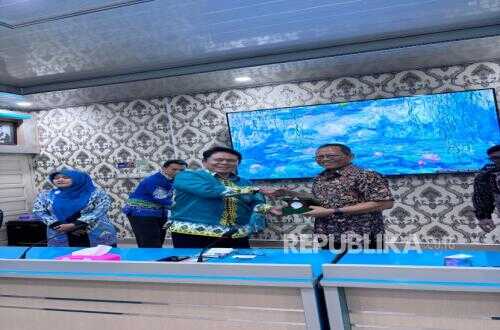
Multiusaha Kehutanan (MUK) development in Lampung is to be accelerated through collaboration with various parties, including academics, to realise an industrial-scale MUK model capable of delivering a multiplier effect for the national economy while increasing the value added of forest areas, APHI chairman Soewarso said on Friday (6 March 2026).
He revealed that forest multi-enterprise practices in Lampung have already been implemented in several areas with activities located within forest areas. This experience is an important asset for developing a more integrated MUK model at the landscape level.
Lampung is considered to have several advantages in pushing forward MUK development. The natural resources are relatively fertile with fairly flat terrain. Infrastructure and accessibility of the area have also been adequately provided.
Soewarso noted that local human resources already have experience in managing forestry commodities and agriculture. Local government support also opens space for more structured forest enterprise development.
“The development of MUK in Lampung will focus on intensifying governance of business activities towards sustainable forest management, while strengthening governance and the supply chain from upstream to market through improvements in production factors including quantity, quality, and continuity,” he said.
He added that collaboration between business, local government, higher education, and the community is a key success factor for MUK development. The synergy among the parties is expected to accelerate the implementation of a productive yet sustainable forest enterprise model.
Developing demonstration plots (demplots) or pilot projects is also deemed important as a research basis and shared learning in designing a management model that fits regional characteristics. Through these demplots, the parties can formulate a plan for developing forest enterprises based on flagship commodities that are adaptable to Lampung’s site conditions.
The Dean of the Faculty of Agriculture at Universitas Lampung, Kuswanta Futas Hidayat, welcomed APHI’s effort to engage universities in developing multi-enterprise forestry in the region.
“We welcome APHI’s effort to collaborate with higher education institutions to accelerate the development of multi-enterprise forestry in Lampung. The region has several flagship commodities such as coffee, chocolate, candlenut, and nutmeg with great potential for development,” Kuswanta said.
He explained that piloting MUK in Lampung’s landscape can be carried out at several potential locations. Tahura (Forest Park) area and Integrated Area Development (IAD) zones are considered to have an economic base that can support programme implementation.
Lampung also has significant potential in the non-wood forest products (HHBK) sector, especially coffee, the majority of which production comes from forest areas.
“We note that around 60 per cent of Lampung’s HHBK production from coffee originates in forest areas, and its potential remains very large to be developed further through sustainable management approaches,” he said.
Kuswanta added that the Forestry Department (Department Kehutanan) at Unila’s Faculty of Agriculture has several research domains relevant to supporting MUK development. These include Social Forestry and Science and Technology Forestry, which focus on strengthening community-based forest governance and the use of technology.
The approach is also seen as an important instrument to help resolve tenure conflicts through a more inclusive and collaborative forest management model.
The collaboration between APHI and Universitas Lampung’s Faculty of Agriculture is expected to strengthen the integration between academic research and on-the-ground implementation. This synergy is also expected to promote productive, inclusive, and ecologically sustainable forest management that benefits communities and regions economically, socially, and environmentally.