
APHI Pushes for Accelerated Development of Landscape-Based Multi-Enterprise Forestry
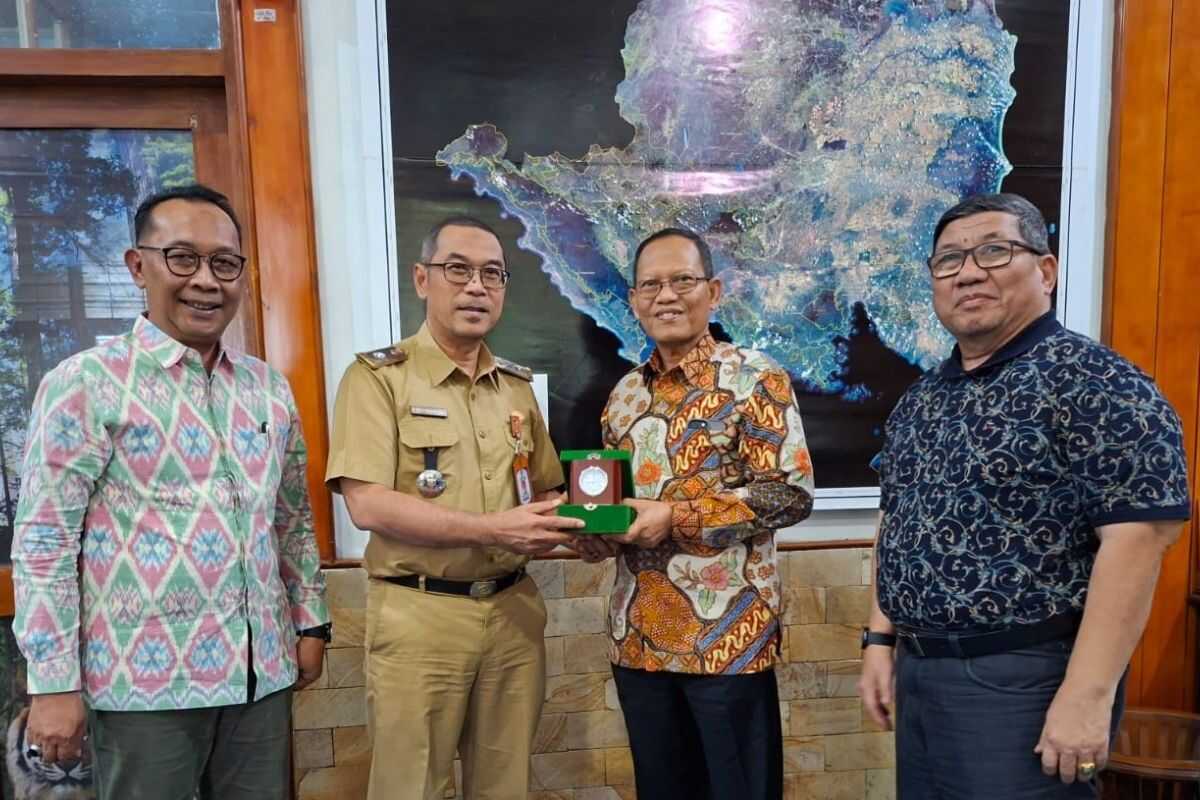
Jakarta (ANTARA) - The Indonesian Forest Entrepreneurs Association (APHI), together with the Indonesian Chamber of Commerce and Industry (Kadin), is pushing for accelerated development of landscape-based multi-enterprise forestry (MUK) to be used as a pilot project, including Lampung’s MUK. APHI President Soewarso said Lampung has substantial natural-resource potential as a producer of coffee, cocoa and pepper, supported by adequate road and port infrastructure and strong market access. ‘We hope the Lampung landscape of MUK can become a pioneer and national exemplar,’ he said in a statement in Jakarta on Wednesday.
In relation to this, he added that APHI, together with the Lampung Provincial Forestry Service, is reinforcing the synergy for developing landscape-based multi-enterprise forestry (MUK) as a model for productive and sustainable forest management. The strengthened collaboration is aimed at optimising the potential of non-timber forest products (NTFPs) and accelerating the downstream processing of regional flagship commodities through partnerships between holders of the Forest Utilisation Business Permit (PBPH) and Perhutanan Sosial (PS) groups.
He said the implementation of the model requires support from all parties, including local government, business actors, and social forestry groups. Soewarso emphasised that the collaboration between PBPH and Perhutanan Sosial within the landscape-based MUK framework is expected to strengthen the forestry sector’s contribution to the regional economy while safeguarding the sustainability of forest functions.
Meanwhile, Lampung Province Forestry Service Head Yayan Ruhyansyah said Lampung has great potential in developing MUK, particularly in non-timber forest product (NTFP) commodities. “Lampung has great potential for developing MUK, especially NTFP commodities such as coffee, cacao, cardamom, avocado, nutmeg, kemiri, and jengkol, which are already entering the downstream stage and are managed by Perhutanan Sosial (PS),” he said.
He explained that the development of MUK in Lampung is directed through an agroforestry pattern that not only maintains ecological balance but also promotes higher economic value for communities through partnerships between PBPH holders and Perhutanan Sosial (PS) groups. According to him, the success of MUK development is determined by productivity, quality and continuity of products, and that an open market governance is required so MUK products have assured market access and competitiveness. “The keys to the success of MUK are productivity, quality, and continuity. Downstream processing must also be integrated within PBPH areas in partnership with PS to build a robust value chain from upstream to downstream,” he said. He added that in Lampung, MUK development has already been underway in three PBPH areas applying the scheme. In addition, there are 451 Perhutanan Sosial groups with a total area of about 209,000 hectares, involving around 95,000 households.