
APHI Encourages Multi-Stakeholder Collaboration for Sustainable Forest Management in Bangka Belitung
The Indonesian Forest Entrepreneurs Association (APHI) is encouraging the acceleration of landscape-based Multi-Purpose Forestry (MUK) implementation in Bangka Belitung Province as part of efforts to increase forest area productivity and strengthen economic empowerment of surrounding communities. This development is being directed through multi-stakeholder collaboration involving the central government, regional government, business actors holding Forest Utilisation Business Permits (PBPH), and communities living around forest areas.
The landscape-based approach is considered important for optimising forest resources sustainably, both through the utilisation of timber and non-timber forest commodities. In addition to improving production forest management performance, the Multi-Purpose Forestry model is also expected to strengthen the value chain of local commodities while opening opportunities for downstream industrialisation based on forest areas.
These efforts also align with government policy in expanding social forestry practices, whilst promoting partnerships between forestry companies and communities as a strategy for resolving social conflicts and improving the welfare of communities around forest areas.
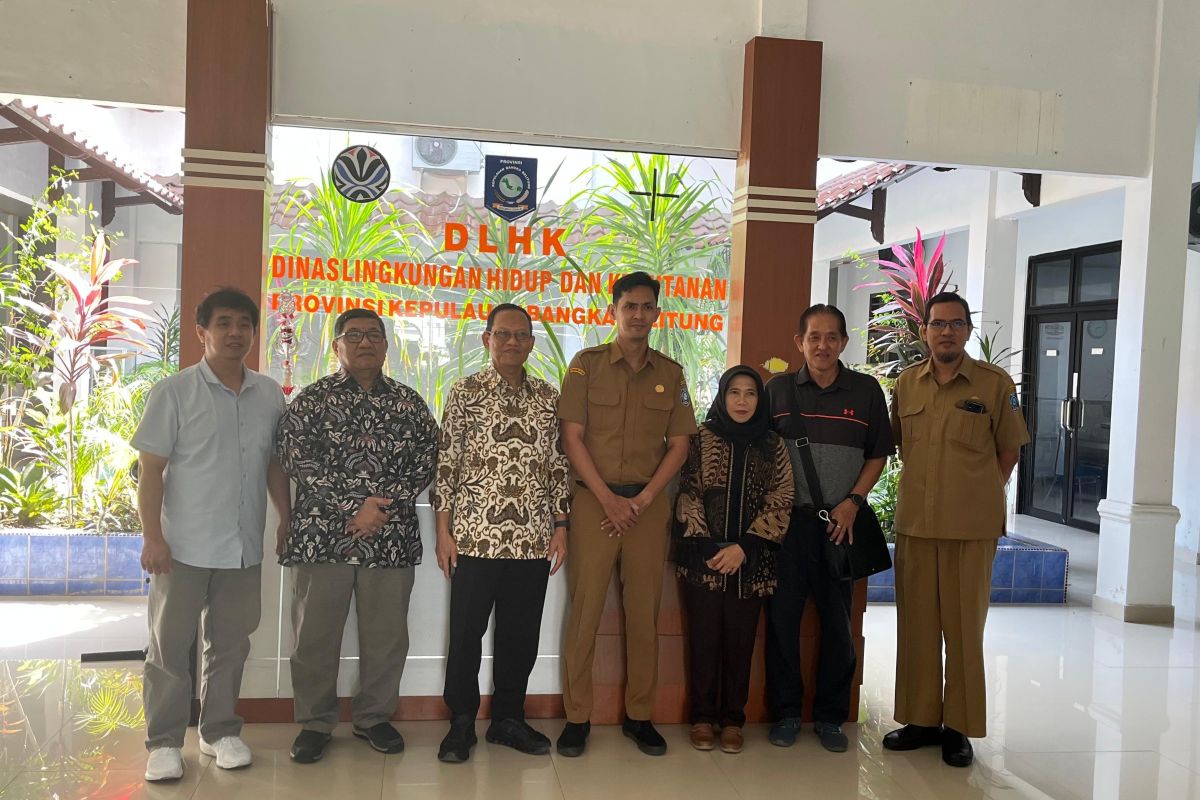
This emerged during a meeting between APHI and the Bangka Belitung Provincial Environment and Forestry Service on 10 March 2026, which discussed opportunities for strengthening sustainable forest management whilst promoting economic empowerment of communities through the development of regional flagship commodities.
Heru Prayoga, Head of Forest Area Governance and Utilisation at the Bangka Belitung Environment and Forestry Service, stated that the provincial government is currently promoting the development of coconut commodities through social forestry schemes as part of a strategy to empower communities and optimise regional economic potential.
“The Bangka Belitung Governor’s programme is directed at developing coconut commodities through social forestry schemes to strengthen community empowerment and establish coconut as one of the region’s flagship commodities,” said Heru.
According to him, the development of these commodities can be supported by companies holding PBPH through forestry partnership patterns with communities. This scheme is considered capable of serving as a solution for resolving social conflicts in forest areas whilst strengthening collaborative sustainable forest management. Heru also added that PBPH permit holders need to conduct potential area mapping to identify opportunities for Multi-Purpose Forestry development, including through coconut commodity development or other commodities suited to the region’s characteristics.
Additionally, MUK development through forestry partnerships needs to be supported by strengthening industrial downstream integration, such as by building processing facilities within or around the working area to increase commodity value-added and strengthen supply chains based on forest areas.
Meanwhile, APHI Chairman Soewarso stated that APHI, together with the Indonesian Chamber of Commerce and Industry (Kadin), continues to encourage the acceleration of landscape-based Multi-Purpose Forestry implementation in various regions, including Bangka Belitung.
“APHI together with Kadin encourages the acceleration of Multi-Purpose Forestry implementation based on landscape approaches to improve PBPH performance through collaboration between central government, regional government, business actors, and communities,” he said.
He assessed that Bangka Belitung has great potential for MUK development because it is supported by various development factors, such as the availability of relatively adequate infrastructure and opportunities for utilising technology to increase the productivity of forestry businesses. Additionally, cooperation with higher education institutions is also considered important for encouraging innovation, research, and development of business models based on sustainable forest resources.
According to Soewarso, MUK development in Bangka Belitung can also be strengthened through social forestry programmes, particularly through concession partnership patterns between PBPH and communities currently being promoted by the regional government.
This approach is expected to create a forest management model that not only focuses on timber production, but also opens opportunities for developing non-timber commodities and other forest-based enterprises that can provide economic benefits for communities.