
APHI and Unila collaborate to strengthen multi-enterprise forestry in Lampung
Jakarta (ANTARA) - The Indonesian Forestry Entrepreneurs Association (APHI) together with the Faculty of Agriculture of Lampung University (Unila) are collaborating to strengthen the development of Forest Multi-Enterprises (MUK) in Lampung Province to increase the added value of forest areas and the contribution of the forestry sector to the national economy.
According to APHI President Soewarso, cross-sector collaboration is important so that MUK development does not merely operate at project scale, but can develop into an industrial-scale forestry business model that provides broad economic impact for communities and the region.
‘The development of forest multi-enterprises must be conducted through collaboration with various parties, including academia, so that an industrial-scale MUK model can be realised that provides a multiplier effect for the national economy while also increasing the added value of forest areas,’ he said in a statement in Jakarta on Saturday.
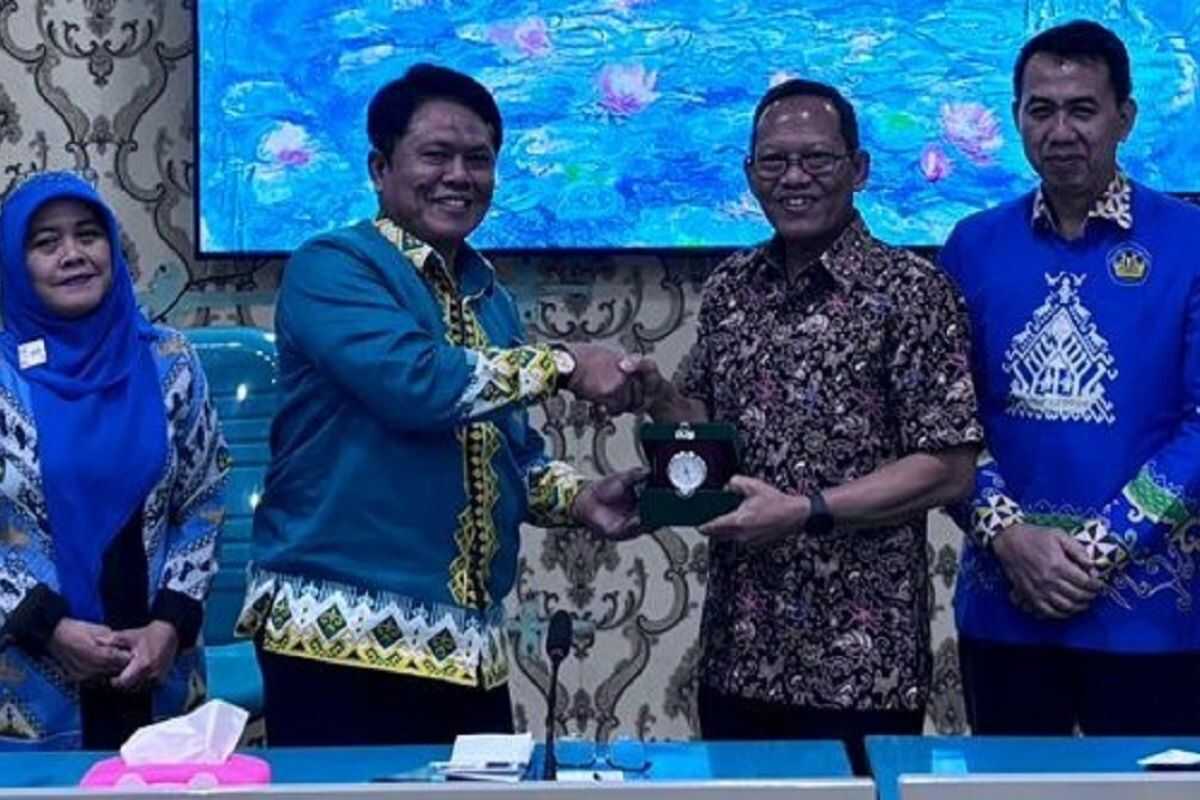
Previously, APHI’s President held a meeting with the Dean of the Faculty of Agriculture Unila, Kuswanta Futas Hidayat, to discuss opportunities for collaboration on research development, the formulation of a site-based management model, and the development of demplots or pilot MUK projects in Lampung landscapes that have adequate natural resources and human resources.
Soewarso added that forestry multi-enterprises in Lampung Province have already been implemented in several areas with activities located within forest areas.
That experience, he continued, is an important capital to develop a more integrated and sustainable MUK model at the landscape level.
He stated that Lampung has a number of advantages supporting the acceleration of MUK development, such as relatively flat and fertile natural resource conditions and adequate infrastructure and accessibility to the area.
Additionally, the available human resources have experience in managing forestry and agricultural commodities, and there is support from local government.
With these advantages, the development of MUK in Lampung will be more directed towards strengthening business governance in line with the principle of sustainable forest management (SFM).
Then, supply-chain strengthening from upstream through downstream to the market through improvements in production factors including quantity, quality, and continuity.
Soewarso emphasised that collaboration among parties is a key factor in ensuring the success of MUK development in the region; synergy between business, local government, higher education, and the community is expected to accelerate the implementation of a productive yet sustainable forestry business model.
He added that the development of demplots or pilot MUK projects is very necessary as a basis for joint research and learning for all parties in designing a management model that suits regional characteristics.
Through these demplots, it is hoped to develop a forestry business development plan based on flagship commodities that is adaptable to Lampung’s site conditions.
Meanwhile, Dean Kuswanta Futas Hidayat of the Faculty of Agriculture, Unila, stated that the area has several flagship commodities such as coffee, cocoa, kemiri (candlenut), and nutmeg with great potential for development.
He explained that piloting MUK development in Lampung’s landscape can be carried out in several potential locations, including in Tahura (Hutan Raya Reserve) areas or within Integrated Area Development (IAD) development zones that already have the regional economic development base.
He also stated that Lampung has great potential in the non-timber forest products (HHBK) sector, particularly coffee, of which much of its production originates from forest areas.
‘We note that around 60 percent of Lampung’s HHBK production comes from forest areas, and the potential remains very large to be developed through sustainable management approaches,’ he said.
Kuswanta stated that the Department of Forestry of the Faculty of Agriculture at the University of Lampung has several relevant study areas to support MUK development, including Social Forestry and Science and Technology Forestry.
Both study areas are considered able to contribute to strengthening community-based forestry governance while supporting the use of technology and innovation in forest management.
According to him, this approach can also be an important instrument in encouraging the resolution of tenure conflicts through a more inclusive and collaborative management model for forest areas.