
APEC ministers push for open trade amid global uncertainty
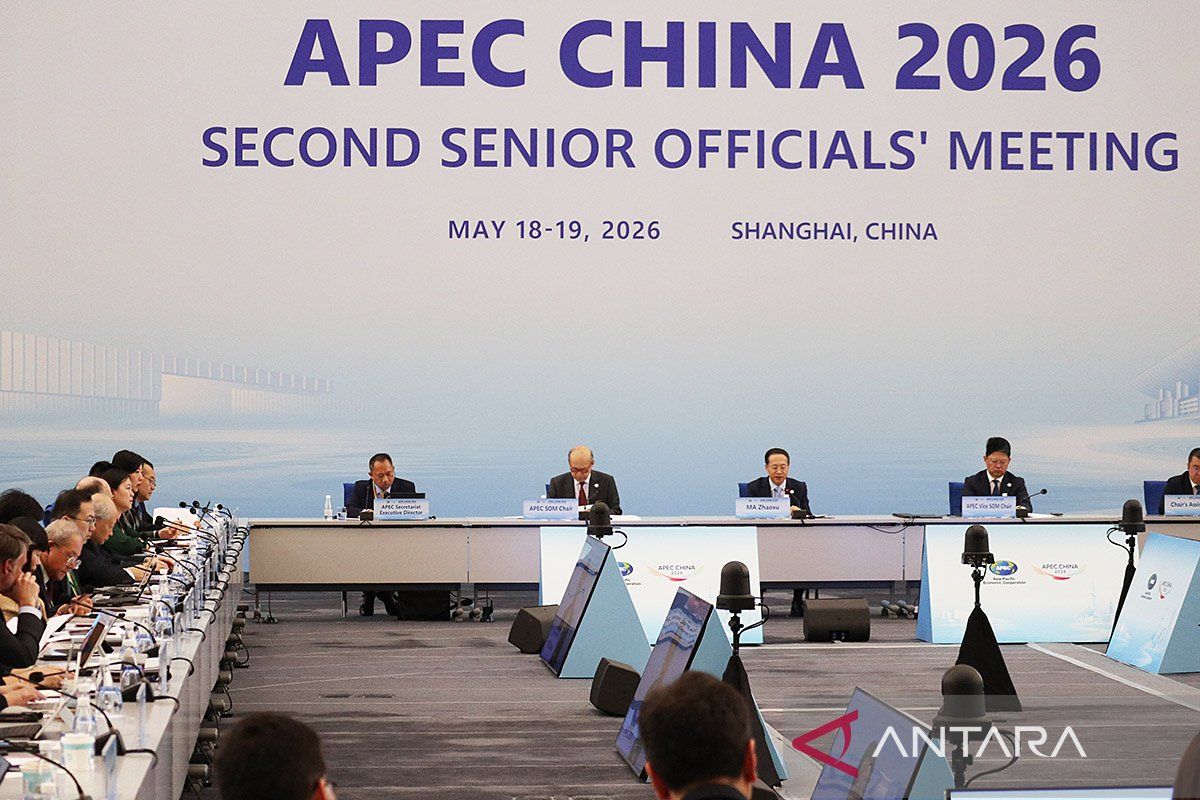
“In the face of these complexities, APEC economies have demonstrated their resolve to jointly uphold the regional economic and trade order,” said Li Chenggang, Vice Minister of Commerce, People’s Republic of China, in APEC statement on its website, on Friday.
Discussions on strengthening the cooperation was held when the APEC ministers met in Suzhou, on Friday, and was held when shifts in trade patterns, supply chains and technology are reshaping the global economy, reinforcing the need for practical cooperation to address shared challenges.
During the meeting, Li Chenggang said that changes unseen in a century are unfolding at rapid speed with protectionism on the rise and risks of trade fragmentation increasing across the region. He outlined some points of responsibilities for APEC economies to navigate the current challenging economic landscape, emphasizing the need for cooperation to ensure the region’s economic resilience and growth.
First, APEC economies must stay true to their founding mission, noting that trade and investment liberalization has always been the region’s way forward through previous crises, from the Asian financial crisis to the global financial crisis.
Second, acknowledging that APEC economies are at different stages of development with varying interests, the value of APEC lies in bringing economies with different interests together.
Vice Minister Li stressed that while APEC is not a negotiating venue, it must take the lead in trade and economic discussions and bring regional trade rules toward greater consensus.
“For agreements already established, we should implement them at a faster speed for early outcomes. For existing differences, we need flexibility and progress in building consensus,” he added.
During the meeting, APEC ministers discussed restoring trust in the multilateral trading system, with focus on advancing the Free Trade Area of the Asia-Pacific (FTAAP) to keep the region economically integrated despite global fragmentation.
Ministers also received an update from Dr Ngozi Okonjo-Iweala, Director-General of the WTO, on developments following the Fourteenth Ministerial Conference (MC14) in Yaounde, Cameroon.
She highlighted the risks to the global economic outlook, noting that further geopolitical tensions and rising oil prices could add pressure to trade flows, supply chains and growth prospects.
As artificial intelligence reshapes global commerce, ministers also examined how APEC economies can harness digital trade and cross-border e-commerce to create various new opportunities, particularly for micro, small and medium enterprises struggling to compete in an increasingly tech-driven market.
Related news: Asia-Pacific region’s economy grew 3.3 percent in 2025
Related news: Indonesia supports China’s APEC push on digital transformation
Translator: Katriana