
APBN Deficit: Said Abdullah Presents Four Policy Recommendations for Fiscal Buffers
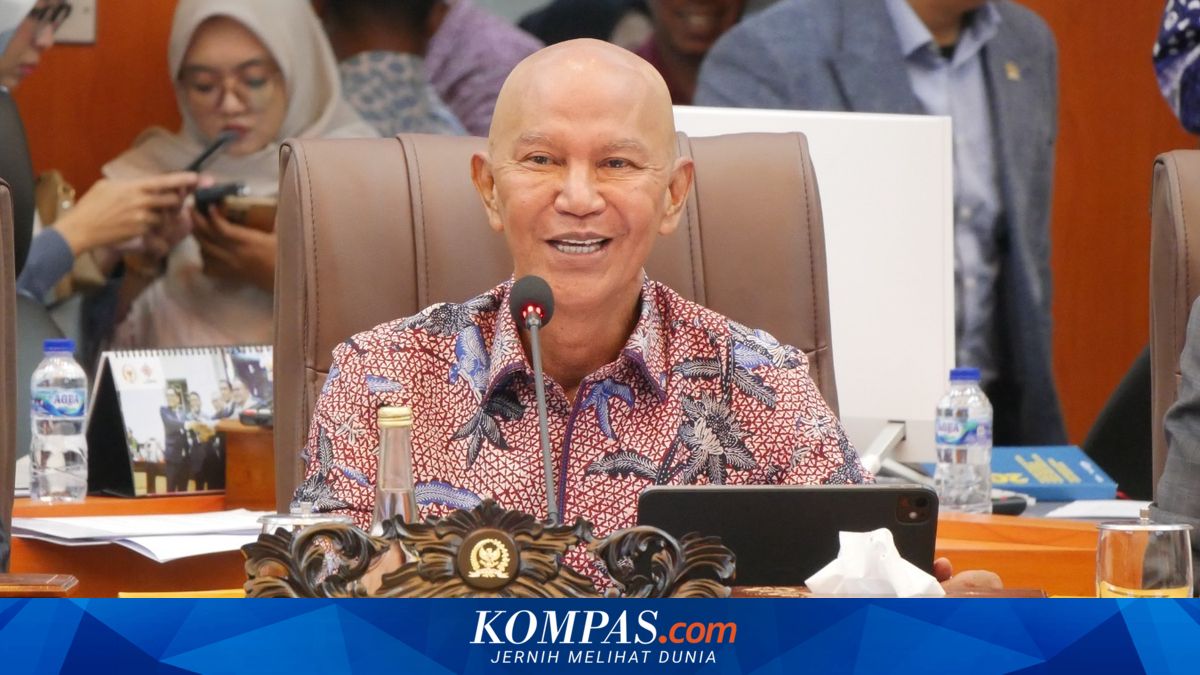
The Parliamentary Budget Committee (Banggar) of the Indonesian House of Representatives is calling on the government to swiftly implement anticipatory measures to address global economic uncertainty.
The Finance Minister, Purbaya Yudhi Sadewa, announced that the state budget (APBN) as of February 2026 is projected to have a deficit of Rp 135.7 trillion, equivalent to 0.53 per cent of gross domestic product (GDP).
Additionally, the conflict in the Middle East has intensified economic pressure, with Indonesian crude oil prices (ICP) experiencing volatility.
In response to these conditions, Banggar Chairman Said Abdullah has presented four recommendations as a strategy to build a strong fiscal buffer (reserves) without breaching the APBN deficit ceiling stipulated by law.
These recommendations are designed not only to prepare fiscal buffers, but also to strengthen Indonesia’s social capital amid various pressures, including reports from economic institutions such as MSCI and Goldman Sachs, as well as rising government debt.
“The turmoil did not begin from late January until now. What I want to convey is that Indonesia is our home. As a home, we must care for and nurture it so it grows and develops together,” Said Abdullah said in a written statement received by Kompas.com on Thursday (12 March 2026).
“We hope the government will sharpen programmes that are truly a priority and urgent. Such programmes must of course continue,” he added.
Secondly, programmes that are not particularly pressing should be postponed temporarily to address global economic uncertainty.
Thirdly, subsidy policies should be sharpened. Said noted that lower-middle income groups must receive support. On the other hand, the distribution of targeted assistance must be reformed, as many recipients of aid are in fact from groups that are not eligible.
Fourthly, real buffers should be prepared for micro, small and medium enterprises (UMKMs) or productive activities. He believes that provision of Rp 3 million per UMKM will be able to stimulate the real sector amid global dynamics.
Said expressed optimism that, with social capital and collective commitment to adhering to fiscal rules, Indonesia will be able to weather global economic shocks safely.
“These four items are hopefully the beginning of change. Indonesia is our shared home,” he said.