
Anticipating the Impact of the Hormuz Strait Closure, Diversifying Oil Imports as the Key
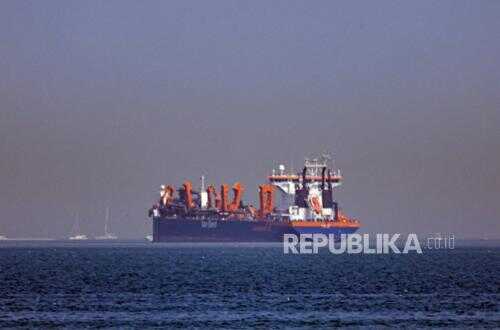
The Indonesian government is preparing a range of scenarios to safeguard national energy resilience following the potential closure of the Hormuz Strait, which could disrupt global oil supplies. Anticipatory measures are being taken to ensure the secure import of crude oil and fuels amid escalating tensions in the Middle East.
The anticipatory steps were discussed at the 1st Session of DEN Members for 2026, chaired by Energy and Mineral Resources Minister Bahlil Lahadalia, at the Ministry of Energy and Mineral Resources in Jakarta on Tuesday 3 March 2026.
Abdul Rahman Farisi, policy secretary for the Economic section of Golkar Party, said risk mitigation must be strengthened promptly to prevent global volatility from disrupting domestic energy stability. He said the government should ensure supply availability while preparing to redirect imports to safer routes and countries.
‘We should commend the DEN session results as the government’s anticipatory response to global dynamics. Several scenarios have been prepared, including risk mitigation so that national energy supplies remain secure,’ he said in a written statement on Wednesday 4 March 2026.
The closure of the Hormuz Strait is seen as potentially disrupting around 20 percent of global oil supply, or about 20.1 million barrels per day. For Indonesia, the impact is significant because around 19 percent of domestic crude oil requirements—equivalent to about 25.36 million barrels—originate from the region and transit through that route.
He also emphasised President Prabowo Subianto’s directive to the ESDM Ministry to ensure there is no energy scarcity domestically, as part of a commitment to national stability.
To reduce reliance on a single supply route, the government has prepared to divert part of crude imports to other countries, including increasing supply from the United States.
Meanwhile, fuel imports are considered relatively secure as most sources are outside the conflict zone. In another sector, national LPG demand of 7.3–7.8 million tonnes per year, which is also met via imports, will be increasingly diversified.
He said that the shift in import sources must be accompanied by strengthening domestic energy. One potential to be optimised immediately is hydropower plants, which are currently not being utilised to their full potential.
‘Energy resilience is the foundation of economic stability. If supply is secure and prices controlled, inflation can be kept in check and households’ purchasing power protected,’ he added.