
Anthropologist believes palace cultural diplomacy must involve communities
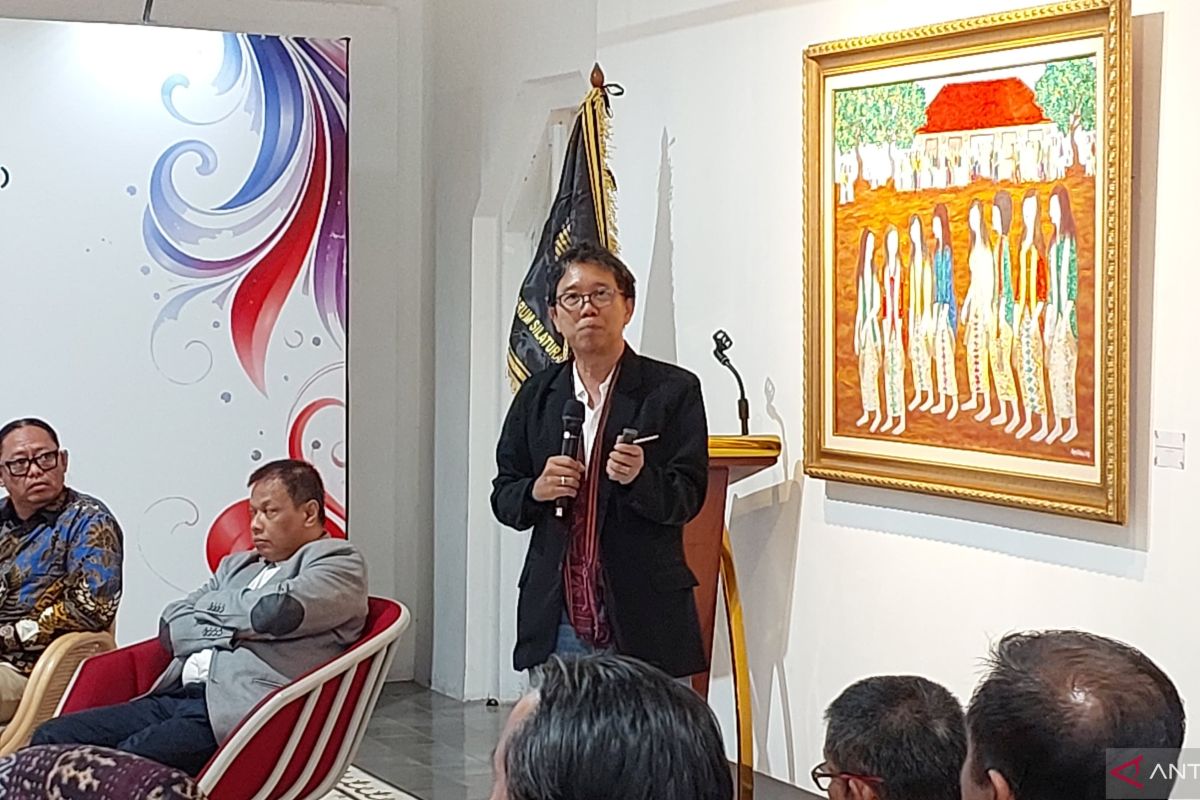
Jakarta (ANTARA) - Professor of Anthropology at the University of Indonesia, Prof. Dr. Semiarto Aji Purwanto, stated that cultural diplomacy to introduce the palace as Indonesian cultural heritage must involve local communities who serve as the drivers of culture.
“There must not be any missing link; the communities and the drivers in the palace. In Java, the abdi dalem, the punggawa, the hulu balang who are there—these are the main actors. So, I want to convey that cultural diplomacy through the palace should be delivered through this practice,” said Aji during a discussion that was part of the “Revitalisasi Keraton Nusantara” painting exhibition at the ANTARA Heritage Center, Jakarta, on Friday.
The role of the palace in cultural diplomacy is very important; however, it needs to involve cultural practitioners who can tell not only the buildings and history but also as a social process that builds cultural closeness. He also highlighted that cultural diplomacy is often still reactive and always positions cultural heritage merely as a display or exhibition, which ultimately reduces culture to mere symbolic icons.
“The palace’s traditions do not stop now but are continuously developing. And I hope that friends supporting Keraton Nusantara do not stop at just preserving and continuing the past heritage but also continue to develop it forward,” he said.
The process of developing cultural heritage as diplomacy on the international stage can involve local communities by studying traditional heritage with fellow kingdoms or palaces abroad, thus producing collaborative creations that are not just showcases but become active processes of cultural preservation.
Cultural diplomacy, according to the academic, must now move from a heritage display approach to a new approach regarding relations and joint creation processes in which communities are involved as actors in cultural diplomacy.