
Antam Ready to Absorb Gold from Artisanal Miners, Provided It Meets LBMA Standards
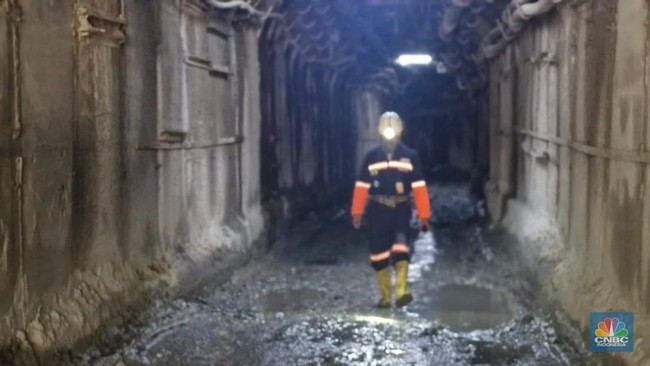
Antam Ready to Absorb Gold from Artisanal Miners, Provided They Meet LBMA Standards
Jakarta, CNBC Indonesia - PT Aneka Tambang Tbk (Antam) says it is open to absorbing gold produced by artisanal miners, as long as the mining activities meet the international standards set by the London Bullion Market Association (LBMA) and have official approvals under the Artisanal Mining Permit scheme (IPR).
Antam’s Corporate Secretary Wisnu Danandi Haryanto explained that LBMA standards do not actually prohibit gold from artisanal miners. However, the mining process must comply with a number of requirements relating to responsible mining practices.
Among the important provisions are: no use of mercury in the processing of the gold, and no involvement of child labour.
“For example, no mercury use, no child labour. So such things must be ensured. There are other conditions as well, I don’t recall all of them. The important thing is that there are requirements that LBMA says must be met,” Wisnu said in Jakarta, quoted on Wednesday (4/3/2026).
According to Wisnu, if the scheme to absorb gold from artisanal mines is implemented, there will likely be a certification mechanism to ensure the mining process meets the standards.
“It will have to be like that in the end. Or, for example, the Commission VI has said it will be absorbed and there may be some form of guidance from Antam. Some coaching from Antam, approximately,” he said.
As is known, the Ministry of Energy and Mineral Resources (ESDM) has stated that artisanal mining activities already have a clear legal umbrella. Communities can mine legally under the IPR, without worrying about illegal mining.
Director-General of Mineral and Coal (Dirjen Minerba) at the Ministry of ESDM, Tri Winarno, said the legalisation mechanism for artisanal mining is already regulated and underway in various regions. One area being pushed currently is the Bangka Belitung Islands (Babel), especially for tin.
“Illegal mining approaches normalisation. Normalisation means we regulate, in-licence, through the mechanism of IPR,” Tri said at the Mining Zone CNBC Indonesia Special Road to Mining and Energy Day 2025 event, quoted Tuesday (21/10/2025).
In essence, the IPR concept in the mining sector is similar to the concept of ‘sumur rakyat’ in the oil industry. “If it is ‘sumur rakyat’, then in the mining industry it is IPR, the Artisanal Mining Permit,” he said.
He explained that the mechanism for granting IPR is set out in Law Number 4 of 2009 on Mineral and Coal Mining. The process starts at the regional level, where the governor proposes the designation of a Mining Area (WP) to the Minister of ESDM. Once WP is designated, within it the Artisanal Mining Area (WPR) is defined, which can be managed by the community.
“Currently, the WP designation is underway for 2025. Within the WP there is the WPR,” he noted.
After the WPR is established, local governments will prepare the WPR management documents, which will serve as the basis for the governor to grant IPR licences to cooperatives or individuals. Unlike commercial mines, IPR holders do not pay royalties to the state, but contribute the Community Mining Levy (IPRA), whose amount is set by regional regulation (Perda).