
Andrie Yunus Case: Analyst Says TNI is Responsive, Public Still Awaits Police Firmness
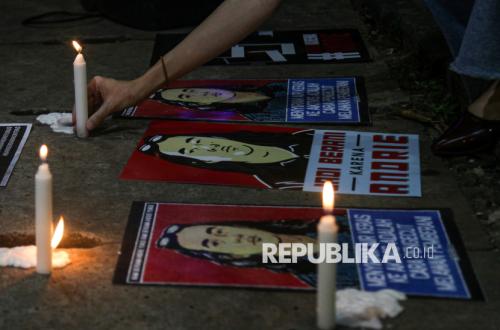
REPUBLIKA.CO.ID, Jakarta — The Indonesian National Armed Forces’ (TNI) rapid response in handling the acid attack case against KontraS activist Andrie Yunus has received appreciation from observers. This step is seen as reflecting the military institution’s commitment to maintaining accountability and transparency. Military and political analyst from Universitas Nasional (UNAS), Dr. Selamat Ginting, described the TNI’s swift action as a positive signal in impartial law enforcement. “This rapid handling demonstrates seriousness in upholding accountability. This is important amid the historically tense relations between civil society and the military,” Selamat stated in his comments in Jakarta on Monday (23/3/2026). According to him, this step sends a message that the law must be enforced without considering institutional sensitivities or the victim’s position. Selamat assessed that appreciation for the TNI’s actions cannot be separated from comparisons with law enforcement practices within the Indonesian National Police (Polri), which still leave public doubts. He alluded to several cases deemed not fully resolved, such as the acid attack on KPK investigator Novel Baswedan. “Although the perpetrators have been tried, the public still questions who the intellectual actors behind the case are,” he said. In addition, he highlighted other incidents, such as the destruction of CCTV in the KM 50 Jagorawi Toll case and matters involving former high-ranking Polri officials, which are seen to reinforce perceptions of fact obfuscation. Selamat emphasised that the main issue is not technical capability, but consistency in revealing facts. According to him, Polri has adequate technological capacity, from digital forensics to biometrics. However, challenges arise when cases touch on internal institutions. “That is where transparency becomes a test of integrity. Whether the law is enforced objectively or compromised to protect image,” he stressed. Furthermore, Selamat viewed the TNI’s steps as an opportunity for reflection for all law enforcement institutions. He emphasised that openness actually strengthens institutional legitimacy in the public’s eyes. “Acknowledging and addressing internal violations is a form of institutional courage, not a threat to honour,” he said. According to him, public trust is the main foundation for state apparatus, both TNI and Polri, which can only be built through consistent actions, not mere rhetoric. Selamat concluded by stressing the importance of honesty in law enforcement in a democratic country. “The question is no longer who is faster or more sophisticated, but who is braver in being honest to the public. In a rule-of-law state, there should be no grey areas,” he stated.