
Andrie Yunus Applies to Become Involved Party in Constitutional Review of Military Judiciary Law
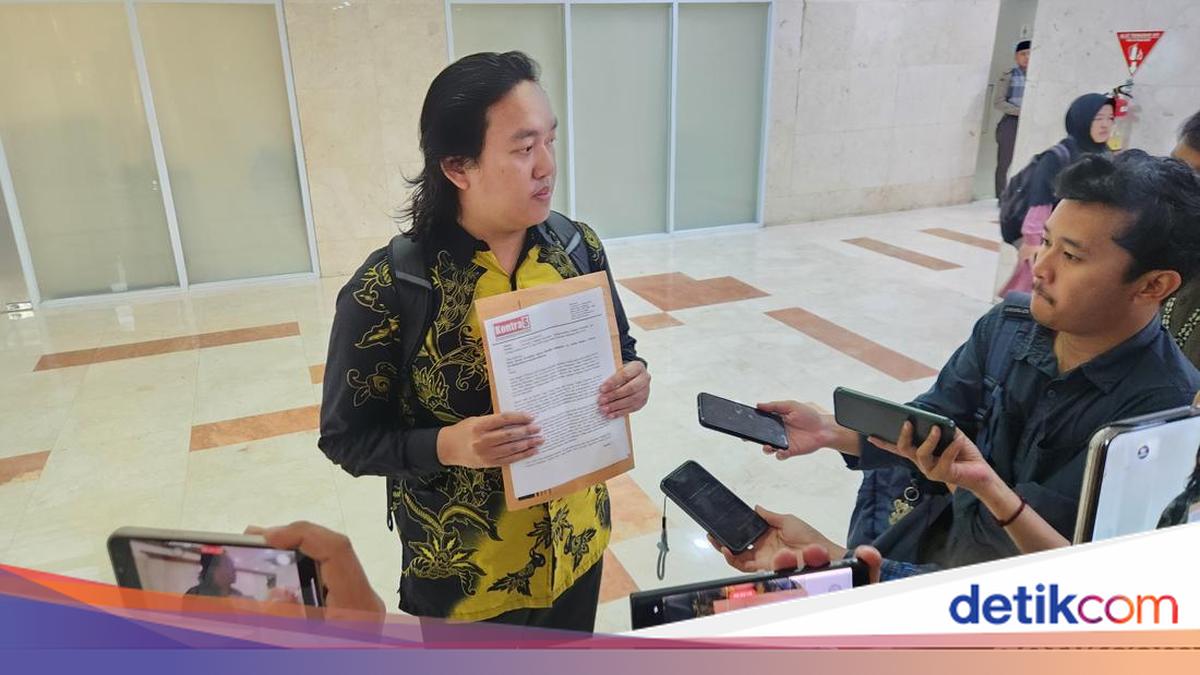
The Advocacy Team for Security Sector Reform has submitted an application to become an involved party in case Number 260/PUU-XXIII/2025 concerning the material review of Law Number 31 of 1997 on Military Judiciary at the Constitutional Court (MK). The application was filed on behalf and representing Andrie Yunus.
The advocacy team highlights that Andrie became a victim of violence allegedly perpetrated by TNI BAIS members. In addition to being a victim of violence, Andrie Yunus is known as an activist, human rights defender, and public lawyer who has been actively involved in assisting victims of human rights violations, advocating human rights issues, and reforming the security sector.
The advocacy team states that the acid splashing incident experienced by Andrie Yunus constitutes a general criminal offence. However, the handling of Andrie’s case has been directed towards the jurisdiction of the military judiciary.
“This situation reveals a fundamental issue in the legal construction of military judiciary in Indonesia, particularly regarding Article 9 paragraph (1) of the Military Judiciary Law, which uses the phrase ‘criminal acts’ without distinguishing between military criminal acts and general criminal acts,” said the Advocacy Team for Security Sector Reform in a statement on Monday (13/4/2026).
According to the advocacy team, the lack of clarity in this norm has opened the door to excessive expansion of military court jurisdiction. As a result, soldiers who commit general crimes are still tried in military forums, not in more independent and open general courts.
The advocacy team notes that Article 65 paragraph (2) of the TNI Law has explicitly regulated the separation of judicial regimes. They emphasise that under the TNI Law, military members who commit general criminal acts should be tried in general courts, while military courts are limited to military-specific criminal acts.
“This normative inconsistency not only creates legal conflicts but also directly impacts the obstruction of justice access for victims,” said the advocacy team.
Due to this legal construction, Andrie Yunus is said to have experienced, or at least potentially experienced, constitutional harm in the form of the loss of guarantees for fair legal certainty, legal protection, and equal treatment before the law as guaranteed by Article 28D paragraph (1) of the 1945 Constitution of the Republic of Indonesia.
“Through this application, the Advocacy Team for Security Sector Reform requests the Constitutional Court to declare that the phrase ‘criminal acts’ in Article 9 paragraph (1) of the Military Judiciary Law is contrary to the 1945 Constitution of the Republic of Indonesia and has no binding legal force insofar as it is not interpreted as ‘military criminal acts’,” said the advocacy team.