
Andilan Kebo Tradition Revived, Pramono Contributes 9 Buffaloes for Residents
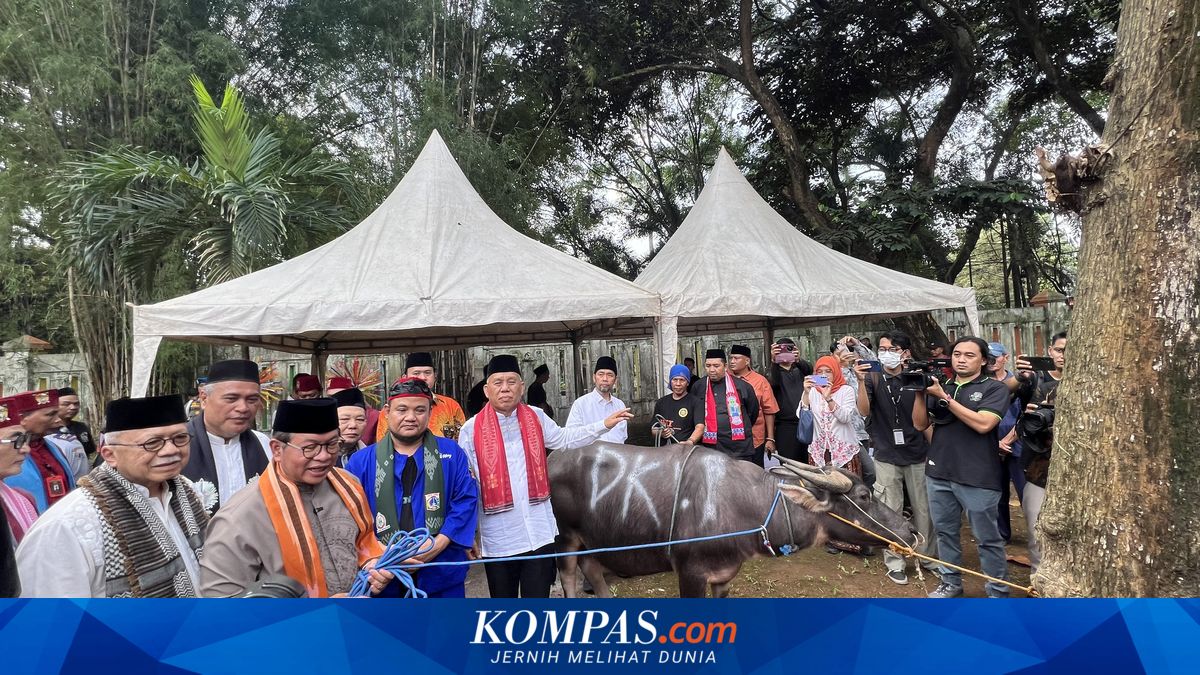
JAKARTA – The Andilan Kebo tradition was once again held by the Majelis Kaum Betawi at the Puskesmas Hewan in the Pondok Rangon area, Cipayung Subdistrict, East Jakarta, on Wednesday (18/3/2026).
This event not only serves as a platform for cultural preservation but also as a means of sharing with the community ahead of Eid al-Fitr.
During the event, Jakarta Governor Pramono Anung was present and donated nine buffaloes. The animals were then slaughtered, and the meat was distributed to the public.
“This is a cultural tradition that we must continuously nurture because it contains an extraordinary essence, namely arisan, mutual cooperation, sharing, and very positive things, which are then distributed to families in need,” said Pramono on Wednesday.
He admitted that this was his first time participating in the buffalo slaughtering in this tradition. In a light-hearted tone, Pramono joked that he usually sees buffaloes in the form of party symbols.
“So far, I have actually never slaughtered a buffalo, because its face is usually on my bet (party logo on clothing) like that. But for the Betawi community, I slaughter the buffalo and join the andilan,” said Pramono.
Andilan Kebo is a distinctive Betawi tradition involving residents pooling resources or making contributions to buy a buffalo. The animal is then slaughtered, and the meat is shared among the andilan participants and the surrounding community, especially those in need.
The concept is similar to an arisan, but instead of returning in the form of money, the result is meat.
Chairman of the Customary Council of Majelis Kaum Betawi, Fauzi Bowo or Foke, stated that this tradition embodies fundamental values in Betawi society, from mutual cooperation to religious values.
“In every asset we possess, there is a right of others, whether they ask or not. That is the basis of this tradition,” said Foke.
He also described the tradition, which has been ongoing for years, as a form of “social piety”, where the community not only worships for themselves but also shows care for others.
Foke emphasised that Andilan Kebo is a tradition born from the people or bottom-up in nature, not a government programme.
“Even without regulations, if the community desires it, this tradition will continue,” he said.
Meanwhile, Pramono hopes that Betawi traditions like this will continue to be preserved and developed. He views Betawi culture as having an important position as Jakarta’s primary culture, and it opens opportunities for policy support if proposed by the community.
“In principle, I want Betawi customary traditions to be well preserved,” he stated.