
Analysts see opportunities in energy commodity sector amid oil price pressures
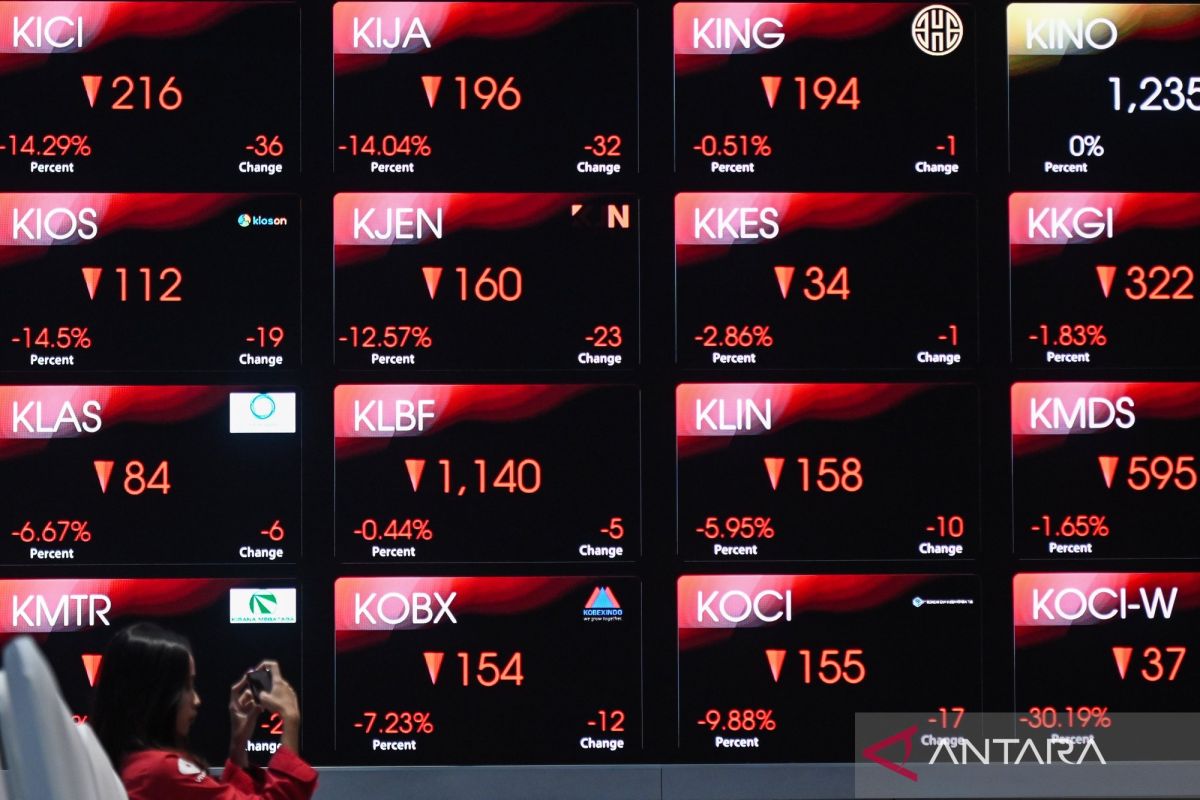
Market observer Elandry Pratama has stated that fiscal pressures and weakening rupiah exchange rates have the potential to increase volatility in the Indonesian stock market in the short term, as global investors become more selective towards risky assets.
However, according to him, the impact will not be uniform. Energy commodity-based listed companies have the potential to gain positive sentiment from rising oil prices, whilst sectors sensitive to imports and purchasing power could face pressure.
“The impact will not be even. Energy commodity-based listed companies have the potential to benefit from the positive sentiment of rising oil prices, whilst sectors sensitive to imports and purchasing power could face pressure,” said Elandry when contacted by Antara in Jakarta on Monday.
In the current situation, he stated that foreign investors are likely to exercise greater caution, particularly if fiscal pressures and rupiah exchange rate weakness increase.
“This could prompt some global investors to adjust their portfolio allocation in emerging market countries, including Indonesia,” said Elandry.
Meanwhile, he continued, domestic investors are more likely to view conditions from a more fundamental perspective.
“As long as economic stability and the credibility of fiscal policy remain intact, domestic investor interest is usually still sufficiently strong,” said Elandry.
Elandry explained that pressure on Indonesia’s fiscal position has increased following the surge in global oil prices and the depreciation of the rupiah. West Texas Intermediate (WTI) crude oil was trading at 98.53 US dollars per barrel, whilst Brent crude stood at 105.60 US dollars per barrel, according to trading data at 15:30 WIB today.
“This situation could increase the burden of energy subsidies and compensation in the state budget, given that the oil price assumptions in the budget are significantly lower than market prices,” said Elandry.
On the other hand, he expressed confidence that Indonesia’s fiscal space remains relatively intact given the various adjustment options available to the government.
“The government still has several adjustment options through spending management, optimisation of state revenues, and more adaptive regulation of energy subsidies,” said Elandry.
At this juncture, he expressed investor expectations, including that the government can maintain fiscal credibility amid global pressures, particularly through disciplined deficit management.
“And more adaptive regulation of energy subsidies to maintain investor confidence in Indonesia’s economic stability,” Elandry added.
For information, according to Indonesia Stock Exchange (BEI) trading data at 15:26 WIB today, the Composite Index (IHSG) declined 142.58 points or 2.00 per cent to 6,994.63.