
Analyst: Yaqut's House Arrest is an Unprecedented Privilege in KPK History
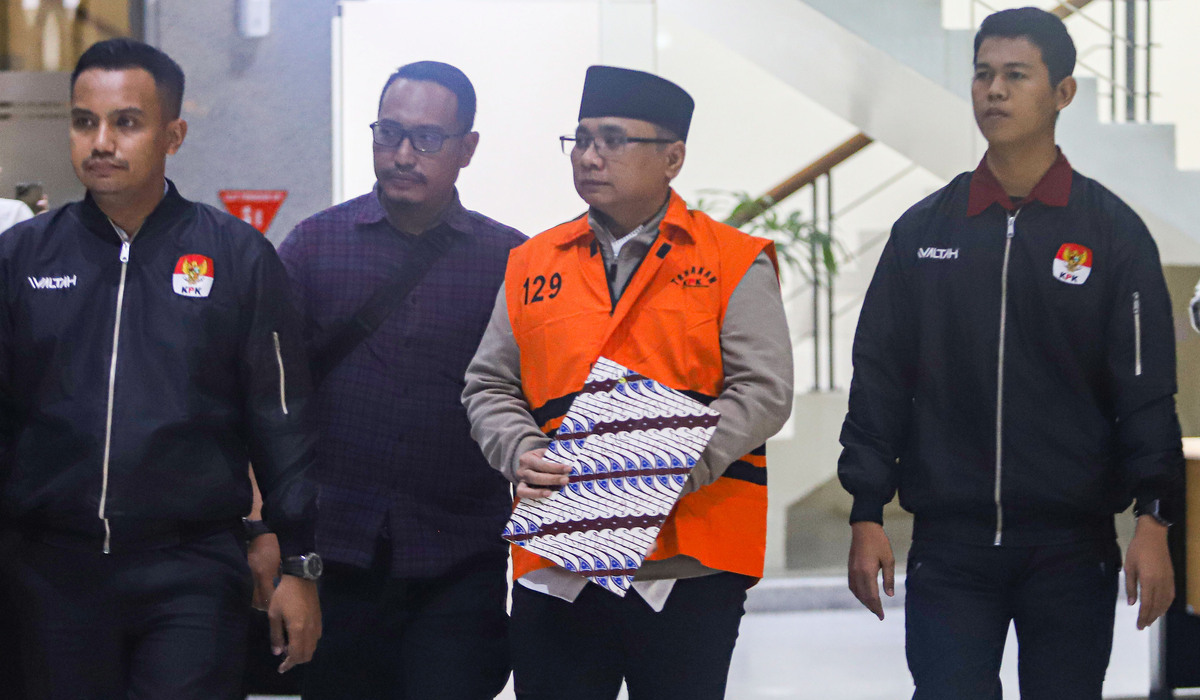
Researcher from Transparency International Indonesia (TII), Agus Sarwono, has highlighted the Corruption Eradication Commission’s (KPK) decision to change the detention status of former Minister of Religious Affairs, Yaqut Cholil Qoumas, to house arrest ahead of Eid al-Fitr 2026. He views the KPK’s action as a form of privilege that harms public sense of justice.
Agus revealed that the process of changing the detention status of the suspect in the alleged hajj quota corruption case appeared to be conducted “quietly,” sparking strong suspicions of double standards at the anti-corruption agency.
“The fact that Yaqut was not seen at the KPK Detention Centre, including during Eid al-Fitr prayers, and was only later confirmed to be under house arrest, reinforces public perception that the process lacks transparency and is laden with privileges,” Agus told Media Indonesia on Tuesday (24/3/2026).
Agus spotlighted the KPK’s admission that the status change was made in just a few days upon the family’s request. According to him, such speed and discretion represent an anomaly that has never occurred in the KPK’s history since its establishment.
“As far as I recall, this has never happened in the KPK’s history since 2003. This decision harms public sense of justice and opens the door to suspicions of political pressure or negotiation. It confirms that the KPK has failed to maintain its integrity standards,” Agus emphasised.
Agus assessed that this policy creates a bad precedent that could damage the consistency of law enforcement. He warned that the KPK’s step could trigger a wave of similar requests from other corruption suspects for various reasons during major holidays.
“This instead strengthens the potential for discrimination claims and opens the way for other suspects to demand the same treatment. It disrupts the consistency of detention, which has long been considered ‘sacred’ in corruption eradication,” he added.
Furthermore, Agus views this policy as not only procedurally misguided but also thickening public concerns that the KPK is no longer impartial in enforcing the law without favour.
Although as of today, Tuesday (24/3), the KPK has returned Yaqut to the KPK Detention Centre, Agus urged a comprehensive evaluation to ensure such discretion does not become a negotiation ground in the future.
“This step not only weakens the KPK’s institutional position but also damages public trust that has long been eroded by various internal controversies,” Agus concluded.
The KPK shifted Yaqut’s detention from the detention centre to house arrest on Thursday (19/3). The shift was granted based on a request from the family on 17 March 2026.
The request was approved considering Article 108 paragraphs (1) and (11) of Law Number 20 of 2025 on the Criminal Procedure Code.
On Monday (23/3), the KPK finally returned Yaqut’s status to detention centre. Before being detained, Yaqut first underwent a health examination at the Kramat Jati Police Hospital.
Yaqut is a suspect in the hajj quota case. He was named a suspect along with his former special staff, Ishfah Abidal Aziz alias Gus Alex.
This hajj quota arrangement case occurred in 2023 and 2024. The hajj quota was allegedly manipulated with fees in return.
The practice of demanding fee money was carried out to Special Hajj Organisers (PIHK), or hajj travel agencies. The costs were then passed on by the PIHK to special hajj pilgrims in the package price.
Yaqut and Gus Alex are suspected of playing a major role in arranging the hajj quota. The KPK stated that a number of fees flowed to both of them. However, the KPK has not detailed the exact amount.
Yaqut and Gus Alex are suspected of violating the Corruption Eradication Law regarding state losses. According to the KPK, the state losses in this case amount to Rp622 billion.