
Analyst: US-Iran Ceasefire Still Laden with Uncertainty, Could Spark New Conflict
The government faces a policy dilemma with no truly comfortable option.
The two-week ceasefire agreement between the United States (US) and Iran is assessed as unlikely to pave the way for permanent peace. Middle East analyst Smith Alhadar views the minimal transparency regarding the agreement’s contents as leaving the situation uncertain.
He highlights the statement from Israeli Prime Minister Benjamin Netanyahu, who said the regional war halt does not include the conflict between Israel and Hezbollah. However, stopping that conflict is part of Iran’s demands in its 10-point peace proposal.
According to Smith, this situation opens the door for renewed escalation. “This means war could erupt again due to Netanyahu’s sabotage,” Smith told Media Indonesia on Wednesday (8/4).
He assesses that Netanyahu is in a difficult position if he must cease fire with Hezbollah before the group is weakened. “Because if he implements a ceasefire with Hezbollah before this Iranian proxy is defeated and disarmed, then Netanyahu will fall—hopefully without leading to a trial over corruption issues and the weakening of the judiciary he has carried out,” he explained.
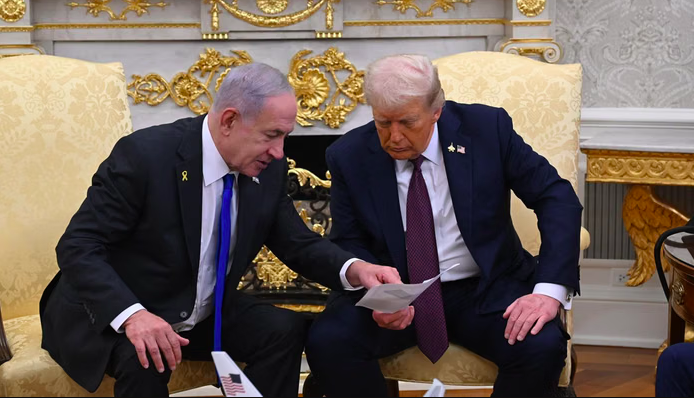
On the other hand, President Donald Trump is seen as an unpredictable figure. Smith believes domestic political pressures in the United States will also influence Trump’s policy direction.
“On the other side, Trump is an unpredictable character. Moreover, Republican supporters in the US Senate and House of Representatives will pressure Trump to support Israel in its war in Lebanon,” he clarified.
Nevertheless, he predicts that Trump will instead push Israel to end the conflict in Lebanon.
“But I believe Trump will pressure Netanyahu to end the war in Lebanon because Trump is in a weak position vis-à-vis Iran in the negotiations in Pakistan this Friday,” he continued.
The advisor to the Indonesian Society for Middle East Studies (ISMES) also believes that Iran’s experience dealing with Trump’s policies previously has made Tehran more cautious in these negotiations.
“Certainly, because Iran has been deceived multiple times by Trump, this point has been indirectly negotiated between the US and Iran, mediated by Pakistan,” he said.
Additionally, he assesses that the war involving the US and Israel lacks broad domestic support in the United States. “Moreover, the illegal war launched by Trump-Netanyahu is not popular in the US,” he stated.
With these various factors, Smith opines that Iran will continue to press the US in the negotiations. “So, I believe Iran will urge Trump to end the war in Lebanon. This is a difficult choice but must be accepted as reality. Thus, this is not a tactical pause but this ceasefire represents a strategic defeat for the US against Iran,” he elaborated.
Regarding the potential for escalation if the agreement fails, Smith notes that the negotiations are designed to last two weeks, with the possibility of extension if no deal is reached. “According to the agreement, if no deal is reached in two weeks, the negotiations will be extended,” he said.
He assesses the chances of Trump cancelling the agreement as relatively small. “In my view, this time it’s nearly impossible for Trump to renege because he is not in a position to continue a war that harms the entire world, hits the US economy, and offers no chance of victory,” he stated.
Meanwhile, regarding the opening of the Strait of Hormuz, Smith views this step as more of a temporary compromise. “The temporary opening of the Strait of Hormuz is just to save Trump’s face,” he said.
He added that during the ceasefire period, shipping activities will remain under Iranian supervision. “Moreover, during these two weeks, tankers and cargo entering the Strait of Hormuz must coordinate with the Iranian military,” he explained.
In the demands put forward by Iran, the Strait of Hormuz is said to remain under Tehran’s control after the conflict ends. Therefore, the opening of that route is assessed as only temporary during the negotiation process.
“So, the temporary opening without Iran charging fees from entering tankers only applies during the negotiations. If the negotiations fail, Iran will close the strait again,” he concluded.
This two-week ceasefire is assessed as not yet guaranteeing long-term stability, but rather leaving potential for escalation in the region.