
Analyst: Street Money Changers Emerge Due to Exchange Rate Spread and Fast Transactions
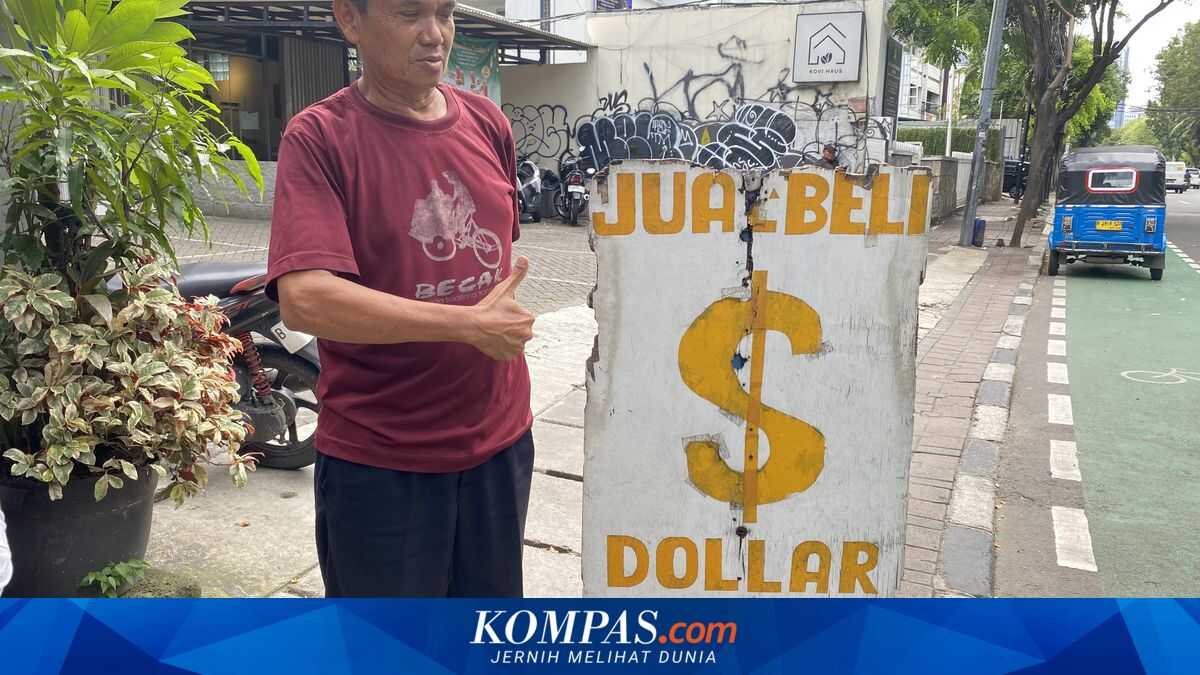
JAKARTA, KOMPAS.com – The phenomenon of street money changers in Jakarta is more than just a marginal economic practice. It is part of the informal foreign exchange market that emerges due to the gap between public needs for fast and affordable foreign exchange transactions and the relatively more expensive and procedural official services. This was stated by economist and Head of the Macroeconomics and Finance Center at the Institute for Development of Economics and Finance (Indef), M Rizal Taufikurahman. “In addition, the long-established customer trust network ensures that transactions continue even if they are not official. Thus, the informal economy fills the space that the formal sector has not fully served,” said Rizal when contacted by Kompas.com, Tuesday (24/2/2026). Macroeconomically, the existence of informal dollar exchangers has almost no impact on the stability of the Rupiah’s exchange rate because the volume is very small compared to banking and interbank transactions, which reach tens of billions of dollars per day. However, Rizal emphasized that the greater risk lies in the integrity of the financial system, because informal transactions are not recorded and can become a channel for small-scale illegal fund flows. The risks faced by the public are quite large, including the potential for receiving counterfeit money, manipulation of exchange rate calculations, to criminal risks such as surveillance and robbery due to cash transactions without legal protection. There is no consumer complaint mechanism, so if losses occur, the public does not have legal protection. The role of Bank Indonesia is more in regulation and supervision through the licensing of Non-Bank Foreign Exchange Dealer Business Activities (KUPVA BB), reporting obligations, and the application of anti-money laundering principles. “Enforcement of individuals in the field is the responsibility of law enforcement officials. In terms of policy, an effective approach is not only to crack down but also to improve the design of the retail foreign exchange market by expanding access to official money changers, reducing the exchange rate spread, and simplifying micro foreign exchange transactions,” explained Rizal. One of the sources, Nana, who is almost 58 years old, has been working in this profession since the 1998 monetary crisis. Nana learned from her friend how to distinguish between genuine and counterfeit money. “I started learning in 1998, and became serious around 2000-2005. During the crisis, it was busy, many people exchanged dollars because the value of the Rupiah fell,” said Nana when met directly.