
Analyst Provides Notes on Indonesia-US Defence Cooperation in MDCP
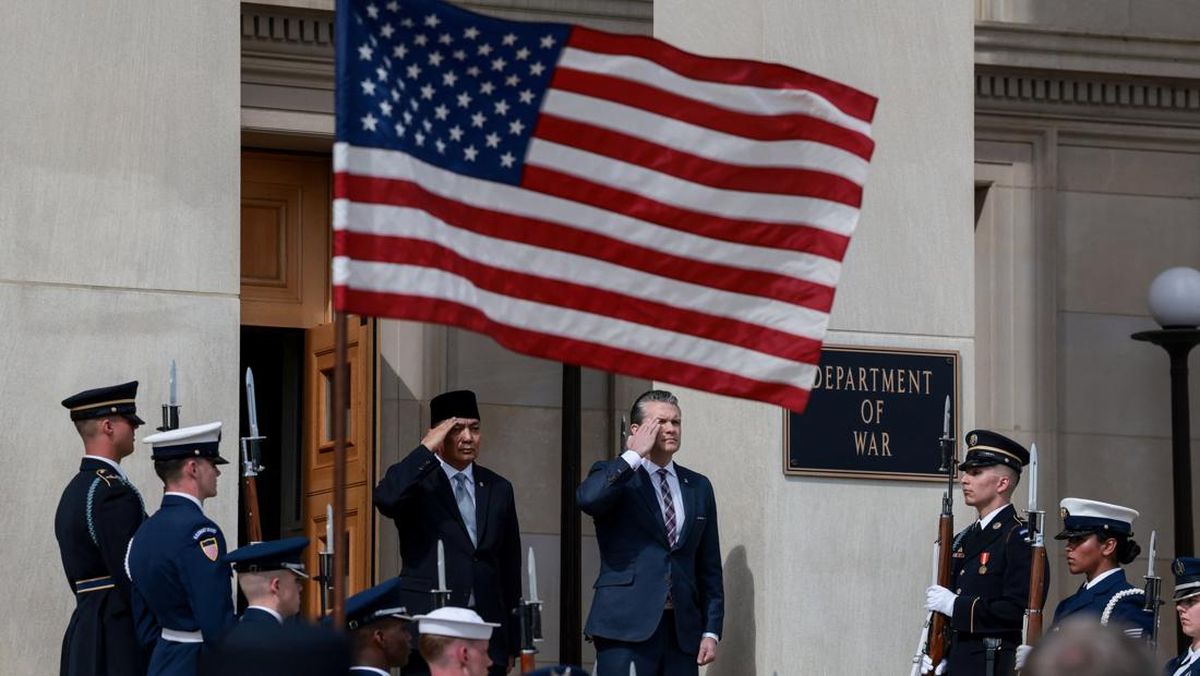
Defence analyst from Lab45, Christian Guntur Lebang, has provided several notes on the defence cooperation between Indonesia and the United States under the Major Defence Cooperation Partnership (MDCP). The MDCP was agreed upon following a meeting between the United States Secretary of Defense and Indonesian Minister of Defence Sjafrie Sjamsoeddin at the Pentagon in Washington DC on Monday (13/4). The MDCP has three main pillars implemented based on principles of mutual respect and national sovereignty. First, military modernisation and capacity building; second, professional military training and education; and third, exercises and operational cooperation. Guntur stated that the first pillar, related to military modernisation and capacity building, is the most crucial and introduces a new dimension that has not been extensively explored. He noted that in the MDCP document, the United States and Indonesia explicitly target the joint development (co-developing) of next-generation asymmetric defence technologies, particularly in the maritime domain, subsurface sea, and autonomous systems. According to him, this represents a strategic leap that transforms the relationship pattern from mere arms sales transactions to high-technology research and industry cooperation. “This can also be understood as an effort to strengthen Indonesia’s defence industry, regardless of how it is realised in the future, for example, if we look at the complexity of joint production with South Korea on the KFX,” Guntur said when contacted on Thursday (16/4). Meanwhile, regarding professional military education, he believes that this point deepens the already strong foundation of relations between the two countries. “The emphasis on expanding ‘joint special forces training’ and forming a ‘defence alumni network’ is a normal practice in defence diplomacy,” he said. He highlighted the third pillar, exercises and operational cooperation, as having the most vulnerable gaps and prone to developing into sovereignty issues. In the explanatory paragraph of the MDCP document, operational cooperation includes maintenance, repair, and overhaul (MRO) support to enhance operational readiness. “The gap lies in the implementation of this agreement. High-level operational cooperation and MRO facilities certainly require consolidated and uninterrupted logistical access, fleet transit, and airspace passage,” he said. Guntur stated that without strict national legal restrictions, this operational pillar has high potential to be used by the US military as a legal umbrella to demand access to passages and transit facilities at Indonesian military bases. “These rules could invite public criticism, similar to discussions on the US request for blanket overflight access to Indonesia, which is not actually part of the MDCP itself,” he said. Is Indonesia leaning towards the US? Guntur assesses that functionally, the emergence of the MDCP indeed shows Indonesia’s operational inclination increasingly approaching the US. However, he said, politically, the agreement seems to imitate the precedent of India through Major Defence Partner (MDP) status in 2016 to obtain US defence technology without being locked into a defence alliance pact, in order to maintain strategic autonomy and the Bebas Aktif doctrine. “However, formalising this high-level defence partnership amid the raging US-Iran War creates risks in geopolitical perceptions of Indonesia leaning to one side,” Guntur said. According to him, if the operational cooperation gaps in the MDCP, such as MRO facility support or transit leniency, are applied during an open conflict in the Indo-Pacific region, Indonesia’s non-aligned status might not be recognised by the opposing party. He stated that Indonesia would be highly vulnerable to being classified as a belligerent (combatant party) actively facilitating US military movements, triggering a worst-case scenario where the country’s territory becomes a target for retaliatory attacks. “Similar to neutral countries in the Arabian Peninsula that are now facing drone attacks from Iran, particularly because their airspace or facilities are used by US military fleets,” he said.