
Analyst: Operation Ketupat 2026 Runs Smoothly, 94 Percent of the Public Satisfied
Professor Albertus Wahyurudhanto, a tenured lecturer at STIK Lemdiklat Polri and expert in government science, has revealed that the implementation of Operation Ketupat 2026 in securing the Eid al-Fitr homecoming and return flows proceeded well. This assessment is based on an objective academic study employing triangulation methods.
The professor explained that the research integrated three data sources: a public perception survey involving 3,200 respondents from eight regional police commands (Polda), operational data from command posts on vehicle movements and traffic accidents, and the Delphi method involving experts to analyse field findings.
The respondent profile comprised 71.91 percent males and 28.09 percent females. The dominant age groups were 36-45 years (34.28 percent) and 26-35 years (28.38 percent). Educational backgrounds were predominantly high school equivalent (54.19 percent) and bachelor’s degree (33.06 percent). The regional distribution was balanced, with 400 respondents from each Polda.
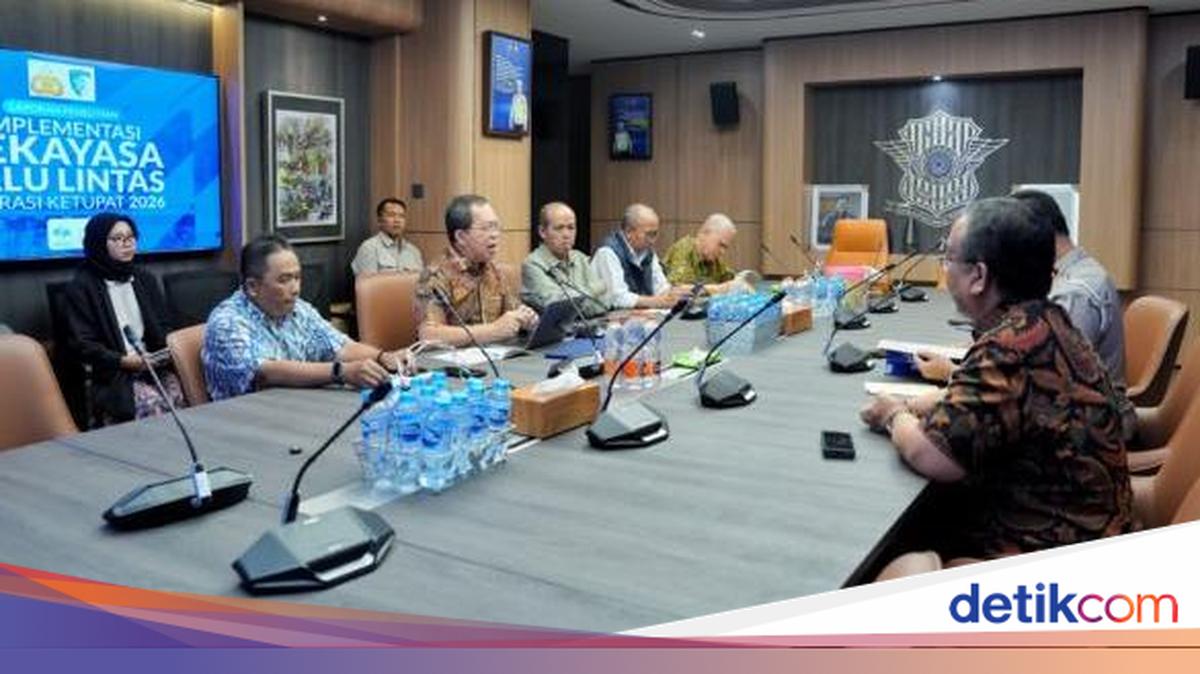
“The research results indicate that Operation Ketupat was carried out effectively, although some notes remain, such as the over-concentration of personnel on land routes, while challenges also arose at transportation nodes like ports and rest areas,” stated Prof Albertus during the Evaluation Audience for Operation Ketupat 2026 with the Head of Traffic Corps of the National Police, Inspector General Agus Suryonugroho, on Thursday (2/4/2026).
Meanwhile, one of the strengths of this year’s Operation Ketupat, according to him, is the real-time based monitoring system and the application of predictive traffic policing grounded in data.
“Operation Ketupat this year features a real-time monitoring system. Whereas previously evaluations focused only on service aspects, the police are now shifting to data-based predictive traffic policing strategies,” he said.
In his view, this strategy is capable of fostering public understanding that traffic engineering is not merely a police obligation but a public need for safety and smooth travel.
“This strategy is deemed able to build public understanding that traffic engineering is not just a police duty, but a public necessity for the safety and smoothness of public travel,” he concluded.
Analyst Appreciates 30 Percent Drop in Accident Figures
Consumer protection and public policy analyst Tulus Abadi assessed that the implementation of Operation Ketupat 2026 successfully reduced accident rates by 30 percent and recorded a 94 percent public satisfaction level.
According to Tulus, this success is inseparable from the various policies implemented by the Traffic Corps of the National Police during the security of the Eid al-Fitr homecoming and return flows this year.
“I believe Operation Ketupat 2026 has produced instruments that are very helpful in ensuring the homecoming flow runs smoothly and safely,” said Tulus during the Evaluation Audience for Operation Ketupat 2026 on Thursday (2/4/2026).
He stated that the survey results showing high public satisfaction serve as an indicator that security and services for travellers were effective.
“The survey shows 94 percent of the public are satisfied with this Operation Ketupat, which we must maintain and continue to improve,” he emphasised.
Additionally, the effectiveness of traffic engineering, such as the one-way system, was deemed very helpful for the smooth flow of homecoming and return during Eid al-Fitr.
“Reducing accident rates by up to 30 percent, and the one-way instrument was very helpful; in the future, this policy is seen as very beneficial, so it is planned to become a permanent policy with upgrades to directional signs on toll roads,” revealed Tulus.
Tulus hopes that public trust and satisfaction with the implementation of Operation Ketupat can be continuously maintained so that future homecoming travels become increasingly safe and comfortable.