
Analyst: National Fuel Reserves Are Sufficient; Government Could Add Floating Storage
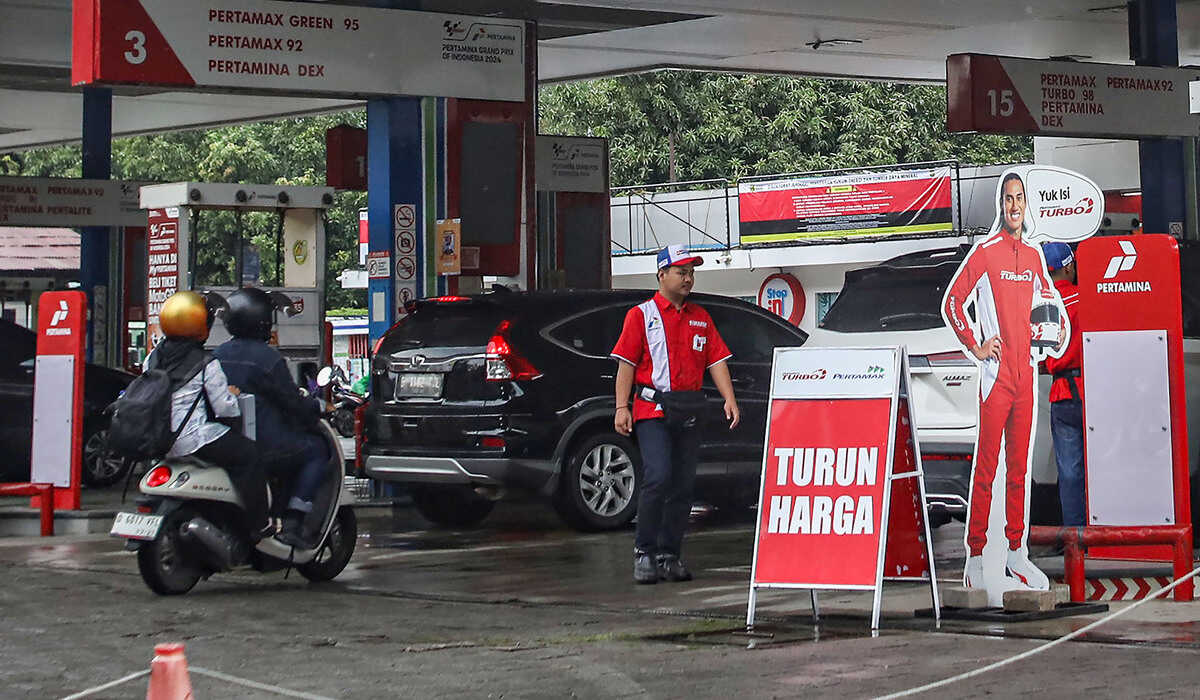
Analyst: National fuel reserves are around 20–21 days and are considered sufficient to meet energy needs under normal conditions, so the public should not panic buy fuel. These reserves are stored across facilities such as tank farms, floating storage, and tanker tanks at filling stations, which continue to receive fresh supply regularly.
Oil and gas practitioner and Secretary General of the Indonesian Petroleum Engineering Association (IATMI), Hadi Ismoyo, said that 21 days of BBM stock means the inventory could last for that period if there were no additional supply. However, in practice, fuel deliveries continuously feed storage facilities, so energy distribution remains normal. “If BBM reserves are 21 days and used continuously with no additional supply, they would be exhausted in 21 days. But storage is dispersed across places such as tank farms, floating storage, bunkers at ports, and SPBU tanks,” he told reporters on Friday (6 March).
He explained that roughly 20 days’ reserves are not ideal, but still adequate because Indonesia is not in direct confrontation with other countries. He said the ideal energy reserve standard is around 90 days, though building extra storage facilities would incur very high costs.
For energy resilience, the government could increase storage capacity by renting facilities such as floating storage or tank farms in regional areas, for example in the Riau Islands or Singapore. This approach would bolster stock without having to build new infrastructure requiring large investments and long construction times.
Based on his calculations, if Indonesia wanted to lift reserves from about 20 days to 90 days, it would require an additional around 112 million barrels of BBM, equivalent to 56 facilities with a capacity of 2 million barrels each. Construction of these facilities would be estimated to require tens of billions of dollars and up to three years.
Nevertheless, gradual increases are more realistic, for instance from 20 days to around 30 days. With this approach, cost and infrastructure requirements can be more controlled, while energy supply resilience would rise.
He also emphasised that global oil supply is actually sufficient because production globally is dominated by a few major countries like the United States, Russia, and Saudi Arabia. Therefore, global energy availability is more influenced by price factors and product specifications rather than mere supply shortages.
According to him, clear communication from the government and energy stakeholders is important so the public does not panic. “Pertamina and the Ministry of Energy and Mineral Resources should automatically communicate stock levels and mitigation steps to the public to prevent panic,” he said.
Executive Director Mohammad Faisal of CoRE urged the public not to panic buy fuel amid rising geopolitical tensions. Minister of Energy and Mineral Resources Bahlil Lahadalia reported that national BBM reserves are safe above standard. President Prabowo instructed to construct new storage in Sumatra to bolster energy. Vehicle queues at several SPBU started to rise from Friday morning (6 March).
CoRE’s Mohammad Faisal again urged the public not to panic buy BBM amid mounting geopolitical tensions. The Ministry of Energy and Mineral Resources assured that national BBM stocks are safe and subsidised prices remain stable amid the Middle East conflict. See the government’s guidance to avoid panic buying. Long queues of vehicles filling BBM at SPBU in Aceh Tengah and Bener Meriah have persisted for three days. The phenomenon of panic buying has been observed in Bangka, Bangka Belitung.