
Analyst: Nadiem's Special Team Violates Administrative Law
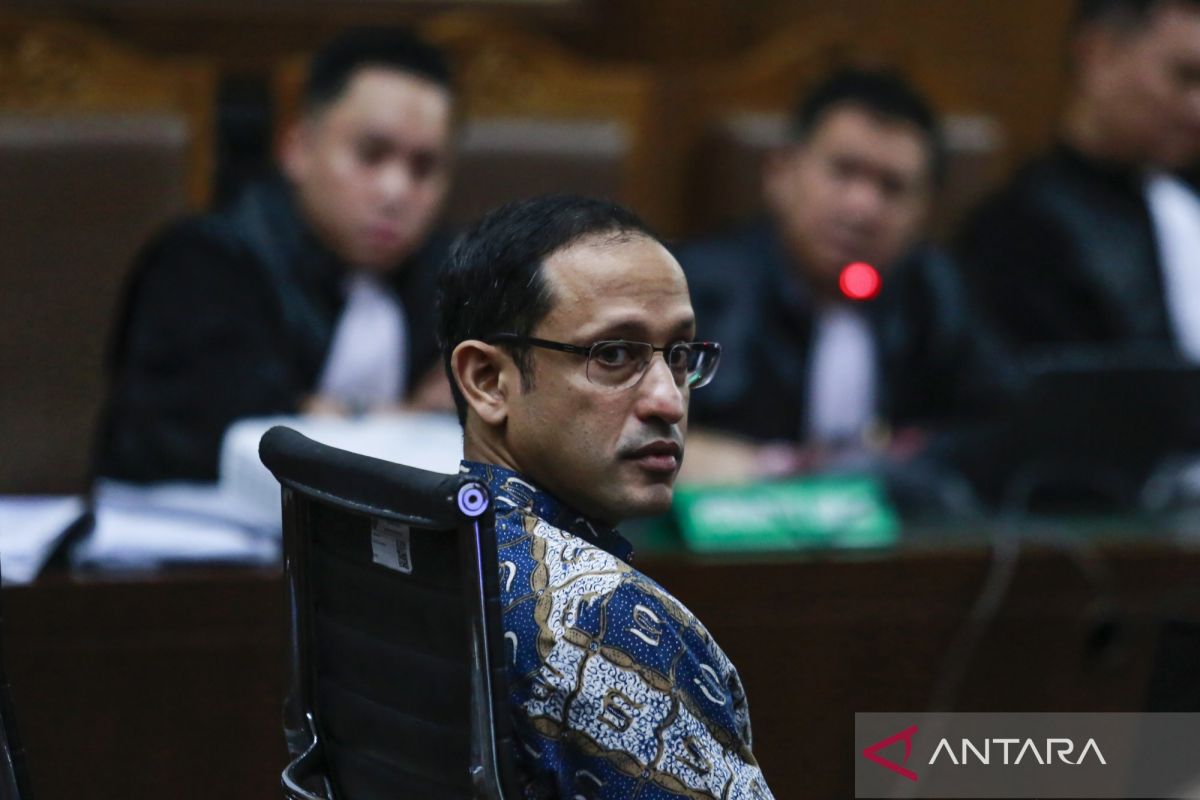
Jakarta (ANTARA) - Public policy analyst Yanuar Wijanarko believes the existence of the external special team brought in by Nadiem Anwar Makarim for the procurement of digitalisation programmes has overstepped the authority of structural officials and represents a clear case of administrative malpractice.
Yanuar stated in Jakarta on Tuesday that the actions of the former Minister of Education, Culture, Research, and Technology (Mendikbudristek), who trusted an external team more than the director generals in his ministry, have violated applicable administrative law regulations.
“In terms of public policy, what Nadiem did is not merely ‘management innovation’, but rather a circumvention of hierarchy or neglect of the official hierarchy,” he said.
He explained that under Law No. 30 of 2014 on Government Administration, every public official’s decision must be based on three main pillars: authority, procedure, and substance.
“If the minister consciously cuts off communication with the director generals and prefers to listen to the external team, then the formal policy procedure is automatically legally flawed,” Yanuar stated.
He also expressed concerns about legal accountability if state losses occur due to policies designed by non-bureaucratic parties.
“We must be critical: if state losses occur due to policies formulated by these outsiders, who will be legally accountable? The director generals cannot be blamed because they were sidelined from the decision-making process from the start. This is where the violation of Law No. 28 of 1999 lies, which strictly prohibits state officials from mixing personal interests or business relations with the public authority they hold,” he said.
Furthermore, Yanuar sees strong indications of the state capture phenomenon, where state policies are “hijacked” for the business interests of certain parties through the influence of public officials.
“When a public policy is specifically directed towards a particular brand like ChromeOS, even though this system has a history of past failures, and on the other hand there are investment ties with the minister’s personal business, then it is no longer a policy for the people. It is a private policy funded by state money,” Yanuar said.
He added that this violates Article 3 of the Corruption Law (Tipikor) regarding the abuse of authority to enrich oneself or a corporation.
Regarding defences from parties claiming the internal bureaucracy is incompetent, Yanuar criticised that logic.
“In a rule of law state, the process is far more important than just the outcome. If the minister feels his bureaucracy is incompetent, the rule is to provide guidance or rotations in accordance with the Civil Service Law (ASN), not to form a ‘shadow government’ within the ministry,” Yanuar said.
Previously, Nadiem admitted to bringing in a personal team for the digitalisation programme procurement because Ministry of Education, Culture, Research, and Technology employees lacked the competence to develop applications.
Nadiem said that building various applications requires a level of competence that can only be obtained from people who have experience in creating large-scale applications.
“That is the function of the technology team, Wartek team, or whatever it is called—GovTech and so on—to realise the President’s vision in education digitalisation, and the results are clear: the creation of applications used by millions of teachers,” Nadiem stated at the trial of the defendant at the Corruption Court at the Central Jakarta District Court on Monday (11/5).