
Analyst: Falling Chilli Prices a Positive Signal Despite Uneven Recovery
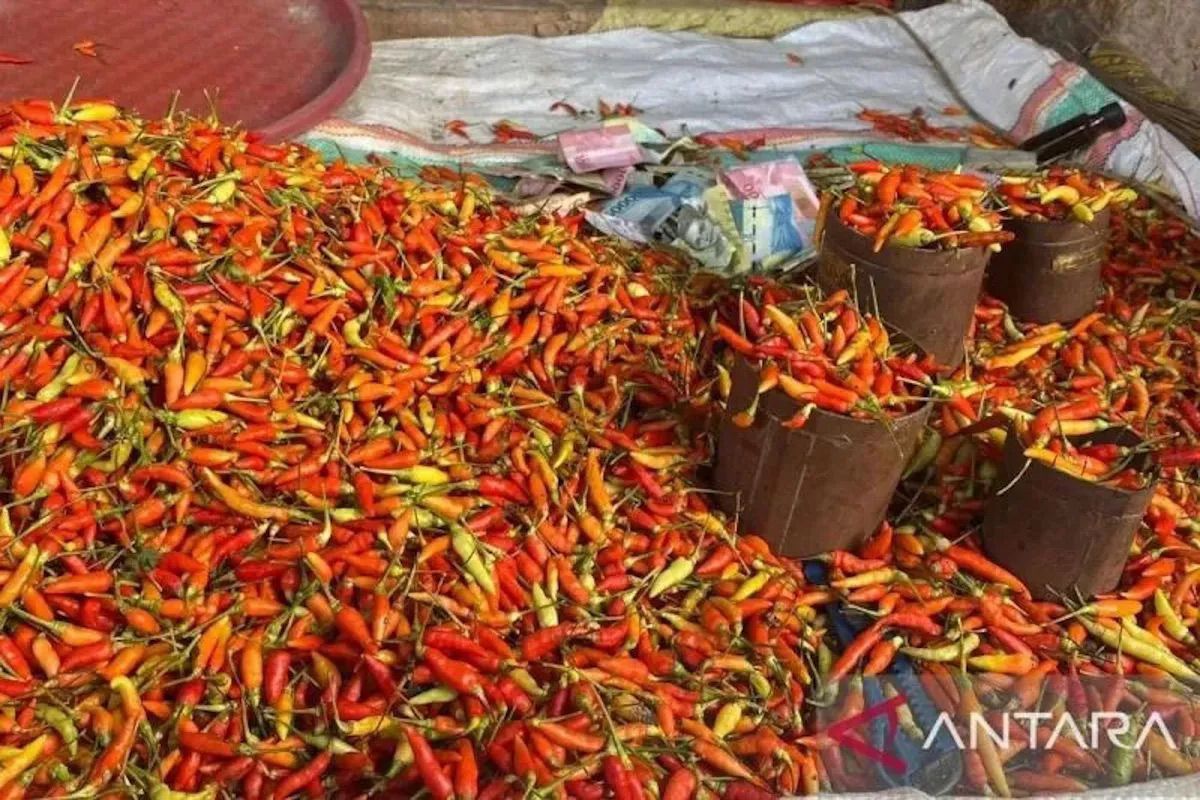
Prices of bird’s eye chillies surged sharply during the Ramadan and Eid al-Fitr periods. “Overall, prices of several food commodities are beginning to show a downward trend, such as chillies which previously reached around Rp140,000 per kilogram (kg) and are now ranging from Rp90,000 per kg, and in some areas even around Rp40,000 per kg,” said Eliza to ANTARA in Jakarta on Thursday. Data from the National Strategic Food Price Information Centre (PIHPS) on Thursday recorded the national average price of red bird’s eye chillies at around Rp87,450 per kilogram. This price is lower compared to the early Eid period when chillies in several areas exceeded Rp100,000 per kg. The price decline reflects improving supply in the market as the post-Eid period progresses. According to Eliza, post-Eid price movements are not uniform across food commodities. She explained that rice prices are relatively stable, while shallot prices have actually increased due to supply disruptions during the Eid holidays. “Rice prices are relatively steady, while shallots have risen because the Eid holidays caused a pause in harvesting, leading to limited supply to major markets,” she said. In addition to supply factors, Eliza believes weather disruptions also play a role in affecting production at the farmer level. Such conditions can lead to crop failures and drastic supply reductions in the market. According to her, distribution is a crucial factor in price formation, especially during Eid homecoming and return traffic. “There are distribution obstacles because of the homecoming, so traffic prioritises people over goods,” she said. Several regions have also recorded post-Eid chilli price drops. In Gorontalo, for example, bird’s eye chilli prices fell to around Rp85,000 per kg on 25 March after previously reaching about Rp120,000 per kg at the start of Eid. On the other hand, the government previously assured that the availability of staple foods was relatively secure during the Eid period, including for rice commodities supported by government rice reserves. Meanwhile, the National Food Agency (Bapanas) at the beginning of March recorded that several national horticultural commodities were still in surplus until April 2026. These commodities include around 105,000 tonnes of bird’s eye chillies, 74,000 tonnes of large chillies, and 57,000 tonnes of shallots. This situation indicates that, besides production factors, smooth distribution is the main determinant in maintaining price stability at the consumer level. Eliza assesses that the normalisation of food prices post-Eid greatly depends on the recovery of distribution and production activities in production centres. The current downward trend in chilli prices is seen as an initial indication of stabilisation, but it will still take time until the supply chain returns to normal operation.