
Analyst: Caution Needed in Discourse on Palm Surface Water Tax
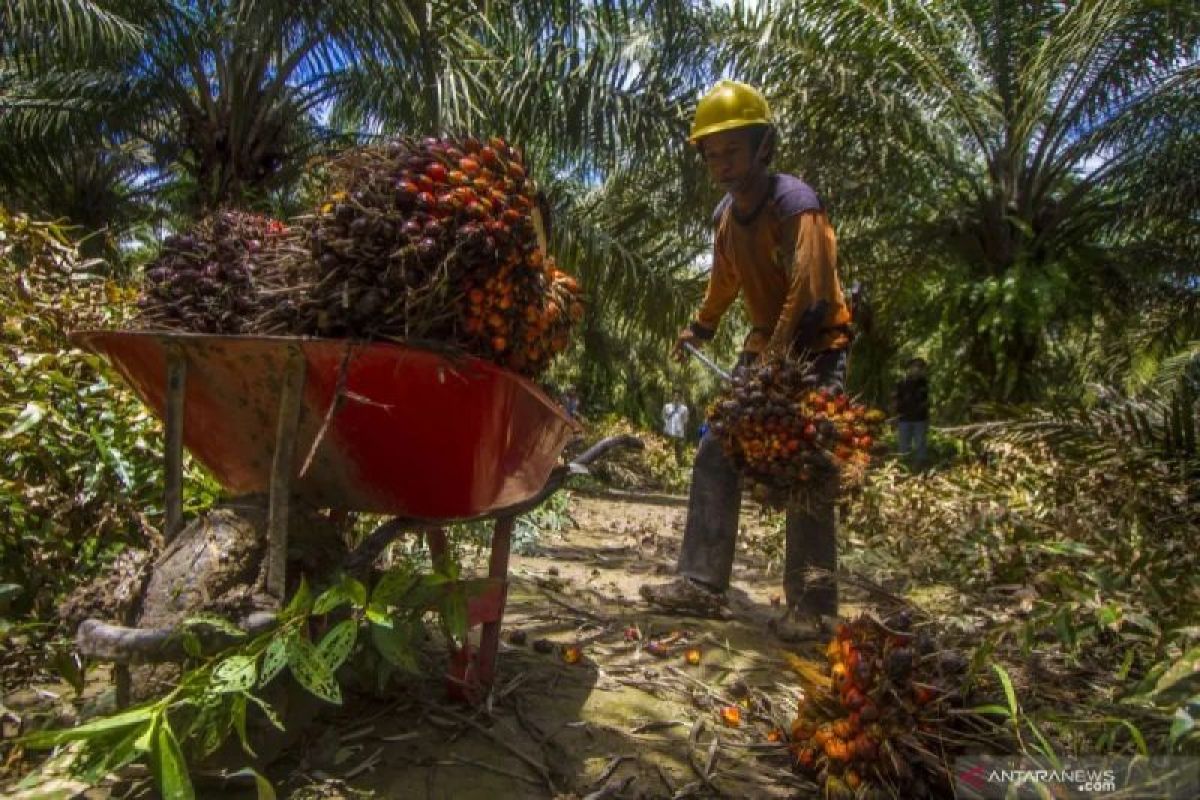
Jakarta (ANTARA) - Director of the Centre for Legal Studies and Advocacy on Natural Resources (Pustaka Alam), Muhamad Zainal Arifin, believes that caution and further legal studies are needed in the plans of several local governments to impose a surface water tax (PAP) of Rp1,700 per palm tree per month.
Zainal, in his statement in Jakarta on Wednesday, said that an understanding of the definition of surface water tax is required.
According to him, surface water legally refers to water sources such as rivers, lakes, reservoirs, swamps, or other water bodies that do not infiltrate into the ground.
“Palm trees only absorb rainwater or dew naturally through the soil, not by sucking up surface water using pumps,” said Zainal.
The policy discourse, he continued, is deemed to lack a legal basis and could potentially violate Law No. 1 of 2022 on Fiscal Relations between the Central Government and Regional Governments (UU HKPD) and Government Regulation No. 35 of 2023 on General Provisions for Regional Taxes and Levies.
Zainal explained that the UU HKPD clearly defines surface water tax as a tax on the extraction and/or utilisation of surface water.
In Article 1 number 52 of the UU HKPD, he mentioned, it defines surface water tax as a tax on the extraction and/or utilisation of surface water. Meanwhile, in Article 30 of the UU HKPD, the tax base must be calculated based on the volume of water extracted.
“This means the tax can only be imposed if there is an active action to extract water, for example, pumping water from a river, measuring it through a water meter, then channeling it for certain needs,” he said.
“As long as there is no actual extraction of water from rivers or lakes, there is no object for surface water tax. Palm trees cannot be measured for how many cubic metres of surface water they use,” he added.
Furthermore, Zainal reminded of the tax law principle of nullum tributum sine lege, meaning there can be no tax without a statutory basis.
“The law never regulates taxes on the biological processes of plants. If forced, this is not double taxation, but a levy without a legal foundation,” he said.
He also warned that additional regional levies could pressure the competitiveness of the national palm oil industry amid various regulatory pressures already faced by the sector.
According to him, the PAP policy would be counterproductive to the government’s strategic agenda, including the mandatory B50 biodiesel programme that requires production cost efficiency.
Zainal hopes that local governments in several palm-producing provinces will immediately stop the planned implementation of PAP on palm trees and realign it with the UU HKPD and Government Regulation No. 35 of 2023, as well as corrective steps from the central government.