
Analyst: BI Needs to Implement Measured Policy Mix to Address Rupiah Weakness
Jakarta (ANTARA) -
President Commissioner of HFX International Berjangka, Sutopo Widodo, assesses that Bank Indonesia (BI) together with the government needs to intervene in the rupiah’s weakening with a tactical and measured policy mix.
BI is expected to continue dual interventions, both in the spot market and the Domestic Non-Deliverable Forward (DNDF) market, utilising foreign exchange reserves currently at around 148 billion US dollars.
In addition, although the benchmark interest rate is still held at 4.75 percent, room for monetary adjustment remains open if imported inflation begins to disrupt domestic stability, Sutopo told ANTARA in Jakarta on Thursday.
“Meanwhile, the government needs to tighten fiscal discipline to maintain long-term investor confidence,” said the financial market analyst.
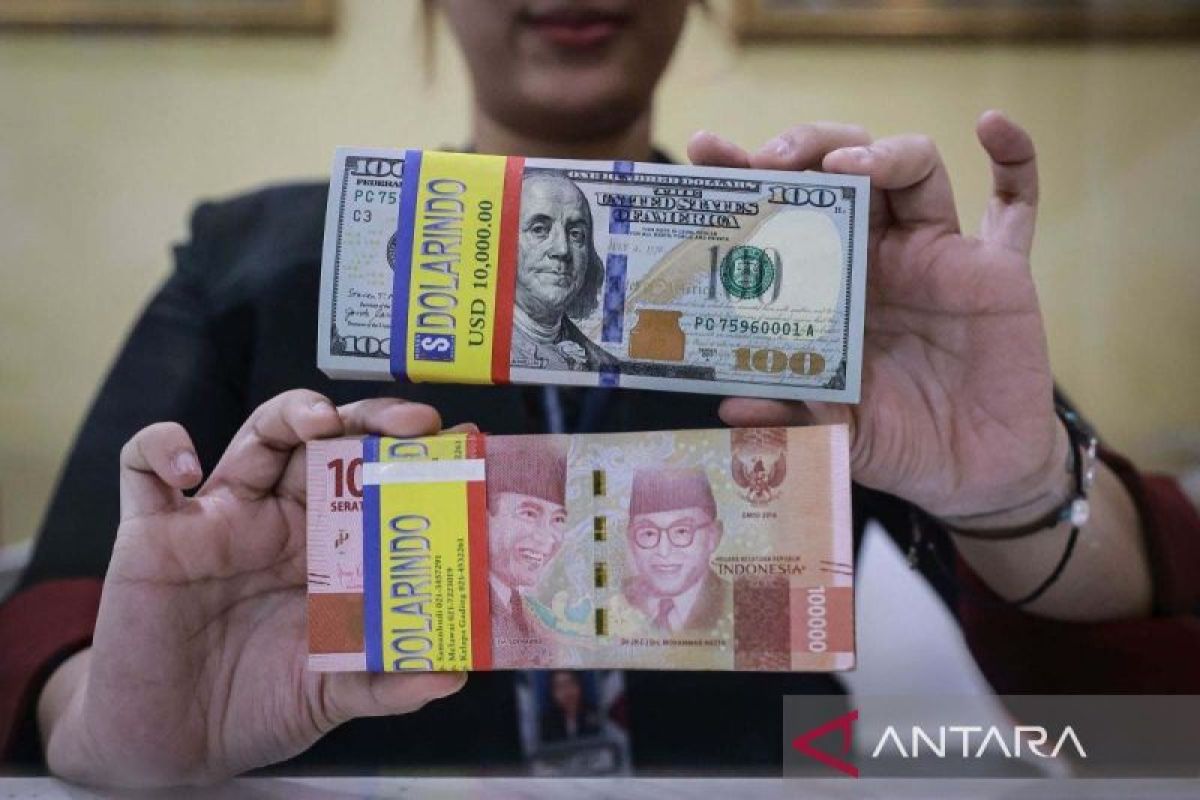
As is known, the rupiah exchange rate on Thursday afternoon, at 13:32 WIB, weakened by 123 points or 0.72 percent to Rp17,304 per US dollar, from the previous close at Rp17,181 per US dollar.
The weakening was triggered by a combination of strong external pressures and domestic vulnerabilities.
Sutopo explained that geopolitical tensions in the Middle East, particularly related to the blockade of the Strait of Hormuz, have driven up global energy prices and inflation, which in turn have strengthened the US dollar as a safe haven asset.
On the other hand, Indonesia’s dependence on energy imports amid high world oil prices, followed by capital outflows due to increasing risk aversion sentiment, have also pressured the rupiah exchange rate.
Furthermore, Sutopo explained that the duration of pressure on the rupiah will very much depend on developments in the Middle East conflict as well as the direction of interest rate policy by the US central bank, The Fed.
As long as global uncertainty remains high, the rupiah is expected to remain under pressure in the short to medium term.
Nevertheless, Sutopo assesses that Indonesia’s economic fundamentals remain relatively strong, with growth projections in the range of 4.9 percent to 5.7 percent in 2026.
“Stability is expected to return only after global tensions subside and markets begin to see a bright spot regarding the normalisation of world energy commodity prices,” he said.