
Analysis of IHSG Collapse Exceeding 2%
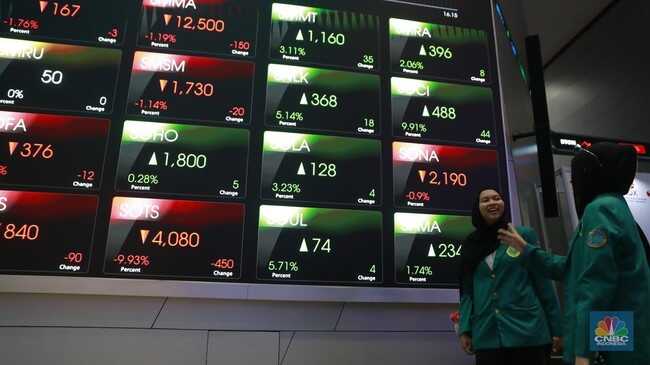
Jakarta – The Indonesian Composite Index (IHSG) opened with significant losses, declining 142.58 points or 1.73% to 8,092.90 in morning trading on Monday, 2 March 2026. A total of 556 stocks fell, 56 rose, and 103 remained unchanged. Morning transaction value reached Rp708.27 billion, involving 976.34 million shares across 104,578 transactions.
Within one minute of opening, the IHSG came under increased pressure, falling more than 2%.
The primary cause of today’s collapse stems from escalating conflict between the United States, Israel, and Iran following news of Iranian Supreme Leader Ali Khamenei’s death. This situation has triggered market concerns over potential disruptions to global energy supplies and heightened geopolitical tensions in the Middle East region.
United States President Donald Trump stated on Sunday that military operations in Iran would continue following the deaths of three American military personnel. This statement has worsened global market sentiment and prompted investors to shift towards safe-haven assets.
Nearly all trading sectors weakened, with the exception of the energy sector, which recorded slight gains. The raw materials sector, which includes gold mining stocks, recorded the smallest decline today. By contrast, non-essential consumer and property sectors came under significant pressure.
Gold mining stocks and oil and gas (upstream) equities served as supports for the IHSG to prevent deeper falls, while major capitalisation stocks and conglomerate equities compactly weighed on the IHSG’s movement into negative territory.
Indonesia’s three largest banking stocks – BBRI, BMRI, and BBCA – accounted for the primary drag on the IHSG, contributing a 35-point decline. Stocks belonging to tycoon Prajogo Pangestu, including BREN, BRPT, and TPIA, also became significant weights on the IHSG.
Entering the first week of March 2026, market participants will face a combination of geopolitical sentiment and important macroeconomic data releases with the potential to influence global market direction.
Middle Eastern conditions are expected to trigger global uncertainty and risk prompting foreign investors to flee Emerging Markets, particularly Indonesia.
Asia-Pacific bourses collapsed during Monday trading (2 March 2026). Oil prices surged over 8%, with West Texas Intermediate and Brent crude contracts trading at US$72.52 and US$79.04 per barrel respectively. Gold contracts rose 2.3% as investors sought safe-haven assets amid heightened uncertainty.
In Japan, the Nikkei 225 index fell nearly 2% at market opening, whilst the TOPIX declined 2.1%. However, defence contractor stocks such as Mitsubishi Heavy Industries, Kawasaki Heavy Industries, and IHI Corporation actually strengthened by more than 1%.
In Australia, the S&P/ASX 200 index fell 0.38% at the start of trading. Meanwhile, Hang Seng Index futures stood at 26,465, lower than the previous close at 26,630.54.
South Korean stock markets were closed for a national holiday. In the United States, stock index futures also weakened, with Dow Jones Industrial Average futures down 517 points or around 1%, whilst the S&P 500 and Nasdaq-100 each fell approximately 1% and slightly above 1% respectively.