
An Elegy of Solace for Child Disaster Survivors
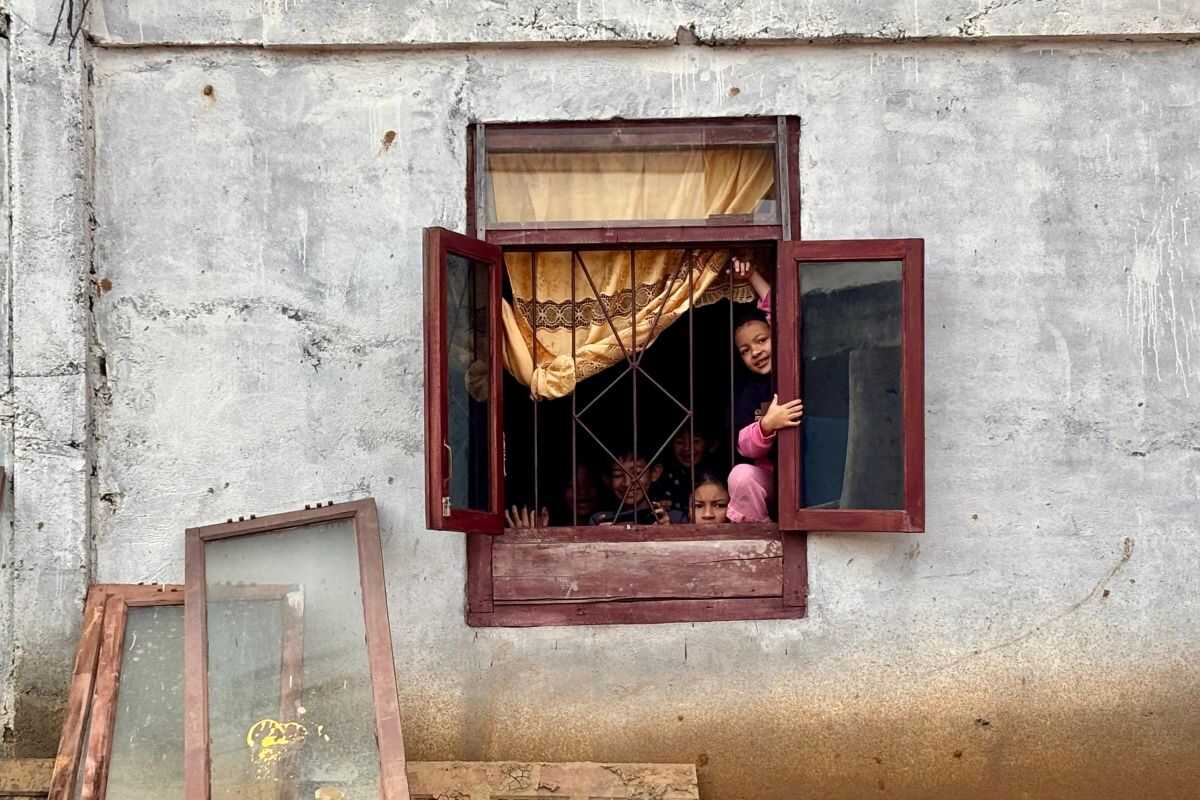
Psychological support for children has become one of the critical aspects that must now be prioritised in order to revitalise disaster-affected areas of Sumatra.
Central Aceh (ANTARA) — Natural disasters inflict not only visible physical damage to buildings and infrastructure but also give rise to unseen, non-physical harm: psychological trauma.
Children are the group most vulnerable to post-disaster psychological trauma. Their feelings of fear, anxiety and loss of security often linger far longer than floodwaters, mud deposits or the rubble of demolished buildings.
A considerable period — well beyond one or two years — is needed to erase the traumatic memories that become lodged in children’s minds.
In a corner of the evacuation post tent in Bintang sub-district, Central Aceh, Chairullah wore a koko shirt, sarong and skullcap, seated with several friends cross-legged on a damp mat still wet from the rain.
These child survivors of the Sumatran floods sat in a circle, glancing at one another in search of a rhythmic cue.
Before long, a didong chant in the Acehnese language rang out in unison.
Chairullah and his companions joyfully exchanged verse after verse — the only entertainment they have truly had during three months in the sweltering evacuation tents.
As the time to break their fast approached, there was no plastic ball for them to kick. Their football pitch had been swept away by the floods.
Only heaps of stone and piles of timber stretched across the open ground. Chairullah and his friends passed the pre-iftar hours singing the elegies of Didong Gayo — tales of sorrow drawn from their experiences over the past three months.
Didong Gayo is a traditional art form of the Gayo people, particularly in Central Aceh, combining poetry, dance and vocal performance.
The tradition is generally performed by a group of adult men chanting traditional verses composed by a practitioner.
This tradition, which predates independence in the Gayo highlands, is customarily performed to mark important occasions such as weddings or circumcision ceremonies.
“Didong Gayo has existed since before independence. It tells stories of religion and history,” said Teuku Haji Muda, a didong Gayo practitioner.
Today, however, didong Gayo has moved beyond its original conventions. It can now be performed by children and is no longer restricted to adults.
Moreover, the themes woven into didong Gayo verses are no longer confined to religion and history; they also address social criticism and ecological crisis.
Teuku Haji Muda, who composed the lyrics sung by Chairullah and his friends, explained that the verses recount the ecological crisis that has struck Aceh, culminating in the great floods of 25–30 November 2025.
“The father here composed the verses. This is how Acehnese people do didong — creating poetry, sometimes as many as 50 songs in a single night,” said Teuku Haji Muda.
With the children deprived of the games that once filled their time waiting to break the fast, Teuku Haji Muda decided that didong Gayo could be chanted to keep them company as they awaited the Maghrib call to prayer.
He also hopes that through this deeply rooted tradition of the Gayo highlands, the children might find a medium for relieving their trauma.
“In a manner of speaking, this serves as psychological therapy — so that these children do not remain traumatised,” said Teuku Haji Muda.