
Amurva Bhumi Temple Officials Predict Lunar New Year Crowds to Last Up to Two Weeks
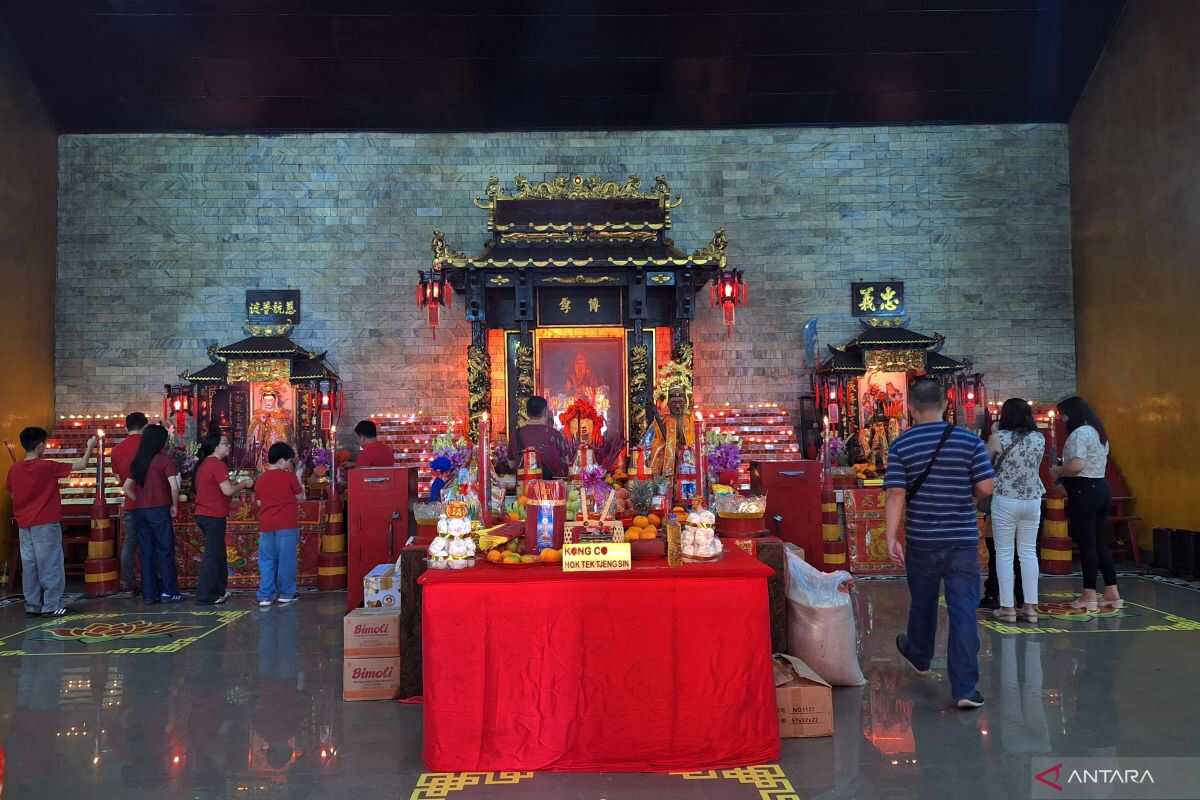
Jakarta (ANTARA) - Officials at Vihara Amurva Bhumi in Setiabudi, South Jakarta, predict that crowds celebrating Chinese New Year 2577 Kongzili will continue through to the Cap Go Meh festival, approximately two weeks after the Lunar New Year.
“We estimate the crowds will last up to two weeks, until Cap Go Meh,” said Zaini Arifin, one of the temple’s administrators (biokong), when speaking to reporters in Jakarta on Tuesday.
Zaini said preparations for the Lunar New Year had included bathing the deity statues (rupang) and cleaning the temple.
The programme of activities ranges from worship services and prayer processions to general worship, with the temple remaining open around the clock.
“We’re open 24 hours. Later this afternoon there won’t be any more formal services — just worship,” he said.
Regarding visitor numbers, officials said they were unable to predict exact figures as worshippers come and go continuously, but confirmed the temple’s capacity can accommodate up to 80,000 people.
“Capacity can reach 80,000 people during worship days and the temple’s anniversary celebration in the eighth month of the Chinese calendar,” he said.
The South Jakarta Metropolitan Police have stationed officers at two temples during the Chinese New Year celebrations to ensure all worship activities proceed safely and in an orderly manner.
Security measures are focused on two temples in the South Jakarta area: Vihara Bio Hok Tek Tjen Sin in Kebayoran Lama and Vihara Amurva Bhumi in Setiabudi.
The security operation is being conducted in coordination with the Indonesian Armed Forces (TNI), the South Jakarta Municipal Administration, the Civil Service Police Unit (Satpol PP), the Transport Agency (Dishub) and other relevant agencies.
This cross-sector collaboration represents a joint commitment to providing a sense of safety and comfort for communities celebrating the Lunar New Year.
At both locations, joint personnel have been deployed to conduct overt and covert security operations, manage traffic flow, sterilise worship areas and carry out dialogue patrols to anticipate potential public order disturbances.