
Amsal Sitepu Case: DPR Urges Severe Sanctions for Prosecutors Who Break Rules
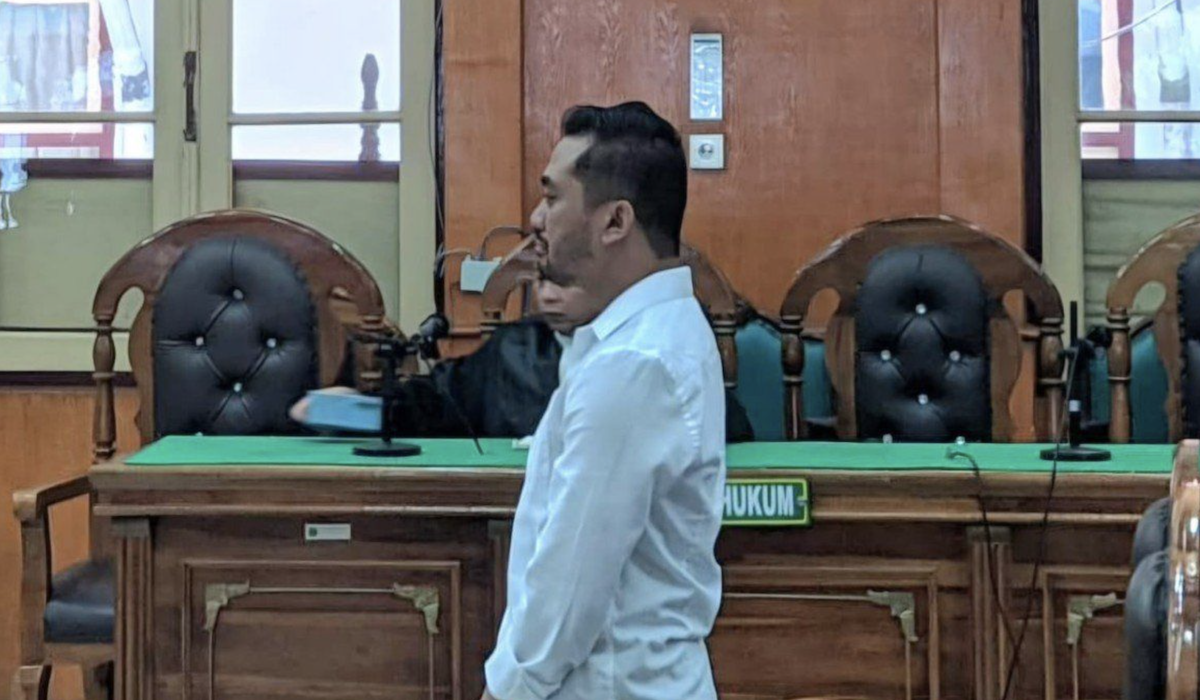
Members of Commission III of the Indonesian House of Representatives (DPR RI) Safaruddin has urged the imposition of severe sanctions against rogue prosecutors proven to have deviated in handling the case of videographer Amsal Christy Sitepu. He emphasised that violations should not be limited to administrative sanctions but must extend to ethical and criminal realms.
The demand was voiced during a Hearing of Opinions (RDP) and a General Hearing of Opinions (RDPU) at the parliamentary complex on Thursday (2/4), which was attended by officials from the Attorney General’s Office and Amsal’s side.
“Prosecutors who deviate must be subject to administrative, ethical, and criminal sanctions. This is not just a rule on paper, but it must be enforced,” Safaruddin stressed.
The PDI Perjuangan legislator highlighted serious allegations of violations in Amsal’s legal process, including indications that prosecutors did not carry out the judge’s orders. According to him, this constitutes a criminal offence.
“Failure to obey the judge’s orders is clearly a violation. It must be followed up and cannot be taken lightly,” he said.
Safaruddin called on the Attorney General’s Office and its regional branches to prove their commitment to cleaning up the institution by taking action against the involved individuals. The DPR, he said, would monitor the type of sanctions imposed.
“We want to know whether the sanctions are administrative, ethical, or criminal. This must be clear,” he stated.
He also assessed the flood of public complaints to Commission III as a reflection of weak internal supervision within the Attorney General’s Office. According to him, the control mechanisms are not functioning optimally, leading the public to seek justice through the DPR.
“Why does the public turn to Commission III? Because supervision in the Attorney General’s Office is not working. This must be improved, both internally and externally,” said the former high-ranking police officer.
Safaruddin also dismissed accusations that Commission III is interfering in the legal process. Instead, the numerous reports are seen as an indicator that the DPR’s oversight function is working.
“The many reports to Commission III show that we are working to deliver justice to the people,” he said.
During the meeting, Safaruddin also reminded prosecutors not to act hastily in using detention authority. He emphasised that detention must be based on evidence and objective needs, not mere subjective concerns.
“There must be a basis and real efforts, not just assumptions. Do not oppress citizens,” he stressed.
In conclusion, Safaruddin hopes that Amsal’s case, in which he was detained for 131 days before being acquitted, will become a momentum for improving law enforcement.
“Do not let there be any more practices that harm the public. This must be a turning point,” he concluded.