
Amran Delivers Good News to Sugarcane Farmers, Sugar Self-Sufficiency in Sight
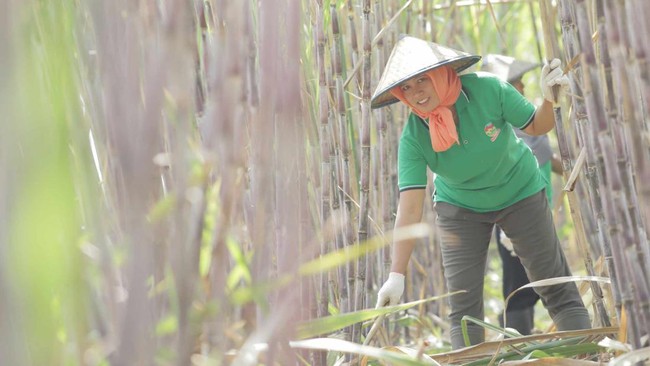
Jakarta — The government is continuing to accelerate national sugar self-sufficiency efforts by strengthening smallholder sugarcane development. By 2026, the Ministry of Agriculture (Kementan) is targeting the distribution of 5.9 billion sugarcane seedlings to develop cultivation areas spanning 99,547 hectares across 10 provinces and 74 districts.
This programme forms part of the government’s strategy to expand cultivation areas whilst increasing the productivity of smallholder sugarcane plantations to sustainably meet domestic sugar demands.
Agriculture Minister Amran Sulaiman stated that the government is currently undertaking comprehensive reforms in the sugar sector, from upstream to downstream operations. These efforts encompass seed provision, improvements to planting patterns, strengthening of downstream processing, and production marketing systems.
“We are implementing reforms from upstream to downstream, starting with seeds, planting patterns, downstream processing systems, and marketing aspects. The goal is simple — farmers must be profitable,” Amran said in a statement quoted on Thursday (12 March 2026).
In line with this programme, the government is also targeting national sugar production to increase to approximately 3 million tonnes by 2026. This target is expected to be achieved through the expansion and optimisation of national sugarcane land.
Efforts to accelerate sugarcane development actually began in the previous year. Throughout 2025, the Ministry of Agriculture’s Directorate General of Plantations distributed 1,925,760,000 sugarcane seedlings to farmers. This assistance was equivalent to developing cultivation areas of approximately 32,096 hectares, based on an assumption of approximately 60,000 seedlings required per hectare.
The seed assistance programme in 2025 was implemented across 7 provinces and 56 districts.
Acting Directorate General of Plantations Abdul Roni Angkat emphasised that the availability of quality seeds is crucial to increasing productivity and sugar yield in sugarcane at the farmer level.
“Seeds are the foundation of sugarcane cultivation. Through this seed assistance programme, the government wishes to ensure farmers have access to quality seeds so that sugarcane productivity and sugar yield can increase,” Roni said.
He added that the Directorate General of Plantations will continue to strengthen coordination with regional governments, seed producers, and farmers to ensure timely and targeted seed distribution.
With strengthened seeds and expansion of smallholder sugarcane areas, the government is optimistic that national sugar production can continue to increase. In addition to strengthening domestic sugar supply, this initiative is also expected to improve farmer welfare whilst reducing Indonesia’s dependence on sugar imports.