
AMNT Profit-Sharing Funds Plunge by Rp 48 Billion, Threatening NTB's Fiscal Stability
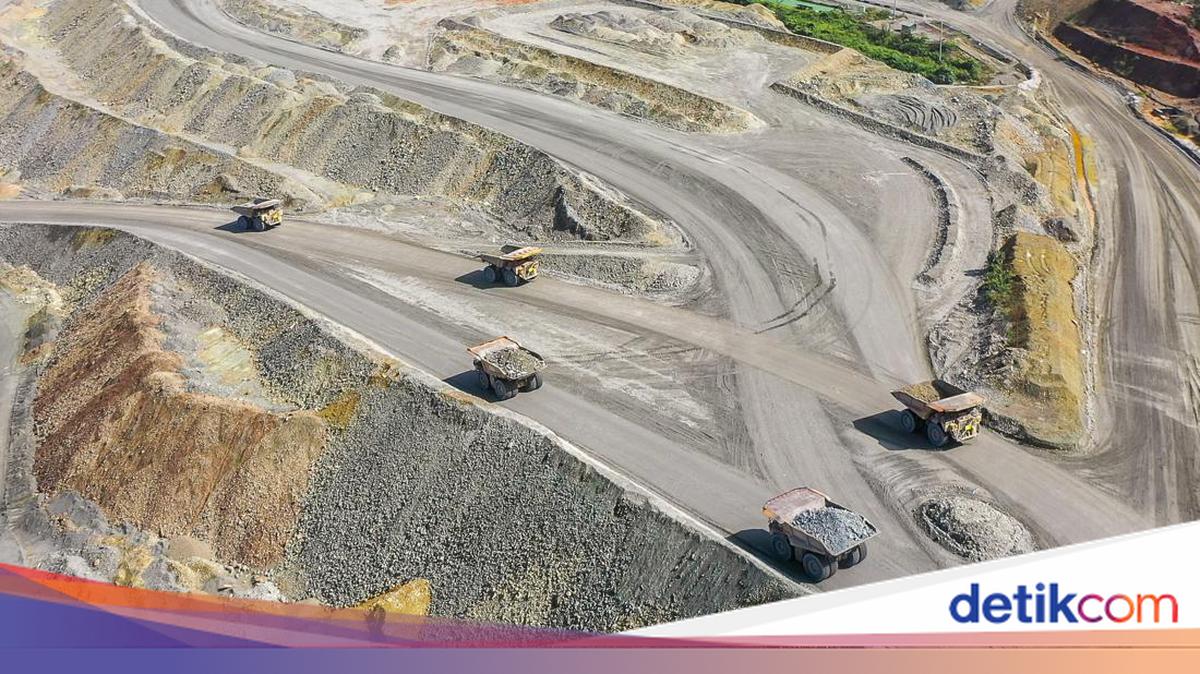
The West Nusa Tenggara (NTB) provincial government is growing anxious about the regional fiscal condition following a drastic plunge in profit-sharing funds (DBH) from PT Amman Mineral Nusa Tenggara (AMNT) in 2026. Revenue from the mining sector has fallen from Rp 110 billion to just Rp 62 billion, a drop of Rp 48 billion.
This sharp decline in DBH has left the NTB provincial government facing the threat of a budget deficit. Several regional spending positions are now being prepared for efficiency measures, including official travel.
Acting Head of the Regional Revenue Agency (Bapenda) of NTB, Baiq Nelly Yuniarti, acknowledged that the reduction in DBH from PT AMNT is putting increasing pressure on the regional fiscal space.
“Hopefully not. We hope that with the ongoing revision of the Regional Tax and Levy Regulation (PDRD) in the Regional People’s Representative Council, it will work. With this new regulation, we hope we won’t have a deficit,” Nelly said on Monday (11/5/2026).
According to Nelly, the revision of the PDRD is expected to serve as a buffer to cover potential revenue shortfalls. Based on preliminary studies, the additional revenue from the regulation is estimated to reach Rp 25 billion.
“Our study results for the PDRD show an addition of Rp 25 billion. Now, the realisation of vehicle tax is only 28 percent,” she said.
Nevertheless, this additional revenue is deemed insufficient to cover the loss of DBH from the mining sector. The NTB provincial government is thus beginning to adjust regional spending plans to match available revenue capacity.
Based on preliminary calculations, other new revenue sources such as People’s Mining Permits (IPR) are also not yet able to serve as the main fiscal support. The six IPR blocks in NTB are estimated to provide only around Rp 29 billion in additional revenue.
“The Head of ESDM estimates revenue of around Rp 29 billion. Meanwhile, the shortfall is in the range of over Rp 50 billion,” she said.
Head of the Energy and Mineral Resources Office (ESDM) of NTB, Samsudin, explained that the DBH decline occurred because PT AMNT was unable to export concentrate for two quarters. This situation was exacerbated by force majeure due to a smelter fire.
“That incident caused them to stop production. They were only repairing some existing infrastructure. If there’s no production, income to the state will definitely drop. Automatically, the DBH for the region decreases as well,” he clarified.
Additionally, since April 2026, AMNT has no longer been permitted to export copper concentrate. This situation is feared to impact NTB’s economic growth in subsequent quarters, as the mining sector remains the main pillar of the regional economy.
AMNT Focuses on Boosting Smelter Production
Previously, PT Amman Mineral Nusa Tenggara (AMNT) stated that the process of increasing smelter production capacity, or ramp-up, continues to improve following the completion of facility repairs in the fourth quarter of 2025.
Vice President of Corporate Communications at AMMAN, Kartika Octaviana, said the company remains committed to implementing the government’s mineral downstreaming policy alongside the expiration of the concentrate export permit at the end of April 2026.
According to Kartika, the company’s current focus is to ensure the gradual, safe, and compliant increase in smelter production.
The company is also said to be continuously conducting evaluations and strict operational monitoring, including coordination with the government.
“AMMAN has not applied for an extension of the concentrate export permit. This step underscores the company’s focus on optimising smelter operations as part of support for the ongoing mineral downstreaming programme,” she emphasised.