
Amid War With Iran, US Court Orders Trump to Pay Refund for Canceled Import Tariffs
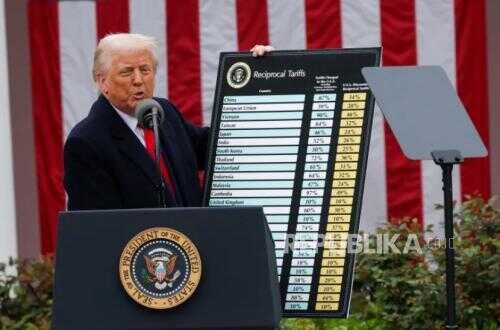
A US federal court has paved the way for thousands of companies to receive refunds of import duties that were previously vacated by the US Supreme Court. The US Court of International Trade on Wednesday ordered the Customs and Border Protection to refund the import duties imposed by President Donald Trump last year under the International Emergency Economic Powers Act (IEEPA). The decision comes as the Trump administration seeks support to obtain funding to finance a war with Iran.
“All importers affected by the IEEPA tariffs are entitled to benefit from that Supreme Court ruling,” wrote Judge Richard Eaton in his ruling, cited by the BBC on Thursday (5 March 2026).
However, the mechanics of how refunds will be paid remain unclear. The court ruling is a setback for the Trump administration, which had previously sought to replace the import tax with a new tariff policy and expressed concerns about potential liability to refund companies.
The ruling emerged specifically from a lawsuit by the Tennessee-based filtration company Atmus Filtration. Nevertheless, the judge said he would handle all cases relating to the tariff refunds.
Meanwhile, US Treasury Secretary Scott Bessent said the government is likely to implement a global tariff of 15 percent in the near future, up from 10 percent. This policy is intended as a replacement for the IEEPA tariffs that were struck down by the Supreme Court.
The Trump administration had previously estimated that about $130 billion would be raised from import tariffs imposed on the majority of goods entering the United States under the IEEPA scheme. Assuming an exchange rate of around Rp 16,870 per US dollar, that amount is equivalent to around Rp 2,190 trillion.
Several large companies, including global logistics firm FedEx, have filed lawsuits seeking full refunds of the tariffs. The White House has yet to respond officially to the court’s ruling.
On the other hand, the Trump administration faces an increasing number of lawsuits from companies that had previously paid the import tariffs. And Anthony from the small-business coalition We Pay the Tariffs, formed to advocate for tariff refunds, called the court’s decision a victory.
“Small American businesses have waited far too long. A full, prompt, and automatic refunds process is their right, and anything less is unacceptable,” he said.
Nevertheless, several major questions remain about the direction of US import tax policy going forward.
In April this year, Trump announced tariffs known as the Liberation Day tariffs against dozens of countries, with rates ranging from 10 percent to nearly 50 percent for some countries. The policy triggered a wave of international trade negotiations, as various countries sought lower tariffs by offering investments or other policy concessions.
But last month, the US Supreme Court struck down the tariff policy, including some tariffs previously imposed on goods from Mexico, Canada, and China, on the grounds of the government’s use of emergency powers.