
Amid IHSG Pressure, Can BPJS Funds Become Indonesia's Market Bulwark?
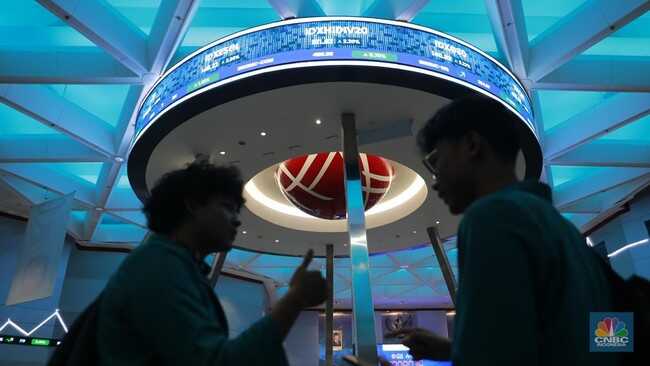
Jakarta — The Indonesian Composite Index (IHSG) has come under renewed pressure, with market participants looking to local liquidity providers, particularly BPJS Ketenagakerjaan, to serve as a market stabiliser.
On Thursday 26 February 2026, the IHSG closed significantly lower by 1.04% to 8,235 points. The index is increasingly shadowed by risks of capital outflows, a situation compounded by the approaching MSCI rebalancing schedule, which has historically triggered volatility, particularly when index recomposition results in more stocks being removed than added.
Simultaneously, global macroeconomic conditions remain unsettled. Uncertainty surrounding US policy direction, including political dynamics and unpredictable statements from Donald Trump, adds to the murk of global sentiment.
BPJS-TK Expected as IHSG Buffer
Against this backdrop, the role of domestic institutional funds has become increasingly critical. BPJS Ketenagakerjaan (BPJS-TK), as one of the largest domestic big funds, has emerged as a potential pillar of support.
Currently, BPJS-TK’s equity allocation stands at approximately 11-12% of total assets under management. However, there is discussion about raising the equity investment ceiling to 20%, as outlined by Coordinating Minister for Economic Affairs Airlangga Hartarto. In a more aggressive scenario, the allocation could reach 25% within three years.
Based on CGSI Research calculations, assuming 8% annual AUM growth, BPJS-TK’s total assets could reach Rp1.314 trillion by 2028. With a 20% equity allocation, estimated equity holdings could rise to approximately Rp263 trillion. In the 25% scenario, equity holdings could reach Rp329 trillion.
This represents substantial room for additional share purchases. Under a conservative scenario, purchasing capacity could reach around Rp40 trillion over coming years. Under a bullish scenario, additional purchases could reach Rp57 trillion in 2026.
On average, BPJS-TK’s purchasing capacity of Rp40-70 trillion annually is comparable to or even exceeds the average annual foreign outflows experienced during previous market stress periods.
Therefore, amid risks of outflows from MSCI rebalancing and global macro pressures, BPJS-TK has the potential to serve as an important buffer for the domestic equity market. Although it cannot entirely replace foreign fund flows, the presence of large-scale local institutional funds can help dampen volatility and maintain IHSG stability in the medium term.