
Amid Global Turbulence, Indonesia's Economy Remains Solid
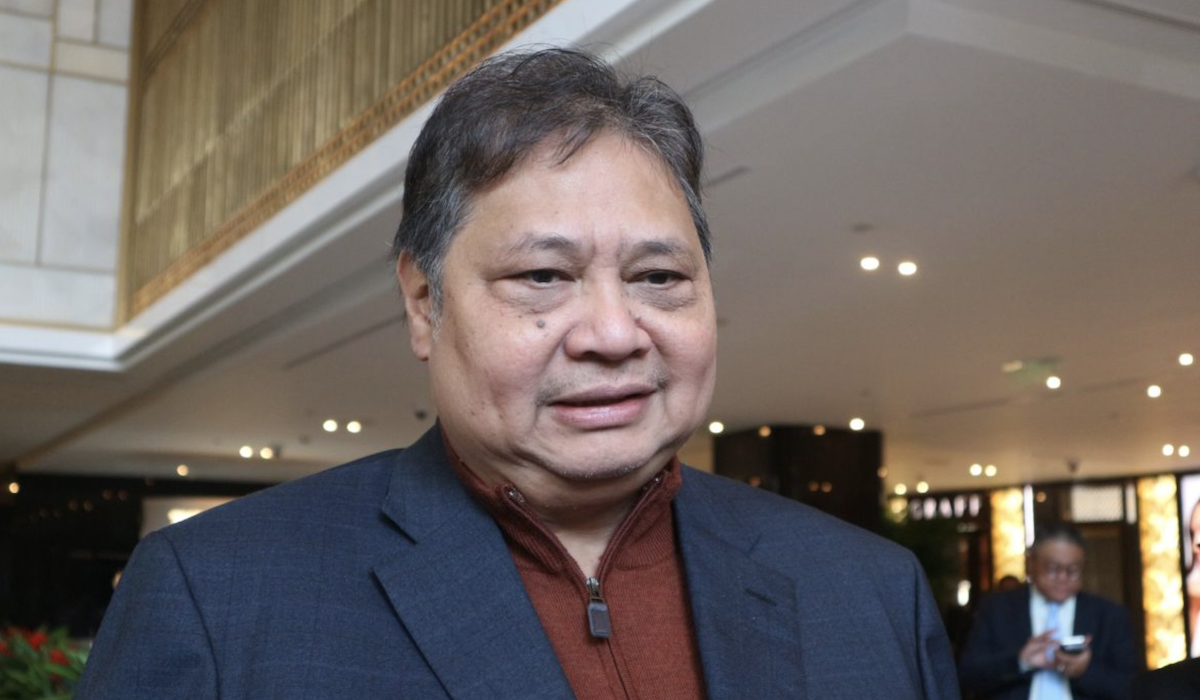
The government assesses that the national economy remains solid amid global pressures, including the dynamics of the Middle East conflict. Coordinating Minister for the Economy, Airlangga Hartarto, stated that Indonesia’s economic performance is still competitive at the G20 level.
Following the Merah Putih Cabinet Working Meeting at the Presidential Palace in Jakarta on Wednesday (8/4), Airlangga revealed that Indonesia’s economic growth is in a strong position. “Our economic condition is good, and among G20 countries, we are only lower than India, with growth in the fourth quarter at 5.39%,” he said.
Energy commodity prices are actually showing a downward trend. The West Texas Intermediate crude oil price was recorded falling to US$96.7 per barrel and Brent to US$95.23 per barrel. Meanwhile, palm oil prices also experienced a slight decline, though still holding above US$1,192.
From the domestic side, public consumption remains the main pillar of the national economy. Airlangga explained that consumption contributes 54% to gross domestic product (GDP), reflecting relatively maintained purchasing power.
Food security is also considered strong, with rice production in 2025 reaching 34.7 million tonnes and Bulog stocks at 4.6 million tonnes.
The government is also strengthening energy resilience through biodiesel policy. “We have agreed on B50 starting from 1 July, which increases budget resilience from savings of Rp48 trillion,” said Airlangga.
That policy also strengthens the role of the state budget as an economic shock absorber, supported by a 14.3% increase in tax receipts or Rp462.7 trillion up to March, as well as an expansive manufacturing sector.
On the fiscal side, Airlangga said, President Prabowo Subianto has emphasised the commitment to maintaining stability. The debt ratio is kept around 40%, far below the maximum legal limit of 60%. The budget deficit is also maintained at 3% until the end of the year.
With stable macro indicators, the government is optimistic that economic growth in the first quarter of 2026 can exceed 5.5%.
Foreign exchange reserves reaching US$151.9 billion as of February 2026 further strengthen external resilience, supported by the stability of the domestic financial system.
Coordination with Bank Indonesia is also continuously strengthened, including through triple intervention policies in the spot market, DNDF, and non-delivery forward to maintain rupiah stability. The policy interest rate (BI Rate) remains at 4.75%.
In addition, the government continues bilateral currency swap cooperation with several countries such as China, Japan, Australia, Malaysia, South Korea, and Singapore, and opens opportunities for expansion to other countries.
In the transportation and Hajj pilgrimage sectors, the government is striving to mitigate the impact of rising energy costs. Adjustments to avtur prices followed by tax incentives mean that aircraft ticket price increases are only around 9% to 13%. Meanwhile, Hajj costs have actually been reduced by Rp2 million per pilgrim.
The government is absorbing the impact of rising avtur so as not to burden the public.
“Thus, there is no increase in Hajj costs and this is absorbed for 220,000 who will become Hajj pilgrims. The budget of Rp1.77 trillion is borne by the state budget,” Airlangga concluded.
Nevertheless, the President stated that Indonesia is in a relatively safe condition so far.
Prabowo also emphasised that the government has various data and intelligence reports regarding parties trying to influence public opinion.