
Amid Global Crisis, Prabowo: Our Nation is Far Better Off than Other Countries
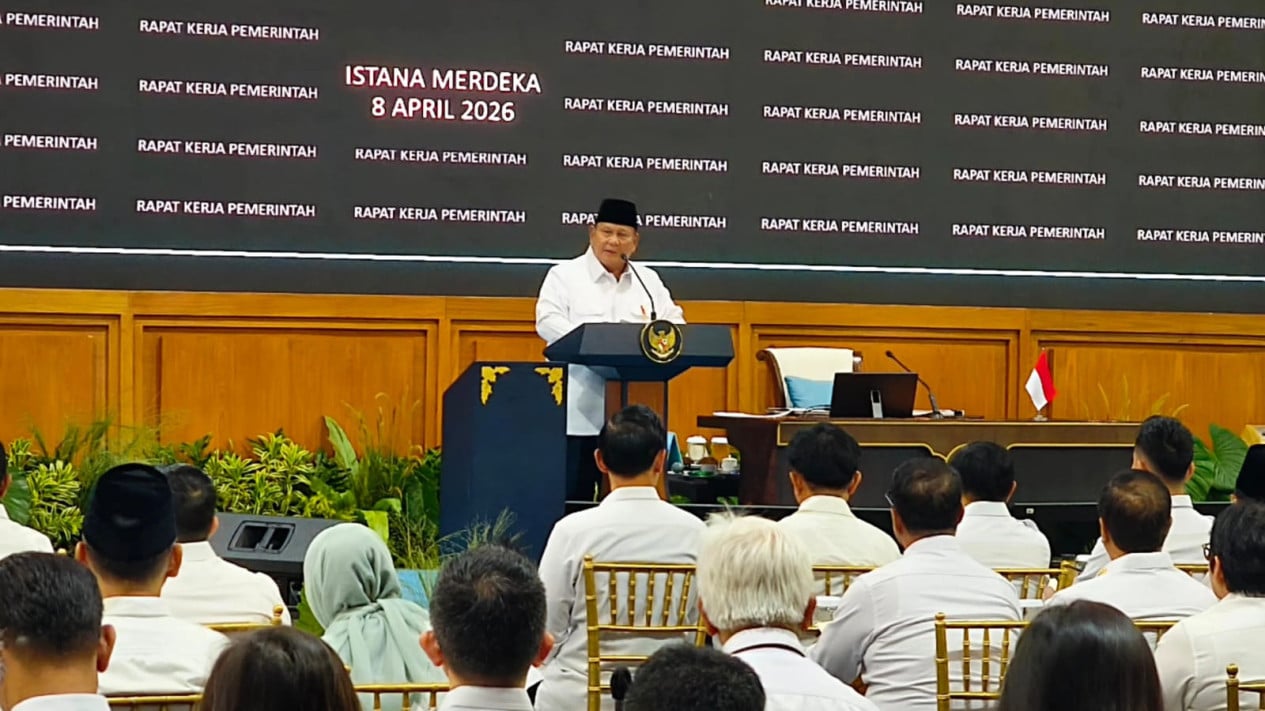
Jakarta – President Prabowo Subianto acknowledged that many other countries have been severely affected by the war in the Middle East, including the high prices of energy or oil.
However, he emphasised that Indonesia is far better off than other nations.
Prabowo made this statement during a briefing at the Government Working Meeting (Raker) at the Presidential Palace Complex in Central Jakarta on Wednesday, 8 April 2026.
“The crisis occurring in the Middle East, which has caused energy prices to soar, we must be convinced and grateful that our nation’s condition is far better than that of other nations,” Prabowo said.
Prabowo said he had studied data related to the war in the Middle East. He also immediately coordinated with several relevant ministries or agencies to report on the global situation.
Amid the global crisis due to the war in the Middle East, Prabowo conveyed that Indonesia remains in the safe category. Although, he said, there are several challenges that must be faced.
“After I studied the figures and received reports from my ministers, it turns out our condition is quite safe. There are challenges, there are difficulties, but we are able to face and overcome them,” he said.
It is known that global oil prices fell sharply after the United States and Iran reached a temporary ceasefire agreement for two weeks, which also included the reopening of the strategic Strait of Hormuz.
According to BBC on Wednesday, 8 April 2026, the global benchmark Brent crude was recorded to have dropped around 13 percent to US$94.80 or the equivalent of Rp1,611,600 per barrel (exchange rate Rp17,000). Meanwhile, oil prices traded in the United States plummeted more than 15 percent to US$95.75 or around Rp1,627,750 per barrel.
This decline occurred after energy prices had previously surged sharply due to supply disruptions from the Middle East. The conflict that began on 28 February had once pushed oil prices far above normal levels, from around US$70 or approximately Rp1,190,000 per barrel.
This ceasefire essentially occurred after the United States stated it would halt attacks on Iran for two weeks, on the condition that Tehran fully, immediately, and safely opens the Strait of Hormuz. Iran then responded by stating its willingness to halt the conflict if attacks on its territory were stopped, while also opening the shipping lane in that strait.